

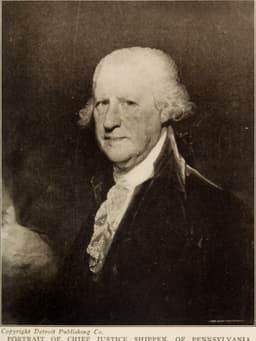
Internet Archive Book Images, 1912. Wikimedia Commons. No restrictions.
1741–1801
Benedict Arnold
4
recorded events
Connected towns:
Crown Point, NYBiography
Benedict Arnold: Hero and Traitor of the American Revolution
Born in Norwich, Connecticut, in 1741, the boy who would become America's most infamous traitor grew up watching his family's fortunes collapse. The Arnold family had once enjoyed considerable standing in their community, but financial reversals during Benedict's youth stripped away that respectability and left deep marks on his character. He was apprenticed to an apothecary, learning the trade with the same restless energy that would later define his military career. Rather than settle into quiet provincial life, Arnold leveraged his apprenticeship into a merchant business based in New Haven, trading goods across the Atlantic and through the Caribbean. This commercial life gave him something no military academy could: a practical education in logistics, procurement, supply chains, and the management of money and men under pressure. He also became captain of the local militia, drilling volunteers and cultivating a reputation for physical daring and an aggressive, confrontational temperament. Those who knew him in these years described a man of undeniable talent shadowed by a volatile pride — someone who demanded recognition and bristled at any perceived slight. These traits, forged in the humiliation of his family's decline, would drive him to extraordinary acts of courage and, ultimately, to the most notorious act of betrayal in American history.
When the first shots of the Revolution echoed out from Lexington and Concord in April 1775, Arnold did not wait for orders. He assembled his New Haven militia company and marched toward Cambridge, Massachusetts, before he had received any formal authorization to move. This impulsive decisiveness was characteristic of the man: he saw opportunity before others did and acted on instinct rather than protocol. Almost immediately, Arnold proposed a daring strike against Fort Ticonderoga on Lake Champlain, recognizing that the fort's cannons and its strategic position controlling the lake corridor made it invaluable to the American cause. He received a commission from the Massachusetts Committee of Safety and raced northward, only to find that Ethan Allen and the Green Mountain Boys had a parallel plan already in motion. The two headstrong leaders clashed over authority but cooperated long enough to seize the fort on May 10, 1775, capturing its artillery without a fight. Arnold's vision extended beyond the fort itself — he immediately grasped that Lake Champlain was the strategic highway connecting British Canada to the American colonies, and that whoever controlled the lake controlled the invasion route. This insight would shape his most consequential contribution to the Revolution and define the military campaign that arguably saved the American cause from destruction in its most vulnerable year.
Arnold's greatest military achievement was not a victory in any conventional sense — it was a fighting retreat that purchased time the Continental Army desperately needed. In the summer of 1776, with the British assembling a massive invasion force in Canada to sweep south through the Champlain corridor, Arnold was given the seemingly impossible task of building an American fleet from scratch. Working at Skenesborough, he supervised the felling of green timber in the wilderness, the construction of gondolas and row galleys, and the forging of fittings and armaments with painfully limited resources. He recruited sailors, soldiers, and anyone who could handle an oar or load a cannon, then drilled this motley collection of men into something approaching a fighting force. By October, Arnold had positioned his small fleet behind Valcour Island, choosing his ground with the tactical shrewdness of a born fighter. On October 11, 1776, the British squadron under Captain Thomas Pringle engaged Arnold's vessels in a brutal close-range battle that lasted hours. The American fleet was outgunned and outmanned, yet Arnold kept his ships in the fight long enough to inflict real damage. That night, under cover of fog and darkness, he slipped his surviving vessels past the British line in one of the war's most daring naval maneuvers, buying still more precious hours.
The Battle of Valcour Island ended in tactical defeat for the Americans — the British pursued and destroyed most of Arnold's remaining vessels over the following two days, and Arnold himself was forced to beach and burn his flagship, the Congress, rather than let it fall into enemy hands. Yet the engagement accomplished something far more important than any single naval victory could have. The weeks consumed in the construction season, the battle itself, and the subsequent British caution had eaten up the 1776 campaign season entirely. British General Guy Carleton, surveying the lateness of the year and the logistical challenges of advancing further south, made the fateful decision to withdraw to Canada rather than press toward Albany before winter closed the corridor. This delay proved catastrophic for British strategy. When the invasion finally came the following year under General John Burgoyne, the Americans had used the intervening months to strengthen their defenses, gather militia, and prepare the resistance that would culminate in the Saratoga campaign. Arnold himself fought with extraordinary valor at the Battles of Freeman's Farm and Bemis Heights in September and October 1777, suffering a severe leg wound that nearly cost him his limb, and contributing materially to the American victory that forced Burgoyne's surrender.
Arnold's relationships with fellow officers, political leaders, and military superiors were defined by a combustible mixture of genuine talent and corrosive resentment. He collaborated uneasily with Ethan Allen at Ticonderoga, clashed repeatedly with General Horatio Gates during the Saratoga campaign, and cultivated a sense of grievance against the Continental Congress that deepened with every perceived injustice. Yet he also inspired fierce loyalty among the men who served directly under him. Soldiers who fought on Lake Champlain or charged into British lines at Saratoga recognized Arnold as a leader who shared their dangers and led from the front, not the rear. His relationship with George Washington was perhaps the most consequential — Washington recognized Arnold's military ability and repeatedly advocated for his advancement, appointing him to command the critical post at Philadelphia and later at West Point. Arnold also formed alliances of convenience with political figures in Pennsylvania, and his marriage in 1779 to Peggy Shippen, a young woman from a prominent Philadelphia family with Loyalist sympathies, drew him into social circles that would ultimately facilitate his treason. The personal connections that had once fueled his ambition became the channels through which his disillusionment found its most destructive expression.
Arnold's path toward betrayal was neither sudden nor simple. After the Saratoga campaign, he was assigned to command Philadelphia following the British evacuation in 1778, where he quickly became embroiled in accusations of profiteering and misuse of military authority. Pennsylvania's civil authorities brought charges against him, and although a court martial in late 1779 resulted in only a mild reprimand from Washington, the proceedings humiliated Arnold and deepened his conviction that the republic he had bled for was governed by petty, ungrateful men. His mounting debts, his lavish lifestyle, and his marriage to Peggy Shippen all contributed to a growing sense that the American cause offered him neither the financial security nor the recognition he deserved. By May 1779, Arnold had secretly opened correspondence with British Major John André, offering military intelligence in exchange for money and a commission in the British Army. Over the following months, he maneuvered to obtain command of West Point — the critical fortress controlling the Hudson River — with the explicit intention of surrendering it to the enemy. The moral complexity of Arnold's treason lies not in any ambiguity about the act itself, which was straightforward betrayal, but in the genuine grievances that propelled a genuinely courageous man toward an unforgivable choice.
The war transformed Benedict Arnold from a prosperous New England merchant into a physically shattered, emotionally embittered man whose name became a byword for treachery. The leg wound he suffered at Saratoga in October 1777 left him permanently disabled, shortening one leg and condemning him to chronic pain for the rest of his life. The months of recovery that followed removed him from active field command at a critical juncture and channeled his formidable energy into the political and administrative arena, where his temperament was far less suited to success. His sense of personal sacrifice — he had risked his life repeatedly, lost his health, and spent his own money outfitting troops — collided with the Continental Congress's repeated decisions to promote junior officers over him and to delay reimbursement of his expenses. Each slight compounded the last, and the man who had once burned his own ship rather than surrender it to the British gradually convinced himself that the cause he had served so faithfully did not deserve his loyalty. The psychological journey from patriot to traitor is rarely a single dramatic leap; in Arnold's case, it was a slow erosion of allegiance driven by pain, pride, financial desperation, and a consuming bitterness that poisoned everything his courage had built.
Arnold's treason was exposed in September 1780 when Major John André was captured carrying documents that revealed the plot to surrender West Point. Arnold fled to a British warship on the Hudson River, leaving André to be hanged as a spy. For the remainder of the war, Arnold served as a British brigadier general, leading raids against American positions in Virginia and his native Connecticut — including the burning of New London in September 1781, an act that horrified former neighbors and cemented his reputation as a villain. His military contributions to the British cause were competent but strategically insignificant; the war was already moving toward its conclusion at Yorktown. After the British surrender in October 1781, Arnold sailed for England, where he spent the remaining two decades of his life seeking recognition, financial reward, and new opportunities for military command. He received a pension and land grants in Canada but never obtained the prominence or respect he craved. He attempted various business ventures in Canada and the Caribbean, most of which ended in disappointment or litigation. He died in London on June 14, 1801, largely forgotten by the British establishment he had served and despised by the nation he had betrayed.
Arnold's contemporaries struggled to reconcile the hero of Valcour Island and Saratoga with the traitor of West Point. George Washington, who had championed Arnold's career and trusted him with critical commands, reportedly received news of the betrayal with visible shock and immediately moved to secure West Point against British attack. American newspapers and pamphlets transformed Arnold's name into an epithet — to call someone a "Benedict Arnold" was, by 1781, the most damning accusation an American could level. His former soldiers, many of whom had followed him into desperate combat and admired his physical bravery, expressed a sense of personal betrayal that went beyond political allegiance. Yet some officers, including those who had witnessed the shameful treatment Arnold received from Congress, privately acknowledged that the republic's ingratitude had contributed to the disaster, even as they condemned the treason itself. In Britain, Arnold was received with a mixture of utility and suspicion — useful as a propaganda tool and a military asset, but never fully trusted by those who understood that a man willing to betray one flag might someday betray another. His reputation, even among those who benefited from his defection, carried the permanent taint of dishonor.
Students and visitors today should know Benedict Arnold's story because it illuminates the Revolution's most uncomfortable truth: that courage, sacrifice, and talent are not guarantees of loyalty, and that the line between patriot and traitor can be thinner than anyone wants to admit. Arnold's 1776 lake campaign — the construction of a fleet from raw wilderness timber, the desperate stand at Valcour Island, and the strategic delay that may have saved the Revolution — demonstrates that wars are not won only by dramatic victories but by unglamorous acts of endurance and sacrifice that buy time for larger forces to coalesce. His subsequent betrayal forces us to reckon with the fragility of revolutionary commitment and the corrosive power of personal grievance. Walking the shores of Lake Champlain near Crown Point, where Arnold built his fleet and launched it against overwhelming odds, visitors can grasp the physical reality of what he accomplished — and understand why historians continue to argue that the traitor's greatest contribution to American independence came years before his treason. Arnold's story is not a simple morality tale; it is a reminder that the American Revolution was fought by complicated, flawed human beings whose choices shaped a nation in ways they could not have foreseen.
WHY BENEDICT ARNOLD MATTERS TO CROWN POINT
Crown Point stands at the heart of Benedict Arnold's most consequential achievement. It was from this stretch of Lake Champlain shoreline that Arnold oversaw the construction and staging of the American fleet in 1776 — the improvised naval force that fought the Battle of Valcour Island and delayed the British invasion by an entire year. That delay allowed the Continental Army to regroup, recruit, and ultimately win the decisive Saratoga campaign in 1777. Visitors to Crown Point walk the same ground where green timber was felled, hulls were laid, and cannons were mounted on vessels that had no business challenging the Royal Navy. Arnold's story teaches us that strategic victories sometimes look like defeats, and that the places where unglamorous preparation happens can matter as much as famous battlefields. Crown Point is where the Revolution was saved — not by a glorious charge, but by sawdust, sweat, and stubborn defiance.
TIMELINE
- 1741: Born January 14 in Norwich, Connecticut
- 1775: Participates in the capture of Fort Ticonderoga on May 10; the American Canada invasion stages through Crown Point later that year
- 1775: Leads the march through the Maine wilderness to attack Quebec; wounded in the assault on December 31
- 1776: Builds the American Lake Champlain fleet at Skenesborough during the summer, commanding operations from Crown Point
- 1776: Fights the Battle of Valcour Island on October 11; the fleet is destroyed over the following days, but the British invasion is delayed until 1777
- 1777: Fights at the Battles of Freeman's Farm (September 19) and Bemis Heights (October 7); suffers a severe leg wound; Burgoyne surrenders at Saratoga on October 17
- 1778: Assumes command of Philadelphia after the British evacuation
- 1779: Court-martialed on charges of misusing military authority; begins secret correspondence with British Major John André
- 1780: Plot to surrender West Point exposed in September; Arnold flees to the British
- 1801: Dies in London on June 14
SOURCES
- Martin, James Kirby. Benedict Arnold, Revolutionary Hero: An American Warrior Reconsidered. New York University Press, 1997.
- Philbrick, Nathaniel. Valiant Ambition: George Washington, Benedict Arnold, and the Fate of the American Revolution. Viking, 2016.
- Nelson, James L. Benedict Arnold's Navy: The Ragtag Fleet That Lost the Battle of Lake Champlain but Won the American Revolution. McGraw-Hill, 2006.
- Randall, Willard Sterne. Benedict Arnold: Patriot and Traitor. William Morrow, 1990.
- National Park Service. "Saratoga National Historical Park: Benedict Arnold." https://www.nps.gov/sara/
Events
Aug
1775
American Canada Invasion Stages Through Crown PointCrown PointContinental Army General# The American Invasion of Canada Stages Through Crown Point, 1775 In the early months of the American Revolution, the conflict was still taking shape, and the boundaries of rebellion remained uncertain. The thirteen colonies that had taken up arms against British rule were not content to simply defend their own territory — they looked northward, toward Canada, with a mixture of strategic ambition and revolutionary idealism. The hope was that Quebec, then a British province, might be persuaded or compelled to join the cause as a fourteenth colony, strengthening the fledgling resistance and denying Britain a critical base from which to launch counterattacks. Crown Point, a fortification perched along the narrow corridor of Lake Champlain in northern New York, became the essential staging ground for this bold and ultimately ill-fated campaign. Crown Point had already figured prominently in the opening moves of the war. In May 1775, just weeks after the battles of Lexington and Concord, American forces under Benedict Arnold and Ethan Allen had seized both Fort Ticonderoga and Crown Point from small British garrisons, capturing valuable artillery and gaining control of the Lake Champlain waterway. These victories gave the Continental forces command of the traditional invasion route between the American colonies and Canada — the same corridor that had seen armies march back and forth during the French and Indian War just fifteen years earlier. With these positions secured, the Continental Congress began to consider a more aggressive move: a full-scale invasion of Canada before the British could reinforce their northern holdings. Through the summer and fall of 1775, Crown Point buzzed with the activity of an army preparing for a major campaign. Richard Montgomery, an Irish-born former British officer who had settled in New York and embraced the patriot cause, was appointed brigadier general and given command of the northern invasion force. Montgomery was widely respected for his military experience and personal courage, and he set about organizing his troops — a mix of Continental soldiers and militia — for the difficult march north. The plan called for Montgomery to advance along the Lake Champlain route through Crown Point and Ticonderoga, pushing into Canada to capture Montreal before joining a second force for an assault on Quebec City. Montgomery's campaign began promisingly. Moving his army northward from Crown Point, he laid siege to Fort St. Johns on the Richelieu River, which fell in early November after a prolonged resistance. With this obstacle removed, Montgomery pressed on to Montreal, which he captured on November 13, 1775, as the British governor, Guy Carleton, narrowly escaped downriver to Quebec City. It was a significant achievement, but the hardest test still lay ahead. Meanwhile, Benedict Arnold had led a separate and harrowing expedition through the wilderness of Maine, arriving outside Quebec City with a drastically reduced force after weeks of grueling marches through dense forests, swamps, and freezing rivers. Montgomery moved east to join Arnold, and together they prepared for an assault on the fortified city. On the night of December 31, 1775, in the midst of a blinding snowstorm, the two commanders launched their attack. The results were devastating for the Americans. Montgomery was killed early in the fighting, struck down by cannon fire as he led his column toward the city's defenses. Arnold was seriously wounded in the leg during his own assault on another part of the city, and his force was thrown back with heavy casualties, including many soldiers taken prisoner. The failed assault on Quebec City marked the effective end of the Canadian invasion, though a demoralized American force lingered outside the walls into the spring of 1776 before retreating south. The campaign's collapse dashed hopes of adding Canada to the Revolution and left the northern frontier vulnerable to British counteroffensives, which would materialize dramatically in the years that followed. Crown Point's role as the staging ground for this ambitious endeavor underscores its strategic importance during the Revolution. The invasion of Canada revealed both the daring vision and the painful limitations of the early American war effort, and the deaths and sacrifices of the campaign — particularly the loss of the talented Richard Montgomery — reminded the young nation of the steep cost of its fight for independence.
Jul
1776
Arnold Builds the American Lake Champlain FleetCrown PointContinental Army General# Arnold Builds the American Lake Champlain Fleet In the summer of 1776, as the ink on the Declaration of Independence was barely dry, the fate of the American Revolution hung in a precarious balance far from Philadelphia. The northern frontier, stretching along the waterway corridor of Lake Champlain between New York and Canada, had become one of the most critical strategic theaters of the war. It was here that Benedict Arnold, a Continental Army general whose name would later become synonymous with treachery but who in 1776 was among the most capable and daring officers in American service, undertook a desperate shipbuilding campaign that would prove to be one of the most consequential logistical feats of the entire Revolution. The crisis on Lake Champlain grew directly out of the failed American invasion of Canada. In late 1775 and early 1776, American forces under generals Richard Montgomery and Arnold himself had launched an ambitious two-pronged assault on Quebec, hoping to bring Canada into the revolutionary fold. The campaign ended in disaster. Montgomery was killed in the assault on Quebec City on the last night of 1775, and Arnold was severely wounded leading his column through a blizzard against the city's fortifications. The surviving American forces, ravaged by smallpox and dwindling supplies, retreated southward through the spring of 1776, abandoning Montreal and then the key fortifications at St. Johns and Crown Point. By summer, the battered remnants of the northern army had pulled back to the southern reaches of Lake Champlain, and a powerful British force under General Guy Carleton, bolstered by thousands of regulars and seasoned sailors, prepared to sweep down the lake, recapture the Champlain corridor, and potentially link up with British forces in New York City — a move that could sever New England from the rest of the colonies and strangle the rebellion. Arnold recognized that the only way to slow this advance was to contest control of the lake itself. With the approval of General Horatio Gates, who commanded the Northern Department, Arnold threw himself into building a fleet virtually from nothing. At Skenesborough, present-day Whitehall, New York, he established a shipyard where workers felled green timber from the surrounding forests and shaped it into hulls, masts, and keels. The laborers were a motley collection — house carpenters, millwrights, and soldiers pressed into service, few of whom had ever constructed anything intended to float in battle. Skilled shipwrights were scarce, tools were inadequate, and supplies of iron, canvas, and cordage had to be begged, borrowed, or improvised. Yet Arnold drove the effort forward with relentless energy, using Crown Point as his northern operational anchor and staging area. The vessels that emerged from this frantic effort were rough and ungainly — flat-bottomed gondolas and row galleys that no professional navy would have considered fit for combat. But Arnold understood something profound: the fleet did not need to win a naval battle. It simply needed to exist. The British, upon learning that armed American vessels patrolled the lake, could not risk sending transports full of soldiers past enemy guns. They were compelled to build their own fleet capable of clearing the waterway, and because there was no direct water route from the St. Lawrence to Lake Champlain, they had to disassemble ocean-worthy vessels and haul them overland past the rapids at Chambly, then reassemble them at St. Johns. This painstaking process consumed weeks and then months of precious campaign season. By the time Carleton's superior fleet was ready and engaged Arnold's makeshift squadron at the Battle of Valcour Island in October 1776, the fighting season was nearly over. Arnold's fleet was largely destroyed in the engagement and the running battle that followed, but the delay proved decisive. Carleton, unwilling to risk a winter siege of the fortifications at Ticonderoga, withdrew his forces back to Canada. The British invasion would not come again until 1777, when General John Burgoyne's campaign down the same corridor ended in the catastrophic British defeat at Saratoga — a victory that brought France into the war as America's ally. Arnold's desperate shipbuilding gamble at Skenesborough had purchased the time the Revolution needed to survive.
Oct
1776
Battle of Valcour Island: Arnold's Fleet DestroyedCrown PointContinental Army General# The Battle of Valcour Island: A Defeat That Saved a Revolution In the autumn of 1776, the American cause hung by the thinnest of threads. The Continental Army had been driven from Canada after a failed invasion earlier that year, and British forces under General Guy Carleton, the Governor of Quebec, were preparing a massive southward thrust along the Lake Champlain–Hudson River corridor. The strategic objective was clear and devastating in its simplicity: if British forces could push south from Canada, link up with forces in New York City, and sever New England from the rest of the colonies, the Revolution might be strangled in its infancy. Standing in the way of this plan was a hastily assembled freshwater navy commanded by one of the most complex and capable officers in the Continental Army — Brigadier General Benedict Arnold. Arnold, who had already distinguished himself during the grueling march to Quebec and the subsequent siege of that city, threw himself into the task of building a fleet at the southern end of Lake Champlain during the summer of 1776. Working with limited resources, unskilled labor, and green timber, Arnold oversaw the construction of a small flotilla of gunboats, galleys, and gondolas at Skenesborough, near present-day Whitehall, New York. The effort was frantic and improvisational, but Arnold understood that every day spent building ships was a day the British could not advance. The British, for their part, were forced to construct their own fleet at the northern end of the lake, a process that consumed precious weeks of the short northern campaigning season. By the time Carleton's superior naval force was ready to sail southward, summer had already given way to early fall. On October 11, 1776, the two fleets met near Valcour Island, a small, heavily wooded landmass situated in a narrow channel on the western side of Lake Champlain, south of present-day Plattsburgh, New York. Arnold had chosen his position with tactical shrewdness, anchoring his vessels in a crescent-shaped line between the island and the western shore. This placement forced the British ships to beat against the wind to engage, negating some of their advantage in firepower and numbers. The fighting that day was brutal and sustained. British gunboats and the larger warships pounded Arnold's smaller vessels for hours. By nightfall, several American ships had been badly damaged or sunk, and casualties were mounting. Under cover of darkness and a thick fog, Arnold executed a daring escape, slipping his surviving vessels through the British line in single file with muffled oars. When dawn broke on October 12, Carleton was stunned to find the American anchorage empty. A pursuit followed, and over the next two days the British overtook and destroyed much of the remaining fleet. Arnold's flagship, the galley Congress, was run aground and set ablaze by her own crew rather than allow her capture. Most of the American vessels were either sunk, burned, or taken as prizes. Arnold himself escaped overland with a small group of survivors and one remaining vessel, refusing to let the British claim a total victory. By any conventional military measure, the Battle of Valcour Island was an American defeat. Arnold's fleet was virtually annihilated. Yet the strategic consequences of the engagement told an entirely different story. The battle, combined with the months of shipbuilding that preceded it, had consumed so much of the 1776 campaign season that Carleton's invasion force could not press its advantage before the onset of winter. The British advanced as far as Crown Point, New York, in late October, but with freezing temperatures closing in and supply lines stretching thin, Carleton made the fateful decision to withdraw his army back to Canada rather than risk a winter campaign. This delay proved to be one of the most consequential turning points of the entire Revolutionary War. It gave the Americans a full additional year to recruit, train, and fortify their positions along the northern frontier. When the British attempted the same strategic corridor again in 1777 under General John Burgoyne, they met a far better prepared American force. Burgoyne's campaign ended in disaster at the Battle of Saratoga, a victory that persuaded France to enter the war as an American ally and fundamentally altered the conflict's trajectory. Without Arnold's desperate stand at Valcour Island, that critical year of preparation might never have existed. In losing his fleet, Benedict Arnold may well have saved the Revolution.
Oct
1777
Saratoga Campaign Ends at British SurrenderCrown PointContinental Army General# The Saratoga Campaign and the British Surrender The British surrender at Saratoga on October 17, 1777, stands as one of the most consequential moments in the American Revolutionary War — a turning point that transformed a struggling colonial rebellion into an international conflict that Britain could not ultimately win. To understand why this single event carried such enormous weight, one must look back to the preceding year and trace the chain of decisions, battles, and delays that made the American victory at Saratoga possible. In 1776, the British devised an ambitious strategy to crush the rebellion by splitting the American colonies along the Hudson River Valley, effectively severing New England from the rest of the states. A critical part of this plan involved moving a large invasion force southward from Canada through the waterways of Lake Champlain and into New York. Standing in the way was a small and hastily assembled American fleet commanded by Benedict Arnold, then a Continental Army general whose courage and tactical instincts had already earned him a formidable reputation. At the Battle of Valcour Island in October 1776, Arnold's outgunned flotilla engaged a far superior British naval force. Though the Americans lost most of their ships and Arnold was forced to retreat, the engagement achieved something of immeasurable strategic value: it delayed the British advance long enough that the approaching winter made further southward movement impractical. The invasion was postponed until the following year, and that delay would prove fatal to British ambitions. The months gained by Arnold's stand at Valcour Island gave the Continental Army precious time to recruit, reorganize, and fortify positions throughout New York. When British General John Burgoyne finally launched his campaign in the summer of 1777, leading an army of roughly 8,000 troops southward from Canada, he encountered a far better prepared American resistance than he had anticipated. Burgoyne's force initially made progress, capturing Fort Ticonderoga in early July, but the deeper his army pushed into the wilderness of upstate New York, the more his supply lines stretched thin and his forces became vulnerable. The American forces opposing Burgoyne were under the overall command of Major General Horatio Gates, a cautious and politically adept officer who established strong defensive positions near Saratoga. The campaign culminated in two critical engagements known as the Battles of Saratoga. The first, the Battle of Freeman's Farm on September 19, 1777, saw fierce fighting that checked the British advance. The second, the Battle of Bemis Heights on October 7, proved decisive. During this engagement, Benedict Arnold — who had been effectively relieved of field command after clashing with Gates — rode into battle without authorization, rallying American troops in a series of aggressive assaults that broke the British lines. Arnold's leadership on the field that day was instrumental in the American victory, though it came at great personal cost: he was severely wounded in the leg, an injury that would trouble him for the rest of his life. With his army battered, surrounded, and cut off from reinforcement or retreat, General Burgoyne found himself in an impossible position. On October 17, 1777, he formally surrendered approximately 5,700 British and allied troops to General Gates — one of the largest capitulations of the entire war. The defeat shattered the British strategy of dividing the colonies and dealt a severe blow to British prestige on the world stage. The ramifications of Saratoga extended far beyond the battlefield. The American victory provided exactly the evidence that France had been waiting for — proof that the Continental Army could defeat a major British force in a set campaign. Within months, France entered the war as a formal ally of the United States, signing the Treaty of Alliance in February 1778. French military and naval support, along with financial assistance, fundamentally altered the balance of the conflict, stretching British resources across multiple theaters and ultimately making their hold on the American colonies unsustainable. The Saratoga campaign thus represents far more than a single battle or surrender. It was the culmination of a sequence that began with Arnold's desperate stand at Valcour Island, continued through months of rebuilding and preparation, and ended with a victory that reshaped the entire war. Without the delay won in 1776, without the reinforcements gathered through the winter, and without the fierce fighting at Freeman's Farm and Bemis Heights, the outcome might have been very different — and with it, the course of American independence itself.
Stories