

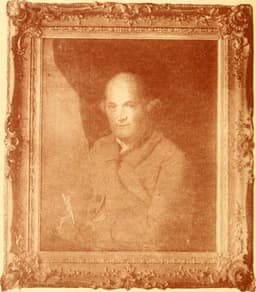
Internet Archive Book Images, 1913. Wikimedia Commons. No restrictions.
1754–1833
Banastre Tarleton
6
recorded events
Connected towns:
Charlottesville, VABiography
Banastre Tarleton (1754–1833)
British Lieutenant Colonel, Cavalry Commander, and Raid Leader
Few names inspired more fear across the American South than that of the young British cavalry officer who earned a reputation for speed, aggression, and ruthlessness that became nearly mythological during the Revolutionary War. Born in 1754 in Liverpool, England, Banastre Tarleton grew up in a prosperous merchant family whose wealth derived in significant part from the transatlantic slave trade. Liverpool was then one of the busiest slaving ports in the world, and the Tarleton family's deep involvement in that commerce shaped the social world in which the young man came of age. Rather than follow his father into trade, Tarleton briefly studied law at the Middle Temple and attended Oxford before purchasing a commission in the cavalry — a common path for ambitious young men of means in Georgian England. The purchase system allowed wealth to substitute for experience, but Tarleton would prove to be far more than a gentleman playing at soldiering. His natural instincts for mounted warfare, his physical courage, and his willingness to act with shocking decisiveness would set him apart almost immediately upon his arrival in the American war. The world of Liverpool commerce had given him confidence and nerve; the battlefields of America would give him infamy.
Tarleton arrived in North America in 1776, and he wasted no time making his presence felt. His first notable achievement came in December of that year, when he played a leading role in the capture of American General Charles Lee at Basking Ridge, New Jersey — a daring raid that demonstrated precisely the qualities that would define his career: speed, surprise, and a willingness to strike deep behind enemy lines. The exploit brought him to the attention of senior British commanders, and over the next several years he rose rapidly through the ranks, earning a reputation as the most aggressive young cavalry officer in the British army. By 1778, he had been given command of the British Legion, a mixed force of cavalry and light infantry composed primarily of American Loyalists, many of them drawn from New York and the mid-Atlantic colonies. The Legion became Tarleton's signature instrument — fast-moving, hard-hitting, and utterly loyal to their commander. When the British high command shifted the war's strategic focus to the southern colonies in late 1779 and 1780, Tarleton and his Legion were deployed to the Carolinas, where the nature of the conflict was about to become far more savage and personal than anything fought in the North.
Tarleton's operations in the Carolinas cemented his reputation as both a brilliant tactical commander and a figure of deep controversy. His most notorious action came at the Waxhaws on May 29, 1780, when his cavalry overtook a retreating Continental regiment under Colonel Abraham Buford. What happened next became one of the war's most bitterly debated episodes: Tarleton's men killed or wounded a staggering number of soldiers who were, by many Patriot accounts, attempting to surrender. The event gave rise to the phrase "Tarleton's Quarter," meaning no quarter at all, and it became a rallying cry that hardened Patriot resistance across the South. Whether Tarleton personally ordered the slaughter or simply lost control of his men remains a subject of historical debate, but the political and psychological consequences were undeniable. The Waxhaws massacre deepened the already vicious partisan warfare that characterized the southern campaign, where neighbor fought neighbor and atrocities were committed by both sides. Tarleton continued to lead aggressive raids and engagements throughout 1780, burning farms, scattering militia forces, and projecting British power across vast stretches of territory. His very name became a weapon — communities that heard his Legion was approaching often fled before a shot was fired.
In June 1781, Tarleton undertook one of the most audacious cavalry operations of the entire war. Under orders from Lord Cornwallis, who was then campaigning across Virginia, Tarleton led approximately 250 mounted troops on a grueling 70-mile overnight ride from central Virginia toward Charlottesville, where the Virginia legislature had fled after Richmond fell to British forces. His objective was breathtaking in its ambition: capture Governor Thomas Jefferson, seize as many members of the legislature as possible, and decapitate Virginia's political leadership in a single stroke. The raid came perilously close to succeeding. Tarleton's riders arrived in Charlottesville on the morning of June 4, 1781, scattering legislators and sending the government into panicked flight. A detachment rode up the mountain to Monticello, Jefferson's hilltop estate, arriving only minutes after the governor had departed. Only the midnight ride of Captain Jack Jouett, who had spotted Tarleton's column at a tavern and raced through the night on back roads to warn the legislature, prevented a catastrophic capture. Tarleton also dispatched forces to Point of Fork to destroy Continental Army supplies stored there, further disrupting Virginia's ability to sustain the war effort.
Tarleton's effectiveness depended not only on his own talents but on his relationships with the senior British commanders who shaped the war's strategic direction. His closest professional relationship was with Lord Cornwallis, who valued Tarleton's aggressiveness and relied heavily on the British Legion as the mobile striking arm of his southern army. Cornwallis gave Tarleton considerable independence, trusting him to lead detached operations that required speed and initiative — a trust that Tarleton generally rewarded with tactical success, though his January 1781 defeat at the Battle of Cowpens by Daniel Morgan was a significant and humiliating exception. That loss cost the British Legion much of its fighting strength and represented one of the most decisive American tactical victories of the war. Tarleton's adversarial relationships were equally defining: American commanders like Morgan, Nathanael Greene, and the partisan leaders Francis Marion, Thomas Sumter, and Andrew Pickens all adapted their strategies specifically in response to Tarleton's methods. Jack Jouett's famous ride to warn Charlottesville was itself a direct response to the threat Tarleton posed. In Virginia, Tarleton's raid brought him into indirect conflict with Thomas Jefferson, whose narrow escape from Monticello became one of the most dramatic personal episodes of the Revolution and a story that would follow Jefferson throughout his political career.
Tarleton's legacy in America is one of fear, resentment, and grudging respect for his military abilities. After the surrender at Yorktown in October 1781, where Tarleton was present though he avoided formal captivity under the terms of capitulation, he returned to Britain and embarked on a long career in public life. He entered Parliament, where he vigorously defended British military conduct during the war and, notably, opposed the abolition of the slave trade — a position consistent with his family's longstanding commercial interests in Liverpool's slaving economy. He eventually rose to the rank of full general and received a baronetcy, living until 1833. In America, however, his name remained synonymous with brutality and the excesses of British military power. The phrase "Bloody Tarleton" persisted in southern memory for generations, shaping how communities in Virginia and the Carolinas remembered the Revolution as a war not merely of armies and ideals but of personal suffering and local devastation. His story reminds us that the Revolution was often fought at terrifying speed, in the darkness of night, and with consequences that fell hardest on those who could not outrun the cavalry.
WHY BANASTRE TARLETON MATTERS TO CHARLOTTESVILLE
Banastre Tarleton's daring raid on Charlottesville in June 1781 is one of the most dramatic episodes in the town's history and a vivid reminder that the American Revolution reached directly into Virginia's heartland. His overnight cavalry ride nearly succeeded in capturing Thomas Jefferson and the entire Virginia legislature, an event that would have been a devastating blow to the Patriot cause. The raid connects Charlottesville, Monticello, and the surrounding countryside to the larger story of the war's final year, when Virginia became a critical theater of operations. For students and visitors, Tarleton's story illustrates the speed, danger, and high stakes of revolutionary warfare — and how the actions of a single determined rider, Jack Jouett, could alter the course of history in a matter of hours.
TIMELINE
- 1754: Born in Liverpool, England, into a wealthy merchant family involved in the slave trade
- 1775: Purchases a cavalry commission in the British Army
- 1776: Arrives in North America; plays key role in the capture of General Charles Lee at Basking Ridge, New Jersey
- 1778: Assumes command of the British Legion, a mixed Loyalist cavalry and infantry force
- 1780: Leads the attack at the Waxhaws (May 29), producing the rallying cry "Tarleton's Quarter"
- 1781: Defeated by Daniel Morgan at the Battle of Cowpens (January 17)
- 1781: Leads overnight cavalry raid on Charlottesville, Virginia, narrowly missing the capture of Jefferson and the legislature (June 4)
- 1781: Present at the British surrender at Yorktown (October 19)
- 1790: Enters the British Parliament as Member for Liverpool; opposes abolition of the slave trade
- 1833: Dies in England, having attained the rank of full general
SOURCES
- Bass, Robert D. The Green Dragoon: The Lives of Banastre Tarleton and Mary Robinson. Henry Holt and Company, 1957.
- Buchanan, John. The Road to Guilford Courthouse: The American Revolution in the Carolinas. John Wiley & Sons, 1997.
- Tarleton, Banastre. A History of the Campaigns of 1780 and 1781 in the Southern Provinces of North America. T. Cadell, 1787.
- Kranish, Michael. Flight from Monticello: Thomas Jefferson at War. Oxford University Press, 2010.
- Thomas Jefferson Foundation. "Tarleton's Raid on Monticello." Monticello.org. https://www.monticello.org
Events
May
1781
Cornwallis Campaigns Across VirginiaCharlottesvilleBritish Lieutenant Colonel**Cornwallis Campaigns Across Virginia: The 1781 Raids That Shook the Old Dominion** For much of the American Revolutionary War, Virginia occupied a paradoxical position. As the largest and most populous of the thirteen states, it was indispensable to the American cause, supplying soldiers, officers, and critical materiel to Continental forces fighting across the colonies. Yet for years, Virginians experienced the war largely at a distance. That changed dramatically in the spring and summer of 1781, when British General Charles Cornwallis marched his army northward from the Carolinas and launched an aggressive campaign across the Virginia interior, bringing destruction, upheaval, and a new sense of urgency to the Southern theater of the war. Cornwallis's decision to move into Virginia followed a grueling and ultimately inconclusive series of engagements in the Carolinas. Although British forces had won tactical victories, including the costly battle at Guilford Courthouse in March 1781, the campaign had left Cornwallis's army battered and depleted. Rather than continue to chase the elusive American General Nathanael Greene through the Carolina backcountry, Cornwallis concluded that the key to subduing the South lay in cutting off Virginia's supply lines and neutralizing the state as a source of reinforcements and provisions for the Continental Army. He marched his forces into Virginia, joining with British troops already operating there under the command of Brigadier General Benedict Arnold and later Major General William Phillips, who had been conducting raids along the James River and its tributaries. Once in Virginia, Cornwallis pursued the Marquis de Lafayette, the young French nobleman commanding a small and underequipped American force tasked with defending the state. Lafayette, recognizing that he was significantly outnumbered, wisely refused to be drawn into a pitched battle. Instead, he conducted a careful campaign of retreat and maneuvering, keeping his army intact while avoiding the kind of decisive engagement Cornwallis sought. The British general, frustrated by Lafayette's elusiveness, dispatched raiding parties to strike at targets of strategic and political value across the Virginia Piedmont. Among the most dramatic of these raids was the one led by Lieutenant Colonel Banastre Tarleton against Charlottesville in June 1781. Tarleton, already infamous for his ruthlessness in the Carolinas, led a fast-moving cavalry force toward the town, which was temporarily serving as the seat of Virginia's government after the legislature had fled Richmond. His objective was nothing less than the capture of Governor Thomas Jefferson and members of the Virginia General Assembly. Though Tarleton's force reached Charlottesville with remarkable speed, advance warning — carried, according to tradition, by a Virginia militia captain named Jack Jouett — allowed most of the legislators and Jefferson himself to escape just ahead of the British arrival. The raid nonetheless succeeded in scattering the government, seizing supplies, and demonstrating the vulnerability of Virginia's interior to British operations. Tarleton's strike on Charlottesville was only one element of a broader pattern of devastation. British forces burned plantations, confiscated livestock, destroyed military stores, and liberated enslaved people who sought freedom behind British lines. The raids disrupted Virginia's ability to function as the logistical backbone of the Continental war effort in the South, and they spread alarm across a population unaccustomed to the immediate horrors of military occupation. Yet the Virginia campaign ultimately proved to be a strategic miscalculation for Cornwallis. His march into the state extended his supply lines and drew him farther from British strongholds in the Carolinas. By late summer, Cornwallis moved his army to Yorktown on the Virginia Peninsula, seeking a defensible position near the coast where he could maintain contact with the British Navy. That decision set the stage for the war's most consequential engagement. In October 1781, a combined force of American and French troops under General George Washington and the Comte de Rochambeau, supported by the French fleet under Admiral de Grasse, besieged Cornwallis at Yorktown and forced his surrender. The capitulation effectively ended major combat operations in the Revolutionary War and paved the way for American independence. The spring and summer campaigns across Virginia, including the raid on Charlottesville, thus occupy a critical place in the war's narrative. They illustrate both the destructive reach of British military power and the limits of a strategy built on raiding rather than holding territory. They reveal the resilience of American forces under leaders like Lafayette, who understood that survival itself could constitute a form of victory. And they set in motion the chain of events that would bring the war to its dramatic conclusion at Yorktown, transforming Virginia from a secondary theater into the stage on which the fate of the Revolution was decided.
May
1781
Virginia Legislature Meets in Charlottesville (May 1781)CharlottesvilleBritish Lieutenant Colonel# Virginia Legislature Meets in Charlottesville (May 1781) By the spring of 1781, Virginia's revolutionary government was a government on the run. The preceding months had delivered a series of devastating blows to the Commonwealth, each one pushing its leaders further from the seat of power in Richmond and deeper into the interior of the state. What unfolded in Charlottesville during the final days of May and the first days of June would become one of the most harrowing episodes in Virginia's experience of the American Revolution—a moment when the entire apparatus of state government nearly collapsed under the pressure of British military aggression. The crisis had been building since January, when the turncoat general Benedict Arnold led a British raiding force up the James River and burned much of Richmond, scattering the legislature and exposing the vulnerability of Virginia's capital. Governor Thomas Jefferson, already struggling with the immense logistical challenges of supporting the war effort in the South, found himself presiding over a government that could barely protect itself. Arnold's raid was humiliating, but it was only the beginning. In April and May, British General William Phillips launched another campaign against Richmond and its surroundings, further destabilizing the region and making it clear that the Tidewater and the fall line were no longer safe for the conduct of government business. Phillips died of illness during the campaign, but the British military presence in eastern Virginia only intensified as General Charles Cornwallis moved his army northward from the Carolinas, consolidating British strength in the state. Faced with these mounting threats, the Virginia General Assembly made the decision in late May 1781 to relocate to Charlottesville, a small town nestled in the Piedmont foothills at the foot of the Blue Ridge Mountains. The choice reflected a calculated judgment that distance from the coast and the navigable rivers would provide the breathing room the legislature needed to continue its work. Governor Jefferson, whose term was nearing its end, accompanied the government to Charlottesville, where he could retreat to his nearby estate at Monticello. His wife, Martha Wayles Skelton Jefferson, was at Monticello as well, in fragile health, adding a personal dimension of anxiety to an already desperate political situation. Among the enslaved community at Monticello was Isaac Jefferson, whose later recollections would provide a rare firsthand account of the chaos that descended on the mountain when the British arrived. For a brief period, the legislature attempted to conduct business in Charlottesville, but the sense of security proved illusory. British commanders recognized the opportunity to strike a decisive blow against Virginia's leadership. Lieutenant Colonel Banastre Tarleton, a young and aggressive cavalry officer already infamous for his ruthlessness in the Southern campaigns, was dispatched with a fast-moving force of mounted troops to ride across the Virginia countryside and surprise the legislature. On June 4, 1781, Tarleton's raiders descended on Charlottesville with stunning speed. Legislators scrambled to escape, many fleeing westward over the Blue Ridge toward the Shenandoah Valley. Several members of the Assembly were captured. Jefferson himself narrowly avoided capture at Monticello, departing only shortly before Tarleton's men arrived at the estate. The enslaved people at Monticello, including Isaac Jefferson, experienced the terrifying arrival of British soldiers firsthand, a reminder that the disruptions of war rippled through every layer of Virginia society, touching the lives of the free and the unfree alike. The scattering of the legislature and the near-capture of the governor represented the lowest point of Virginia's Revolutionary War experience. It exposed the fragility of the revolutionary government and raised painful questions about leadership and preparedness. Jefferson's reputation suffered considerably; critics accused him of failing to organize an adequate defense, and he chose not to seek another term as governor. The Assembly eventually reconvened further west in Staunton, determined to keep the machinery of self-governance alive even in the face of near-total disruption. Yet the Charlottesville episode, for all its embarrassment, also demonstrated something essential about the revolutionary cause: the refusal of Virginia's leaders to surrender the principle of self-government. The legislature kept meeting. The government kept functioning. Within months, the strategic situation in Virginia would shift dramatically, culminating in the siege of Yorktown in October 1781 and the effective end of major combat in the war. The desperate days in Charlottesville were not the final chapter but rather the darkest hour before a remarkable reversal of fortune.
Jun
1781
Jack Jouett's Midnight RideCharlottesvilleBritish Lieutenant Colonel**Jack Jouett's Midnight Ride: The Race to Save Virginia's Government** By the spring of 1781, the Revolutionary War had shifted decisively southward, and Virginia found itself at the center of British military operations. British forces under generals like Cornwallis and Phillips had been ravaging the state for months, targeting supply lines, plantations, and seats of government. The Virginia legislature, driven from Richmond by earlier threats, had relocated to the small town of Charlottesville, nestled in the foothills of the Blue Ridge Mountains. Governor Thomas Jefferson, whose second term was nearing its troubled end, remained at his nearby mountaintop estate, Monticello, with his wife, Martha Wayles Skelton Jefferson, and the enslaved people who maintained the household, among them a man named Isaac Jefferson, who would later provide one of the few firsthand enslaved-person accounts of life at Monticello. It was into this precarious situation that British Lieutenant Colonel Banastre Tarleton launched a bold and secretive raid designed to capture the governor and scatter the rebel legislature in a single devastating stroke. Tarleton, notorious for his ruthlessness and speed, was one of the most feared British cavalry commanders of the war. On June 3, 1781, he led a detachment of roughly 250 mounted dragoons on a swift march westward from the Virginia lowlands toward Charlottesville. The column moved quickly and quietly, hoping to cover the distance before word of their approach could reach the American leadership. They paused to rest briefly at Cuckoo Tavern in Louisa County, approximately forty miles east of their target. It was there, by chance or sharp observation, that Captain Jack Jouett of the Virginia militia spotted the British cavalry and recognized their likely destination. Jouett, a tall and powerfully built man who knew the Virginia countryside intimately, made a fateful decision: he would ride through the night to sound the alarm. What followed was one of the most harrowing and consequential rides of the entire Revolutionary War. Rather than risk capture on the main roads, where British patrols might intercept him, Jouett chose to navigate by back roads, forest trails, and mountain paths through the darkness. The terrain was punishing—densely wooded, uneven, and barely passable even in daylight. By the time he arrived at Monticello around 4:30 in the morning on June 4, his face was reportedly scratched and scarred from low-hanging branches. He delivered his urgent warning to Jefferson, then pressed on to Charlottesville to alert the assembled legislators. Jefferson, roused from sleep, initially took time to organize his papers and prepare for departure, perhaps underestimating the immediacy of the threat. Martha Wayles Skelton Jefferson, who was in fragile health, had to be readied for travel as well. The enslaved members of the household, including Isaac Jefferson, played essential roles in the frantic preparations, hiding silver and other valuables before Tarleton's men arrived. Jefferson eventually departed Monticello only shortly before British dragoons rode up the mountain. In Charlottesville, most of the legislators managed to flee as well, though a handful were captured. The Virginia government reassembled days later in Staunton, farther west across the Blue Ridge, battered but intact. Tarleton's raid was a tactical embarrassment for Virginia's leadership but ultimately a strategic failure. The British colonel captured neither Jefferson nor the legislature in any meaningful sense, and the disruption proved temporary. Jefferson's narrow escape, however, became a source of political controversy; critics accused him of cowardice, a charge that shadowed his reputation for years. His term as governor ended just days later, and the experience left deep marks on his political consciousness. Jack Jouett's ride, covering roughly forty miles of difficult terrain in darkness, was by any measure as daring and consequential as Paul Revere's more celebrated midnight ride six years earlier in Massachusetts. Yet history treated the two men very differently. Revere was immortalized in Longfellow's famous 1861 poem, while Jouett faded into relative obscurity. The Virginia legislature acknowledged his bravery by awarding him an ornate sword and a pair of pistols, but no poet took up his cause. Today, historians recognize that Jouett's warning preserved the continuity of Virginia's revolutionary government at a moment when its capture could have dealt a serious blow to American morale and political organization. In the broader arc of the war, the failed British raid at Charlottesville was one in a series of overextensions that would culminate just months later in Cornwallis's fateful retreat to Yorktown, where the war effectively ended. Jouett's ride, then, was not merely an act of individual courage but a small, vital thread in the fabric of American independence.
Jun
1781
Tarleton's Raid on CharlottesvilleCharlottesvilleBritish Lieutenant Colonel**Tarleton's Raid on Charlottesville: The Night Ride That Saved a Revolution** By the spring of 1781, Virginia had become a central theater of the Revolutionary War. British forces under General Charles Cornwallis had pushed northward from the Carolinas, and raiding parties roamed the Virginia countryside with increasing boldness. The state government, led by Governor Thomas Jefferson, had already been forced to flee the capital at Richmond earlier that year when the turncoat Benedict Arnold led a devastating British raid up the James River. Seeking safety farther inland, Jefferson and the Virginia legislature reconvened in the small town of Charlottesville, nestled against the Blue Ridge Mountains. They believed the distance from the coast and the main British forces would afford them protection. They were wrong. Lieutenant Colonel Banastre Tarleton, one of the most feared and aggressive British cavalry commanders of the war, was given a daring assignment: ride swiftly with a force of approximately 250 dragoons from the east, descend upon Charlottesville, and capture the governor and the assembled legislature in a single stroke. Tarleton, who had already earned a fierce reputation at battles like Waxhaws in South Carolina — where his troops were accused of cutting down surrendering Continental soldiers — was ideally suited for the mission. A successful capture of Jefferson and the legislature would have dealt a devastating blow to Virginia's ability to govern itself and support the broader American war effort. Tarleton's force moved with remarkable speed, covering roughly seventy miles in a punishing overnight march. But fortune intervened in the form of Captain Jack Jouett of the Virginia militia. On the night of June 3, 1781, Jouett spotted Tarleton's column resting at Cuckoo Tavern in Louisa County. Recognizing immediately what such a large body of British cavalry moving westward must intend, Jouett mounted his horse and embarked on a grueling overnight ride along back roads and forest paths to reach Charlottesville before the British did. Riding through dense woodland that left his face scarred by tree branches, Jouett arrived at Monticello, Jefferson's mountaintop estate, in the early morning hours of June 4. He warned the governor of the approaching danger before riding on into Charlottesville to alert the legislators. Jouett's warning gave Jefferson and the assembly precious hours to act, though not all responded with equal urgency. Jefferson, whose term as governor was expiring in mere days, saw to the safety of his wife, Martha Wayles Skelton Jefferson, and his family before preparing to leave Monticello himself. Among those who witnessed the frantic preparations that morning was Isaac Jefferson, an enslaved man at Monticello, whose later recollections would provide one of the few firsthand accounts of the chaos at the estate as the British approached. Jefferson lingered at Monticello longer than was prudent, reportedly pausing to gather important papers and to survey the approaching cavalry through a telescope before finally departing on horseback, narrowly avoiding capture. In Charlottesville, the legislature scattered in haste. Most members escaped, but seven who delayed too long were seized by Tarleton's dragoons. A detachment of British soldiers rode up the winding road to Monticello, only to find the governor gone. Tarleton's troops occupied Charlottesville for approximately eighteen hours, during which they destroyed supplies and arms but largely refrained from widespread destruction of private property. At Monticello, the British soldiers reportedly treated the estate and its enslaved residents without significant violence before withdrawing. The raid was, in narrow military terms, a tactical success for the British. They had demonstrated that no corner of Virginia was beyond their reach and had humiliated the state government by sending it fleeing yet again. However, the failure to capture Jefferson or a significant number of legislators stripped the operation of any lasting strategic value. The legislature simply reconvened in Staunton, farther west across the Blue Ridge, and continued its work. Jefferson, though politically embarrassed by the episode — his critics later questioned his conduct during the flight — went on to even greater prominence in American public life. In the broader arc of the Revolutionary War, Tarleton's raid on Charlottesville underscored both the vulnerability and the resilience of the American cause. Virginia's government bent but did not break. Jack Jouett's midnight ride, though far less celebrated than Paul Revere's, was equally consequential — a single act of initiative that preserved the leadership of a state essential to the revolution's success. Within months, Cornwallis would march to Yorktown, where the war's decisive siege would bring the struggle for independence to its climax.
Jun
1781
Jefferson Flees MonticelloCharlottesvilleBritish Lieutenant Colonel**Jefferson Flees Monticello: A Governor's Narrow Escape and Its Lasting Consequences** By the spring of 1781, the American Revolution had shifted decisively southward, and Virginia found itself at the center of a devastating British campaign. British forces under generals like Benedict Arnold and Lord Cornwallis had been ravaging the state for months, burning supply depots, disrupting governance, and chasing the Virginia legislature from one temporary capital to the next. Thomas Jefferson, then serving his second term as Governor of Virginia, was struggling to mount an effective defense. The state militia was poorly supplied, Virginia's vast geography made coordinated defense nearly impossible, and Jefferson—a man of ideas and letters far more than of military command—found himself overwhelmed by the demands of wartime leadership. It was against this desperate backdrop that the British launched a bold strike aimed at capturing the governor himself and the members of the Virginia legislature, who had recently relocated to Charlottesville. British Lieutenant Colonel Banastre Tarleton, a young and aggressive cavalry officer already infamous for his ruthlessness at the Battle of Waxhaws, was tasked with leading a fast-moving force of approximately 250 mounted soldiers on a surprise raid toward Charlottesville. Tarleton's mission was to seize Jefferson at his mountaintop estate, Monticello, and capture as many legislators as possible, effectively decapitating Virginia's civilian government. The raid was designed for speed and shock, and Tarleton pushed his men through the night of June 3, 1781, covering roughly seventy miles in a rapid march that he hoped would outpace any warning. He nearly succeeded. What saved Jefferson was the keen observation and extraordinary ride of Captain Jack Jouett of the Virginia militia. Jouett, resting at a tavern along the road, spotted Tarleton's column moving through the darkness and immediately deduced their target. Mounting his horse, Jouett rode through the night along back roads and rough trails, arriving at Monticello in the early hours of June 4 to warn Jefferson of the approaching danger. His ride, often compared to Paul Revere's more famous journey, covered approximately forty miles of difficult terrain and proved decisive. Yet Jefferson did not flee immediately upon receiving Jouett's warning. According to historical accounts, he remained at Monticello to gather and secure important state papers and personal documents, apparently unwilling to leave critical records to fall into British hands. His wife, Martha Wayles Skelton Jefferson, who was in fragile health, also had to be seen to safety along with the household. Among those present during these tense hours was Isaac Jefferson, an enslaved man at Monticello whose later recollections would provide one of the few firsthand accounts of the events that morning. It was only when a second warning arrived—from a scout who could physically see British cavalry ascending the mountain toward the estate—that Jefferson finally mounted his horse and departed through wooded back paths. He escaped mere minutes before Tarleton's advance guard reached Monticello. The British soldiers occupied the house but, finding the governor gone, caused relatively little damage before moving on toward Charlottesville, where they captured several legislators and destroyed military supplies. The near-capture proved far more damaging to Jefferson politically than any physical harm could have been. His tenure as governor had already drawn sharp criticism from political rivals who viewed his leadership during the British invasion as indecisive and ineffective. The Virginia legislature had called for a formal investigation into his conduct as governor even before the flight from Monticello, and the dramatic image of the state's chief executive fleeing his home just ahead of enemy soldiers gave his critics potent ammunition. Although the legislative inquiry ultimately cleared Jefferson of wrongdoing, the episode left deep scars on his pride. Jefferson, a man acutely sensitive to his public reputation, was profoundly wounded by the accusations of cowardice and incompetence. He withdrew from public life for several years, retreating to Monticello to tend to his plantation, pursue his intellectual interests, and care for Martha, whose health continued to decline until her death in 1782. The flight from Monticello matters in the broader story of the Revolution because it reveals the vulnerability of American civil government during the war and the personal costs borne by those who served in it. It also shaped the trajectory of one of the nation's most consequential figures. Jefferson's years of withdrawal gave him time for reflection that would ultimately fuel his later return to politics, his service as Secretary of State, Vice President, and President, and his enduring contributions to American democratic thought. The humiliation of June 1781 did not end Jefferson's career—but it profoundly changed the man who would help define the new nation.
Jun
1781
British Troops at MonticelloCharlottesvilleBritish Lieutenant Colonel**The British Raid on Monticello: June 4, 1781** By the spring of 1781, the American Revolution in Virginia had reached a critical and desperate phase. The war's center of gravity had shifted southward, and British forces under General Charles Cornwallis were pressing aggressively into the heart of the state. Virginia's defenses were stretched thin, its militia scattered and poorly supplied, and its government in disarray. Thomas Jefferson, serving his second term as Governor of Virginia, had already relocated the state capital from Richmond to Charlottesville after British forces under the turncoat Benedict Arnold raided Richmond earlier that year. Charlottesville, nestled in the foothills of the Blue Ridge Mountains, seemed safely removed from the main theaters of conflict. That sense of security proved dangerously false. In late May 1781, Cornwallis dispatched Lieutenant Colonel Banastre Tarleton, one of the most feared and aggressive British cavalry commanders, on a bold mission to strike at the Virginia government directly. Tarleton, already notorious for his ruthlessness at the Battle of Waxhaws in South Carolina, led a fast-moving force of approximately 250 dragoons on a rapid march toward Charlottesville. His objectives were ambitious: to capture Governor Jefferson, seize members of the Virginia legislature who had gathered there, and disrupt the rebel government's ability to function. The mission was designed not merely as a military strike but as a political blow intended to demoralize the American cause in Virginia. Word of Tarleton's approach nearly came too late. On the night of June 3, a young Virginia militia captain named Jack Jouett spotted Tarleton's column moving through Louisa County and undertook a legendary overnight ride through rough backcountry terrain to warn Jefferson and the legislators. Jouett arrived at Monticello in the early hours of June 4, giving Jefferson precious time to prepare. Jefferson initially lingered, gathering important papers and making arrangements, but ultimately departed on horseback just ahead of the British arrival, narrowly avoiding capture. His wife, Martha Wayles Skelton Jefferson, who was in frail health during this period, had already left with their children. A detachment of Tarleton's cavalry, led by Captain Kenneth McLeod, reached Monticello shortly after Jefferson's departure. The British troops spent approximately eighteen hours at the estate, consuming food and wine from Jefferson's considerable stores but causing relatively little physical damage to the property itself. Tarleton had reportedly ordered that Monticello be treated with respect, a decision that may have reflected both strategic calculation and an awareness of Jefferson's prominence. The restraint was notable, given that British forces elsewhere in Virginia destroyed plantations and seized property with far less hesitation. Yet for the enslaved community at Monticello, the British occupation carried an entirely different meaning. Left to manage the presence of enemy soldiers on their own, the enslaved people navigated a moment of extraordinary uncertainty. Isaac Jefferson, then a young boy enslaved at Monticello, later recalled the soldiers' arrival in his memoirs, providing one of the few firsthand accounts of the event from the perspective of an enslaved person. His recollections offer an invaluable glimpse into how the war was experienced not by generals and governors but by those whose freedom was denied even as others fought for liberty. Some enslaved individuals at Monticello used the confusion of the British raid as an opportunity to escape, joining British forces who frequently promised freedom to enslaved people willing to leave their enslavers. This pattern repeated itself across Virginia throughout 1781, revealing how military events disrupted the plantation system and created moments of both profound danger and unexpected possibility for enslaved communities. The raid on Monticello, while brief, carried significant consequences. Jefferson faced sharp political criticism for his departure, with some accusing him of cowardice and mismanagement of Virginia's defenses. An official inquiry by the Virginia legislature ultimately cleared him, but the episode left lasting marks on his reputation and contributed to his decision not to seek a third term as governor. In the broader arc of the Revolution, Tarleton's raid demonstrated the vulnerability of the American cause in the South even as the war moved toward its climax. Just months later, Cornwallis would find himself trapped at Yorktown, where a combined American and French force compelled his surrender in October 1781, effectively ending the war. The events at Monticello remind us that the Revolution was not only fought on battlefields but also unfolded in homes, on plantations, and in the lives of people whose stories are often overlooked.