

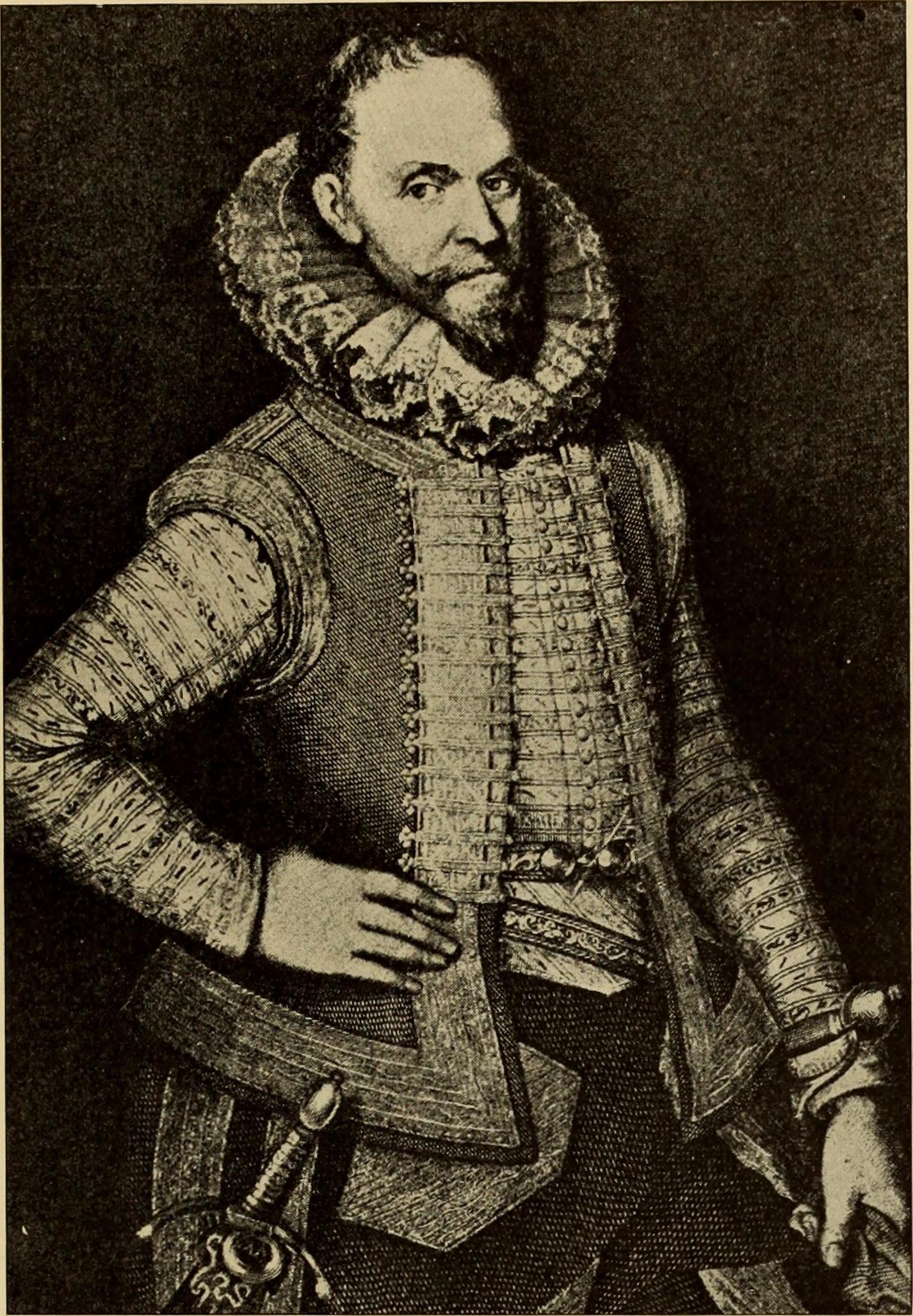
Internet Archive Book Images, 1909. Wikimedia Commons. No restrictions.
1736–1809
Daniel Brodhead
1
recorded events
Connected towns:
Pittsburgh, PABiography
Daniel Brodhead (1736–1809)
Continental Army Colonel and Commander of Fort Pitt
Born in 1736 in Albany County, New York, the man who would become the most aggressive Continental commander in the western theater grew up in a world defined by the collision of empires and peoples. The Brodhead family had deep roots in the Mid-Atlantic frontier, and young Daniel came of age in the borderlands where European American settlement pressed against the territories of the Iroquois and Delaware nations. This was not a genteel upbringing; it was an education in the realities of intercultural diplomacy, violence, and survival. Before the Revolution, Brodhead worked as a surveyor in Pennsylvania, a profession that carried him deep into the contested backcountry between the Allegheny Mountains and the Ohio Valley. Surveying in this era was not merely a technical occupation — it was an act of territorial assertion, mapping lands that Indigenous nations still controlled and that multiple colonial interests coveted. The geographical knowledge Brodhead accumulated during these years, his familiarity with river systems, mountain passes, and the locations of Native towns, would later inform his military campaigns in ways that few eastern officers could match. He understood the western country not as an abstraction on a map but as a physical reality he had walked and measured with his own instruments.
When the American colonies broke with Britain, Brodhead secured a commission in the Continental Army and entered a conflict that would stretch his abilities and temperament to their limits. He initially served in the early campaigns of the war in the eastern theater, gaining experience in conventional military operations before circumstances directed him toward the frontier command where his particular skills would matter most. The western theater of the Revolution was a different kind of war — not the set-piece battles of the mid-Atlantic campaigns but a grinding, dispersed struggle against British-allied Native American raiding parties, chronic supply shortages, and the vast distances that separated frontier garrisons from the Continental Army's main body. Brodhead's assignment to this theater reflected the Continental command's recognition that the war west of the Alleghenies demanded officers with frontier knowledge, not just parade-ground discipline. By the time he received orders to take command of Fort Pitt, the western settlements of Pennsylvania and Virginia were under relentless pressure. British agents operating from Detroit and Niagara had forged alliances with Seneca, Munsee, Shawnee, and other nations, channeling arms and encouragement to war parties that struck isolated farms and settlements with devastating effect. Brodhead stepped into a command that required both military aggression and political dexterity in equal measure.
Brodhead assumed command of Fort Pitt in 1779, and almost immediately he set about transforming a defensive outpost into a base for offensive operations. His most consequential action came in August 1779, when he led approximately six hundred Continental soldiers and militia on an expedition up the Allegheny River into the heart of Seneca and Munsee territory. The column pushed deep into country that had rarely seen an organized American military force, destroying a series of Native towns and burning the agricultural stores — corn, beans, and other crops — that sustained both the resident populations and the war parties that raided Pennsylvania's frontier. Warriors engaged Brodhead's forces at several points along the march, and the Americans killed a number of them in sharp skirmishes. The destruction was systematic and deliberate, aimed not merely at inflicting casualties but at dismantling the logistical infrastructure that made sustained Native resistance possible. This scorched-earth approach was consistent with the broader American strategy of 1779, which sought to break the power of the British-allied nations through the devastation of their homelands. Brodhead's expedition was the western arm of that strategy, and its execution demonstrated both his operational competence and the war's capacity for calculated destruction against civilian populations and resources.
The Brodhead Expedition was designed to coordinate with General John Sullivan's much larger campaign, which was simultaneously driving into Iroquois country from eastern New York and northern Pennsylvania. While Sullivan's force of several thousand men swept through the Finger Lakes region, Brodhead's smaller column struck from the west, creating a two-pronged assault that denied the British-allied nations any safe refuge. The timing was not accidental; Continental planners understood that synchronized pressure from multiple directions would prevent the Iroquois Confederacy and its allies from concentrating their defensive forces. Brodhead's march up the Allegheny complemented Sullivan's advance by extending the zone of destruction further west and striking nations that Sullivan's army could not reach. The immediate results were tangible: burned towns, destroyed food stores, and displaced populations who would face a brutal winter without shelter or provisions. Yet the larger strategic goal — permanently eliminating British influence among the western nations and securing the frontier — proved elusive. Within months, raiding resumed, and the British alliance system, anchored at Detroit, remained intact. The expedition was a tactical success that fell short of its strategic ambitions, a pattern that characterized much of the western war throughout the Revolution.
Brodhead's tenure at Fort Pitt was marked not only by his campaign against the Seneca and Munsee but also by persistent friction with his subordinates, militia leaders, and the civilian population of the surrounding settlements. Command on the frontier was an inherently fractious business: supplies were chronically inadequate, militia units answered to their own officers and local political authorities, and the Continental Army's chain of command stretched thinly across hundreds of miles of wilderness. Brodhead clashed with several of his officers and with frontier leaders who questioned his decisions and resented his authority. These disputes damaged his effectiveness and ultimately contributed to his removal from command. He was superseded by the more famous George Rogers Clark, whose own western campaigns had captured the public imagination in ways that Brodhead's more methodical operations had not. Brodhead's relationship with the Native nations in the region was also complex; while he waged aggressive war against British-allied groups, he attempted to maintain fragile alliances with nations that had declared neutrality or friendship with the Americans, a balancing act that satisfied few parties. His command illustrated the impossibility of any single officer controlling the chaotic political and military landscape west of the Alleghenies during the Revolution.
After his removal from command, Brodhead remained in Pennsylvania, where he lived until his death in 1809. His legacy sits in a complicated space within the history of the American Revolution — less celebrated than Sullivan's parallel campaign, less romantic than Clark's exploits in the Illinois Country, yet no less significant in its consequences for the peoples and landscapes it touched. The Brodhead Expedition was part of a broader pattern of punitive warfare against Indigenous nations that would continue for over a century, and its methods — the destruction of towns, the burning of crops, the displacement of entire communities — became a template for American expansion into the trans-Appalachian West. For students of the Revolution, Brodhead's story reveals the western war in all its moral complexity: a struggle for national independence that was simultaneously a war of conquest, fought by men whose courage and determination coexisted with a capacity for systematic destruction. His command at Fort Pitt represents a chapter of the Revolution that deserves more attention than it typically receives, precisely because it challenges simpler narratives about what the war was and what it meant.
WHY DANIEL BRODHEAD MATTERS TO PITTSBURGH
Daniel Brodhead's command of Fort Pitt from 1779 to 1781 represents the most active period of Continental offensive operations ever launched from Pittsburgh during the Revolutionary War. It was from this post — at the strategic confluence of the Allegheny and Monongahela rivers — that Brodhead organized and launched his August 1779 expedition up the Allegheny, turning Pittsburgh from a defensive garrison into a staging ground for American power projection into the western interior. His story reminds students and visitors that Pittsburgh was not a peripheral outpost during the Revolution but a critical nexus of military strategy, frontier diplomacy, and the violent process of American expansion. Understanding Brodhead's tenure helps us see the Revolution as it was experienced west of the mountains — not as a war of grand armies but as a desperate, often brutal struggle fought from exactly the ground where Pittsburgh stands today.
TIMELINE
- 1736: Born in Albany County, New York, into a family with established frontier roots in the Mid-Atlantic colonies.
- Pre-1775: Works as a surveyor in western Pennsylvania, gaining detailed knowledge of the trans-Appalachian backcountry.
- 1775–1776: Receives a commission in the Continental Army and serves in early campaigns of the Revolutionary War.
- 1779: Assumes command of Fort Pitt, taking responsibility for the defense of Pennsylvania's and Virginia's western frontier.
- August 1779: Leads the Brodhead Expedition of approximately 600 troops up the Allegheny River, destroying Seneca and Munsee towns and agricultural stores in coordination with General Sullivan's campaign.
- 1779–1781: Commands Fort Pitt during the most sustained period of Continental offensive operations from Pittsburgh, while contending with supply shortages and disputes with subordinates.
- 1781: Superseded in western command by George Rogers Clark following persistent conflicts with subordinates and frontier leaders.
- 1809: Dies in Pennsylvania.
SOURCES
- Fischer, Joseph R. A Well-Executed Failure: The Sullivan Campaign against the Iroquois, July–September 1779. University of South Carolina Press, 1997.
- Downes, Randolph C. Council Fires on the Upper Ohio: A Narrative of Indian Affairs in the Upper Ohio Valley until 1795. University of Pittsburgh Press, 1940.
- Sipe, C. Hale. The Indian Wars of Pennsylvania. Telegraph Press, 1929.
- Pennsylvania Historical and Museum Commission. Pennsylvania Archives, Series 1, Volumes VII–VIII (correspondence relating to Fort Pitt and the western frontier). Harrisburg, PA.
Events
Aug
1779
Brodhead Expedition up the Allegheny RiverPittsburghContinental Army Colonel# The Brodhead Expedition Up the Allegheny River, 1779 By the summer of 1779, the western frontier of the American Revolution had become a theater of relentless and devastating violence. For years, British-allied Native American war parties, operating with support from the garrison at Fort Niagara and encouraged by British strategy to destabilize the American backcountry, had struck settlements across western Pennsylvania, New York, and the Ohio Country. Farms were burned, families killed or taken captive, and entire communities abandoned in panic. The Continental Congress and General George Washington recognized that something had to be done to neutralize the threat, or the frontier would collapse entirely, draining manpower and morale from the broader war effort. The response came in the form of two coordinated military campaigns launched in the late summer of 1779: the large-scale Sullivan-Clinton Campaign through Iroquois country in New York, and a smaller but no less significant expedition led by Colonel Daniel Brodhead up the Allegheny River out of Fort Pitt, near present-day Pittsburgh, Pennsylvania. Colonel Brodhead, who commanded the Western Department of the Continental Army from his headquarters at Fort Pitt, had initially hoped to join forces with Major General John Sullivan's column advancing through New York. Logistical realities made that junction impossible, however, and Brodhead instead planned an independent strike northward into the homeland of the Seneca and Munsee Delaware peoples living along the upper Allegheny River in what is now northwestern Pennsylvania. In August 1779, Brodhead departed Fort Pitt with a force of approximately 600 men, a mix of Continental regulars and frontier militia. The column moved up the Allegheny, pushing deep into territory that had served as a staging ground for raids against American settlements. Over the course of several weeks, the expedition destroyed roughly a dozen Native American towns, burned extensive stores of corn and other foodstuffs critical for winter survival, killed an uncertain number of warriors in skirmishes, and took captives before withdrawing back to Fort Pitt in September. The expedition was designed to complement the Sullivan-Clinton Campaign, which was simultaneously laying waste to the Haudenosaunee homeland hundreds of miles to the northeast. Together, the two operations represented a sweeping strategic effort to cripple the capacity of British-allied Native American nations to wage offensive war along the entire northern frontier. By destroying towns and food supplies just before winter, the campaigns aimed to force Native communities into dependency on the British at Fort Niagara and to eliminate the forward bases from which raids were launched. In this sense, the Brodhead Expedition was not an isolated frontier skirmish but a deliberate component of a continent-wide military strategy directed from Washington's headquarters. Brodhead's force achieved its immediate tactical objectives convincingly. The towns along the Allegheny were reduced to ashes, the carefully stored harvests that would have sustained communities through winter were gone, and the expedition demonstrated that Fort Pitt could project military power deep into territory that Native peoples and their British allies had considered relatively secure. The psychological and material impact on the affected Seneca and Munsee communities was severe, displacing families and disrupting the networks of subsistence and alliance that sustained resistance. Yet the strategic results proved frustratingly temporary. Within a single season, Native American raiding capacity along the western Pennsylvania frontier recovered. Warriors displaced by the expedition regrouped, often with renewed British support, and attacks on American settlements continued with grim regularity through the remaining years of the war. The fundamental problem was one that punitive expeditions could not solve: destroying towns and crops caused suffering, but without permanent occupation of the contested territory, there was nothing to prevent communities from rebuilding and warriors from returning. The Americans lacked the manpower and resources to garrison the upper Allegheny, and so the cycle of raid and reprisal ground on. The Brodhead Expedition matters in the broader story of the American Revolution because it illustrates both the ambition and the limitations of American military strategy on the frontier. It reveals how the war in the west was fought not only between empires but against and among Indigenous nations whose own political decisions, alliances, and resistance shaped the conflict in ways that neither the Continental Congress nor the British fully controlled. The expedition also underscores the enormous human cost borne by Native communities caught in the path of a war that, regardless of its outcome, threatened their lands and sovereignty. For the residents of Pittsburgh and western Pennsylvania, the Brodhead Expedition is a reminder that the Revolution was not won only at Yorktown or Valley Forge but was also contested in the river valleys and forests of their own backyard, in campaigns whose consequences echoed long after the last shots were fired.