

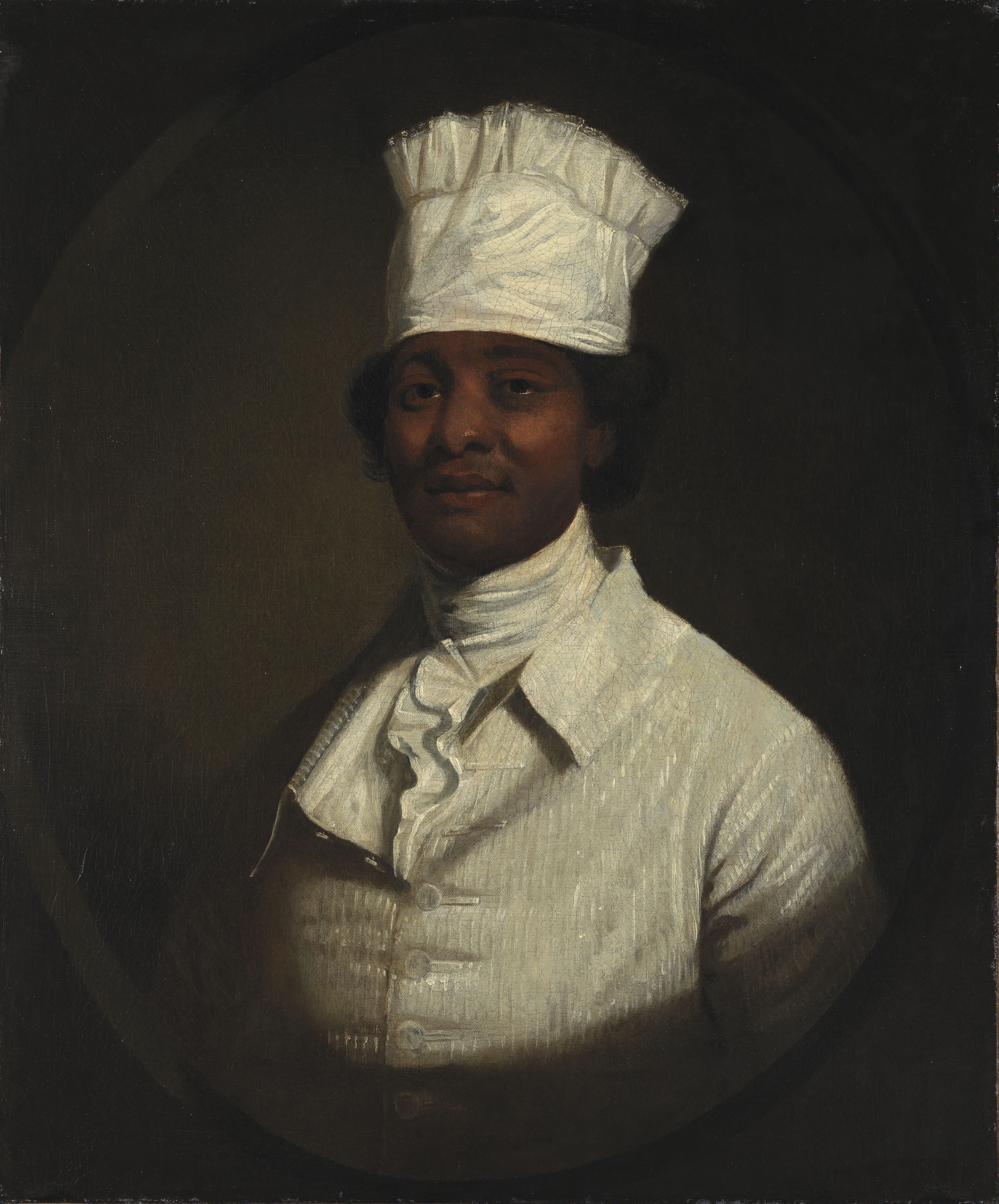
Gilbert Stuart, betw. Wikimedia Commons. Public domain.
1733–1798
George Read
4
recorded events
Connected towns:
Dover, DEBiography
George Read: Delaware's Cautious Patriot and Constitutional Architect
Born in 1733 in Cecil County, Maryland, the man who would become one of Delaware's most consequential statesmen entered a world where the boundaries between colonies were porous and political loyalties were far from fixed. George Read's family relocated during his youth, and he received his legal training in Philadelphia before establishing a practice in New Castle, Delaware, where he quickly rose to prominence. Delaware was one of Britain's smallest North American possessions — a slender territory wedged between Pennsylvania and Maryland, its population a patchwork of Quakers, Anglicans, and Presbyterians whose political sympathies rarely aligned. Navigating this fractured landscape required a particular temperament: measured, deliberate, and attuned to the fragile mechanics of consensus. Read possessed that temperament in abundance. His conservative instincts did not make him timid, but they made him careful. He built his reputation on legal craftsmanship and a willingness to reason through problems methodically before committing himself to a course of action. These qualities — patience, precision, and an almost lawyerly insistence on getting the foundation right before raising the walls — would define his contributions to the revolutionary cause and to the constitutional architecture that followed it.
Entry into the Revolutionary Crisis
Read's path into the revolutionary movement was gradual, reflecting both his temperament and the peculiar politics of Delaware. He served in the colonial legislature and became a delegate to the Continental Congress, where he represented a colony whose small size made every political calculation a matter of survival. Unlike firebrands in Virginia or Massachusetts who thundered against British tyranny, Read approached the imperial crisis with the caution of a man who understood that Delaware had little margin for error. A misstep in the contest between Crown and colonies could leave Delaware absorbed by its larger neighbors or crushed by British retaliation. Yet Read was no loyalist. He opposed the Stamp Act and supported colonial resistance to Parliamentary overreach, believing firmly that the rights of Englishmen extended across the Atlantic. His resistance, however, was rooted in legal argument rather than revolutionary fervor. He wanted grievances redressed within the constitutional framework of the British Empire, not outside it. This put him in an increasingly uncomfortable position as the crisis deepened through 1775 and into 1776, when voices demanding outright independence grew louder and more insistent. Read listened, deliberated, and held his ground — until the ground itself shifted beneath him.
The Vote That Nearly Wasn't
When Richard Henry Lee's resolution for independence came before the Continental Congress in the summer of 1776, Read voted against it. He believed the timing was premature and that avenues for reconciliation had not been fully exhausted. This was not an act of cowardice but of conviction — Read genuinely believed that rushing toward independence without adequate preparation could doom the enterprise. Delaware's three-man delegation was now deadlocked: Thomas McKean voted for independence, Read voted against, and Caesar Rodney was absent in Delaware attending to militia business and a local loyalist insurrection. What followed became one of the Revolution's most celebrated episodes: McKean sent an urgent message to Rodney, who mounted his horse and rode through the night, arriving in Philadelphia on July 2 just in time to break the tie in favor of independence. Read accepted the outcome. When the Declaration of Independence was formally engrossed and presented for signing, he put his name to it without hesitation, having concluded that unity now mattered more than his reservations. His signature represented something important — the capacity of principled dissent to yield to collective purpose when the moment demanded it.
Constitutional Builder in a Revolutionary Moment
With independence declared, Read turned his formidable legal mind to the practical question of governance. He became the principal drafter of Delaware's 1776 state constitution, working from Dover to create an institutional framework for a state that had never before governed itself independently. This was no abstract exercise — Delaware needed a functioning government immediately, with the British war machine mobilizing and loyalist sentiment still simmering in the colony's southern counties. The constitution Read crafted established a bicameral legislature, an executive council, and a judiciary, balancing the competing interests of Delaware's diverse communities. Meanwhile, the war itself pressed close. When Colonel John Haslet, commander of the Delaware Regiment and one of the Continental Army's finest officers, was killed at the Battle of Princeton in January 1777, the loss underscored how directly the conflict touched Delaware's small population. Read continued serving in the Continental Congress through these perilous years, managing the delicate work of sustaining Delaware's commitment to the war effort while simultaneously building the legal and governmental structures that would outlast the fighting. His dual role — revolutionary legislator and constitutional architect — made him indispensable to a state that could afford to waste none of its limited leadership.
The Art of Alliance and Advocacy
Read's influence was magnified by his relationships with other key figures and by his strategic understanding of how small states could protect their interests within larger coalitions. His working partnership with Thomas McKean and Caesar Rodney — Delaware's other delegates to the Continental Congress — was essential, even though the three men did not always agree. McKean was more impetuous, Rodney more politically adroit; Read provided the legal ballast that kept Delaware's delegation grounded. At the Constitutional Convention of 1787 in Philadelphia, Read emerged as one of the most active and vocal delegates, forging alliances with representatives from other small states — particularly Connecticut's Roger Sherman and Oliver Ellsworth — to advocate for equal representation in the Senate. Read went further than most, at one point suggesting that state boundaries be redrawn entirely to equalize their size, a radical proposal that revealed how deeply he feared the domination of large states like Virginia and Pennsylvania. His advocacy helped produce the Connecticut Compromise, which gave every state equal representation in the upper chamber of Congress. Without this agreement, the Constitution might never have been completed, and without Read's persistent, carefully argued pressure, the compromise might never have taken the form it did.
Legacy of the Careful Revolutionary
Read's story challenges the popular image of the American Revolution as a movement driven solely by bold declarations and battlefield heroics. His legacy rests on something less dramatic but equally essential: the painstaking legal and constitutional work that transformed a rebellion into a republic. He presided over Delaware's ratification convention in Dover in December 1787, where delegates voted unanimously to approve the new Constitution, making Delaware the first state to ratify and earning it the enduring title "The First State." Read went on to serve as one of Delaware's first United States Senators and later as Chief Justice of Delaware, continuing to shape the legal foundations of the new nation until his death in 1798. His career arc — from cautious dissenter to signer of the Declaration to architect of state and federal constitutions — illustrates a truth about the founding era that is often overlooked: that the Revolution required not only courage but craft, not only passion but patience. Read was never the most famous founder, but he was among the most consequential for the constitutional framework that endures to this day. His steadiness in moments of crisis and his insistence on getting the legal architecture right gave permanence to what might otherwise have been a fleeting experiment.
WHY GEORGE READ MATTERS TO DOVER
George Read's story is inseparable from Dover's role as the cradle of Delaware's independence and constitutional identity. It was in Dover that Read helped shape the 1776 state constitution that gave Delaware its first framework of self-governance, and it was in Dover that he presided over the ratification convention that made Delaware the first state to embrace the new federal Constitution in December 1787. For students and visitors exploring Dover today, Read's legacy is a reminder that revolutions are won not only on battlefields but in convention halls and drafting rooms, where careful legal minds translate ideals into institutions. His willingness to dissent, to deliberate, and ultimately to commit reveals the messy, human reality behind the founding — a reality that makes the achievement all the more remarkable.
TIMELINE
- 1733: Born in Cecil County, Maryland
- 1753: Admitted to the bar after legal training in Philadelphia; begins practice in New Castle, Delaware
- 1765: Opposes the Stamp Act as a member of Delaware's colonial legislature
- 1774: Elected as a delegate to the Continental Congress
- 1776: Votes against Lee's resolution for independence on July 1–2; signs the Declaration of Independence in August
- 1776: Serves as principal drafter of Delaware's first state constitution, based in Dover
- 1787: Serves as a leading delegate at the Constitutional Convention in Philadelphia, advocating for small-state representation
- 1787: Presides over Delaware's ratification convention in Dover; Delaware becomes the first state to ratify the Constitution on December 7
- 1789: Elected as one of Delaware's first United States Senators
- 1793: Appointed Chief Justice of Delaware
- 1798: Dies on September 21 in New Castle, Delaware
SOURCES
- Munroe, John A. Colonial Delaware: A History. KTO Press, 1978.
- Ferris, Robert G., and James H. Charleton. The Signers of the Declaration of Independence. Interpretive Publications, 1986.
- Read, William Thompson. Life and Correspondence of George Read, Signer of the Declaration of Independence. J.B. Lippincott & Co., 1870.
- National Archives. "America's Founding Fathers: Delegates to the Constitutional Convention — George Read." https://www.archives.gov/founding-docs/founding-fathers-delaware#Read
- Farrand, Max. The Records of the Federal Convention of 1787. Yale University Press, 1911.
Events
Jun
1776
Caesar Rodney's Midnight Ride to PhiladelphiaDoverDelaware Delegate to Continental Congress**Caesar Rodney's Midnight Ride: The Vote That Almost Wasn't** By the summer of 1776, the American colonies stood at a crossroads. For more than a year, armed conflict with Great Britain had raged following the battles of Lexington and Concord, yet many delegates to the Continental Congress in Philadelphia still hesitated to sever ties with the Crown entirely. Independence was not a foregone conclusion. It was a radical, dangerous proposition — one that, if it failed, would mark every man who supported it as a traitor. In this charged atmosphere, Richard Henry Lee of Virginia introduced a resolution on June 7, 1776, declaring that the united colonies "are, and of right ought to be, free and independent States." Debate was fierce, and a final vote was postponed until July. During those intervening weeks, delegates lobbied, argued, and agonized. Every colony's vote mattered, and the Congress wanted something as close to unanimity as possible to present a united front to the world. It was against this backdrop that one man's grueling overnight ride through a thunderstorm would prove decisive. Delaware sent three delegates to the Continental Congress: Caesar Rodney, Thomas McKean, and George Read. These three men reflected the divided sentiments of their colony and, indeed, of America itself. Thomas McKean was a firm advocate for independence, convinced that the colonies had no future under British rule and that the time for half-measures had passed. George Read, by contrast, was more cautious. Though he was no loyalist, Read harbored deep reservations about a complete break with Britain, fearing the consequences of so drastic a step. With the two men standing on opposite sides of the question, Delaware's vote in Congress would be deadlocked — unless Caesar Rodney, the third delegate, was present to break the tie. But Rodney was not in Philadelphia. He had returned to Dover, Delaware, to attend to pressing business, including managing a loyalist uprising in Sussex County and dealing with his own deteriorating health. Rodney suffered from asthma and facial cancer, a condition that caused him constant pain and that he often concealed behind a green silk scarf. When Thomas McKean sent an urgent message informing Rodney that the independence vote was imminent and that his presence was desperately needed, Rodney did not hesitate. Despite his ailments, he mounted his horse and set out on a punishing ride of approximately fifty miles from Dover to Philadelphia. The journey was harrowing. Rodney rode through the night, battling a violent thunderstorm that turned roads to mud and made progress agonizingly slow. He pressed on through darkness, rain, and exhaustion, understanding that the stakes could not have been higher. When he arrived at the Pennsylvania State House on July 2, 1776 — disheveled, soaked, and still wearing his spurs — he strode into the chamber just in time to cast his vote. His presence broke Delaware's deadlock and allowed the colony to vote in favor of independence. Notably, George Read, seeing the strength of sentiment in the room and recognizing the importance of unity, ultimately acquiesced and did not formally dissent, allowing Delaware's vote to be recorded as unanimous. Rodney's arrival helped ensure that the July 2 vote produced the decisive, unified result that the Continental Congress needed to move forward with confidence. On that day, twelve of the thirteen colonies voted in favor of Lee's resolution, with New York abstaining temporarily before later adding its approval. Two days later, on July 4, Congress adopted the final text of the Declaration of Independence, the document that would announce to the world the birth of a new nation. Caesar Rodney's ride is often overshadowed in popular memory by Paul Revere's more famous midnight gallop, yet its significance to the founding of the United States is profound. Without Rodney's determination to endure pain, illness, and a brutal storm, the Delaware delegation would have been split, potentially undermining the show of colonial unity that Congress considered essential. His sacrifice exemplified the personal courage that independence demanded — not only on battlefields, but in legislative chambers and on rain-soaked roads in the dead of night. Today, Rodney's likeness appears on the Delaware state quarter and in statues across his home state, enduring reminders that the birth of American independence hinged not only on grand speeches and bold ideas, but on one ailing man's refusal to let a thunderstorm stand between him and history.
Sep
1776
Delaware Adopts State ConstitutionDoverDelaware Delegate to Continental Congress# Delaware Adopts Its First State Constitution In the late summer of 1776, as the newly declared United States of America grappled with the enormous task of transforming revolutionary ideals into functioning government, the small but strategically significant colony of Delaware took a bold and consequential step. On September 20, 1776, delegates gathered in the town of New Castle convened a constitutional convention that would, within just weeks, produce the first state constitution for Delaware, formally establishing it as a sovereign and independent state separate from both British rule and its long-standing administrative ties to Pennsylvania. This act of political creation was among the earliest efforts by any of the thirteen former colonies to build a framework of self-governance from the ground up, and it reflected both the urgency and the optimism of the revolutionary moment. The road to Delaware's constitution was shaped by the broader currents of the American Revolution. For decades, Delaware had existed as a collection of three lower counties loosely connected to Pennsylvania under proprietary governance. While Delawareans shared many grievances with their fellow colonists regarding British taxation and parliamentary overreach, the colony's political culture was cautious and somewhat divided. When the Continental Congress began pressing the colonies in the spring of 1776 to suppress royal authority and form new governments, Delaware's leaders recognized that the moment for decisive action had arrived. The Declaration of Independence, adopted on July 4, 1776, further accelerated the process by making clear that each state would need to establish its own legitimate governing structure to replace the colonial apparatus that had been swept away. George Read, one of Delaware's delegates to the Continental Congress, emerged as the principal architect of the new constitution. Read was a lawyer and experienced public servant who had played a complicated but ultimately pivotal role in the independence movement. He had initially voted against the resolution for independence in Congress, reflecting the hesitancy of many moderate Delawareans, but he signed the Declaration of Independence once it was adopted, demonstrating his commitment to the collective cause. His legal expertise and political stature made him the natural choice to lead the drafting effort, and he brought both pragmatism and careful thought to the task of designing a government that could function amid the pressures of war. The constitution that the convention adopted on September 21, 1776, established a governmental structure that balanced power among three branches. It created a bicameral legislature consisting of an upper and lower house, a President who would serve as the state's chief executive and who would be chosen not by popular vote but by the legislature itself, and an independent judiciary designed to interpret and uphold the laws. The document also designated Dover as the state capital, moving the center of governance to a more centrally located and secure position within the state. While the constitution was imperfect by modern standards and would eventually be replaced, it represented a remarkable achievement in republican governance, crafted under extraordinary time pressure during an active war for survival. Delaware's adoption of its constitution mattered far beyond the state's borders. It demonstrated that the principles articulated in the Declaration of Independence could be translated into practical, functioning institutions of government. Each state that successfully organized itself strengthened the collective revolutionary effort by providing stability, enabling the collection of taxes, the raising of militia forces, and the administration of justice at a time when the Continental Army under George Washington was struggling against British forces. Delaware, despite its small size, proved that self-governance was not merely an abstract philosophical ideal but a workable reality. In the years that followed, Delaware's constitutional framework would be tested and refined. George Read continued to serve the state and nation with distinction, eventually helping to shape the federal Constitution at the Philadelphia Convention of 1787. The lessons learned in Dover in 1776, about balancing power, creating representative institutions, and translating revolutionary aspirations into law, echoed throughout the founding era and remain part of the enduring legacy of American constitutional governance.
Jan
1777
Colonel Haslet Killed at PrincetonDoverDelaware Delegate to Continental Congress# Colonel Haslet Killed at Princeton The Battle of Princeton on January 3, 1777, delivered a critical victory to General George Washington's beleaguered Continental Army, but for the people of Delaware, that triumph came at a devastating personal cost. Colonel John Haslet, the commanding officer of the First Delaware Regiment and one of the most respected military leaders in the young nation's fight for independence, was killed during the engagement. His death sent shockwaves through Dover and the broader Delaware community, forcing the state's political and military leaders to confront not only their grief but also the enormous practical challenge of rebuilding a regiment that had already been decimated by months of brutal campaigning. Colonel Haslet had been with the Delaware regiment since its very formation, shaping it into one of the most disciplined and effective units in the Continental Army. Known for their distinctive blue coats faced with red, the men of the First Delaware had earned a formidable reputation on the battlefield. That reputation, however, had come at a terrible price. During the Battle of Long Island in August 1776, the regiment had suffered catastrophic losses as Washington's forces were outmaneuvered and nearly destroyed by the British army under General William Howe. The retreat from Long Island, followed by the broader withdrawal across New Jersey in the autumn of 1776, left the Continental cause at its lowest point. Enlistments were expiring, morale was plummeting, and the very survival of the revolution hung in doubt. It was in this desperate context that Washington made his famous decision to cross the Delaware River on the night of December 25, 1776, striking the Hessian garrison at Trenton in a surprise attack that reinvigorated the patriot cause. Emboldened by that success, Washington pressed his advantage and moved against a British force at Princeton just over a week later. Colonel Haslet, despite the battered state of his regiment, was present for the engagement. During the fighting, as American troops clashed with British regulars in the fields and streets around the town, Haslet was struck and killed. Accounts suggest he fell early in the battle while rallying troops during a critical moment in the assault. His willingness to lead from the front, a quality that had defined his command throughout the war, ultimately cost him his life. The news of Haslet's death reached Dover at a time when Delaware's civil government was already under enormous strain. George Read, a prominent Delaware delegate to the Continental Congress and a signer of the Declaration of Independence, was among the political leaders who had to grapple with the aftermath. Read, who had initially harbored reservations about independence but ultimately supported the patriot cause, understood that the loss of Haslet was not merely symbolic. The colonel had been the organizational heart of Delaware's military contribution to the Continental Army. Without him, the task of appointing new officers and recruiting fresh soldiers to fill the regiment's thinned ranks fell to Dover's government under extraordinarily difficult circumstances. Finding men willing to serve was already a challenge across the colonies, and Delaware, one of the smallest states, had a limited population from which to draw. The death of Colonel Haslet at Princeton illustrates a reality of the Revolutionary War that is sometimes overshadowed by its grand narratives of victory and nation-building. For small communities like Dover, the war was deeply personal. Each loss reverberated through networks of family, commerce, and governance. Haslet was not simply a name on a casualty list; he was a leader whose absence created a void that local officials scrambled to fill while simultaneously managing the political complexities of a revolution still very much in doubt. His sacrifice at Princeton, coming at the very moment when the Continental Army was clawing its way back from the brink of collapse, reminds us that the cost of American independence was borne unevenly and intimately by communities that gave their best leaders to a cause with no guaranteed outcome.
May
1787
Delaware Sends Delegates to Constitutional ConventionDoverDelaware Delegate to Continental Congress# Delaware Sends Delegates to the Constitutional Convention In the spring of 1787, as the young American republic struggled to find its footing in the uncertain years following the Revolutionary War, the state of Delaware took a decisive step that would help shape the very foundation of the United States government. The Delaware General Assembly, meeting in the capital city of Dover, appointed five delegates to attend the Constitutional Convention in Philadelphia: George Read, Gunning Bedford Jr., John Dickinson, Richard Bassett, and Jacob Broom. These men carried with them not only the hopes of their small state but also a firm and uncompromising mandate — they were explicitly instructed not to agree to any changes that would diminish Delaware's equal vote in the national government. This single instruction, born from the anxieties of a small state wary of being overshadowed by its larger neighbors, would prove to be one of the most consequential directives in American constitutional history. The road to the Constitutional Convention had been a troubled one. Although the colonies had won their independence from Great Britain through the Revolutionary War, the peace that followed victory revealed deep structural weaknesses in the national government. The Articles of Confederation, ratified in 1781, had established a loose alliance of sovereign states with a weak central government that lacked the power to levy taxes, regulate commerce, or enforce its own laws. By the mid-1780s, economic turmoil, interstate disputes, and events like Shays' Rebellion in Massachusetts made it painfully clear that the existing framework was inadequate. A convention was called in Philadelphia to address these deficiencies, and every state was invited to send representatives. Delaware's delegates were men of considerable experience and political sophistication. George Read, who had served as a delegate to the Continental Congress and was one of the signers of the Declaration of Independence, was a seasoned statesman deeply committed to the principle of equal state representation. John Dickinson, widely known as the "Penman of the Revolution" for his influential writings during the struggle for independence, brought intellectual gravitas and a reputation that extended well beyond Delaware's borders. Richard Bassett, a wealthy planter and lawyer who had served the patriot cause during the Revolutionary War, contributed both political acumen and deep connections within Delaware's leadership. Together with Bedford and Broom, these five delegates formed a delegation that punched far above its weight relative to Delaware's small size and population. The central tension at the Constitutional Convention revolved around representation. Larger states like Virginia and Pennsylvania favored a system of proportional representation, in which states with greater populations would hold more power in the national legislature. For smaller states like Delaware, this proposal was existentially threatening. Under the Articles of Confederation, each state had enjoyed one equal vote regardless of size, and Delaware's delegates were determined to preserve that principle. Gunning Bedford Jr. reportedly went so far as to warn that smaller states might seek foreign alliances if their interests were trampled, underscoring the intensity of the debate. The resolution came in the form of the Connecticut Compromise, also known as the Great Compromise, which established a bicameral legislature. The House of Representatives would be based on proportional representation, satisfying the larger states, while the Senate would grant each state two seats and an equal vote, protecting the interests of smaller states like Delaware. Delaware's unwavering insistence on equal representation was instrumental in bringing about this solution, which remains a cornerstone of American government to this day. Delaware's role at the Constitutional Convention illustrates a broader truth about the founding of the United States: the nation was not built by large states alone but through negotiation, compromise, and the determined voices of smaller states that refused to be silenced. Fittingly, Delaware became the first state to ratify the new Constitution on December 7, 1787, earning it the enduring nickname "The First State" and cementing its place at the very beginning of the American constitutional story.