

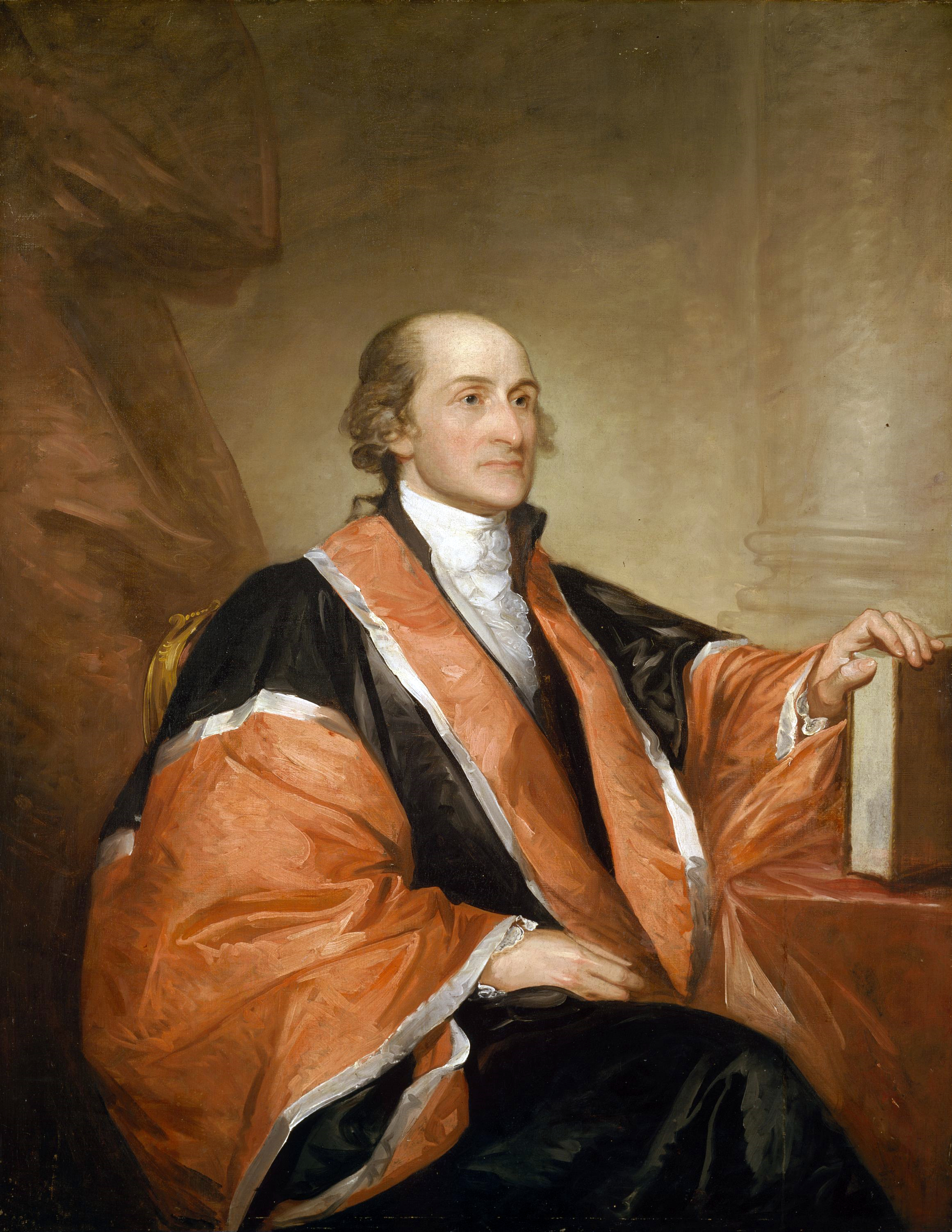
Gilbert Stuart, 1794. Wikimedia Commons. Public domain.
1752–1790
John Stewart
1
recorded events
Connected towns:
Stony Point, NYBiography
John Stewart (1752–1790)
Continental Army Major and Forlorn Hope Commander at Stony Point
By the time the Continental Army had endured the brutal winter at Valley Forge, the stinging defeats at Brandywine and Germantown, and the grueling campaigns that followed, its officer corps had been forged into something qualitatively different from the enthusiastic but amateur force that had taken the field in 1775. Among the professionals who emerged from this crucible was John Stewart, an officer whose career traced the arc of the army's own transformation from a collection of militia bands into a disciplined fighting force. Details of Stewart's early life remain scarce in the historical record, a common fate for officers who served with distinction but died young before the republic they helped create had fully established its commemorative traditions. What is clear is that by the summer of 1779, Stewart had earned enough trust and demonstrated enough battlefield competence to attract the attention of Brigadier General Anthony Wayne, one of the Continental Army's most aggressive and exacting commanders. Wayne was assembling a handpicked assault force for a mission that demanded officers of extraordinary nerve — men willing to walk deliberately into concentrated enemy fire without returning a single shot. Stewart was precisely the kind of officer Wayne needed.
On the night of July 15–16, 1779, Stewart led the second forlorn hope column in Wayne's audacious assault on the British fortification at Stony Point, a rocky promontory commanding the Hudson River. The term "forlorn hope" — derived from the Dutch verloren hoop, meaning "lost troop" — described volunteer units that advanced ahead of the main body into the teeth of defensive fire, absorbing the first volleys so that the columns behind them could exploit the breach. Stewart's volunteers crossed the tidal flats south of the fort under cover of darkness, wading through marshland and shallow water while maintaining the strict silence Wayne had demanded. Their muskets were unloaded by order; bayonets alone would decide the fight. When they reached the abatis — barriers of sharpened stakes and felled timber designed to slow and expose attackers — Stewart's men hacked through the obstacles while British musketry tore into their ranks. His unit suffered the heaviest casualties of the entire operation, but they carved open the path through which the main assault force surged, overwhelming the garrison in a coordinated attack that was over in roughly thirty minutes.
The men of the forlorn hope understood exactly what they were volunteering for. These were not soldiers caught in an unexpected firefight or swept forward by the momentum of a larger formation; they were men who stepped forward knowing that their role was to absorb punishment so that others could succeed. Stewart led them into a kill zone where the British defenders held every advantage — elevation, prepared positions, and the knowledge that any attacker would have to cross open ground under fire before reaching the walls. The stakes were not abstract. Every man in that column risked death or maiming for a cause that, in the summer of 1779, still felt uncertain. The war had ground into a strategic stalemate in the northern theater, and American morale needed a victory badly. Congress recognized what Stewart and his counterpart, Lieutenant François-Louis de Fleury, who led the first forlorn hope, had risked by awarding each a silver medal — one of the rarest individual honors bestowed during the entire Revolution. Only a handful of officers received Congressional medals for battlefield valor during the war.
Stewart's Congressional silver medal placed him in an extraordinarily select group, and his story illuminates a dimension of the American Revolution that popular memory often overlooks. The war was not won solely by inspired militia or brilliant generalship; it was won in significant part by professional soldiers who had learned their trade through years of bitter experience and who executed complex operations with precision under terrifying conditions. Stewart died in 1790, just as the new constitutional republic was finding its footing, and his early death contributed to his relative obscurity compared to more senior figures from the Stony Point action. Yet his willingness to lead the most dangerous element of one of the war's most celebrated operations speaks to a quality that no amount of strategic planning can manufacture: the courage of individual officers who understood the cost of what they were about to do and did it anyway. His medal, his casualties, and his silence in the historical record all testify to the same truth — that the Revolution was carried forward by men whose sacrifices far exceeded their fame.
WHY JOHN STEWART MATTERS TO STONY POINT
The rocky promontory at Stony Point is one of the places where visitors can stand on the exact ground where the American Revolution was decided not by grand strategy but by individual acts of extraordinary courage. John Stewart's story strips away the comfortable distance of history and forces us to confront what the assault actually required: men walking silently through marsh water in darkness, muskets deliberately unloaded, advancing into concentrated fire with nothing but bayonets and the knowledge that they were expected to fall so that others could break through. His Congressional silver medal — among the rarest honors of the entire war — marks him as one of the Revolution's most recognized battlefield leaders, and his story teaches students that the liberty celebrated in documents was purchased in moments of visceral, physical sacrifice at places exactly like this one.
TIMELINE
- 1752: Born; early life details remain largely unrecorded in surviving documents
- 1775–1778: Serves in the Continental Army during the early and middle years of the Revolutionary War, gaining combat experience through multiple campaigns
- 1779: Holds the rank of Major in the Continental Army by the summer campaign season
- July 15–16, 1779: Leads the second forlorn hope column in Brigadier General Anthony Wayne's night assault on the British fort at Stony Point, New York; his unit suffers the heaviest casualties of the operation
- 1779: Congress awards Stewart a silver medal for gallantry at Stony Point, alongside Lieutenant François-Louis de Fleury
- 1790: Dies at approximately thirty-eight years of age
SOURCES
- Johnston, Henry P. The Storming of Stony Point on the Hudson, Midnight, July 15, 1779. James T. White & Company, 1900.
- Journals of the Continental Congress, 1774–1789. Volume XIV (1779). Library of Congress. https://memory.loc.gov/ammem/amlaw/lwjc.html
- Loubat, J. F. The Medallic History of the United States of America, 1776–1876. New York, 1878.
- National Park Service. "Stony Point Battlefield State Historic Site." https://www.nps.gov/places/stony-point-battlefield.htm
Events
Jul
1779
Congress Awards Gold and Silver Medals for Stony PointStony PointContinental Army Major**Congress Awards Gold and Silver Medals for Stony Point** In the summer of 1779, the American Revolutionary War had reached a frustrating stalemate in the northern theater. The British, having abandoned Philadelphia the previous year, had consolidated their forces in and around New York City. As part of their strategy to control the Hudson River—a vital artery linking New England to the rest of the colonies—British forces seized Stony Point, a rocky promontory jutting into the Hudson River about thirty miles north of New York. The British fortified the position heavily, garrisoning it with roughly six hundred troops and establishing it as a threatening outpost that menaced American communications and supply lines. General George Washington, keenly aware of the strategic significance of the Hudson Highlands, began formulating a plan to retake the position. For this daring mission, he turned to one of his most aggressive and capable subordinates: Brigadier General Anthony Wayne. On the night of July 16, 1779, Wayne led approximately 1,350 soldiers of the Corps of Light Infantry in a meticulously planned assault on Stony Point. The attack was remarkable for its audacity and discipline. Washington and Wayne ordered that the assault be carried out almost entirely with bayonets, with muskets unloaded to prevent premature firing that would alert the garrison and sow confusion among the attackers. The troops advanced in two columns through marshland and up steep, rocky terrain under cover of darkness. Lieutenant Colonel François-Louis Teissèdre de Fleury, a French volunteer officer who had already distinguished himself in earlier campaigns, led one of the forlorn hope parties—the small advance units tasked with breaching the British abatis and outer defenses first, at tremendous personal risk. Major John Stewart led the other forlorn hope. Both men charged into the teeth of British fire and hand-to-hand resistance, clearing the way for the main assault columns. Wayne himself was struck in the head by a musket ball during the advance but refused to withdraw, reportedly asking to be carried forward so he could die, if he must, inside the fort. The wound proved superficial, and within approximately thirty minutes the entire British garrison was killed, wounded, or captured. The Americans suffered relatively light casualties, and the victory was resounding. The Continental Congress responded to the triumph at Stony Point with a series of unprecedented honors. Wayne was awarded a gold medal, only the fourth such medal bestowed by Congress during the entire war, placing him in extraordinarily distinguished company. Fleury and Stewart each received silver medals in recognition of their exceptional bravery in leading the forlorn hopes. Perhaps even more groundbreaking, Congress authorized the first cash bonuses for enlisted soldiers who had demonstrated valor during the assault, establishing an early precedent for recognizing the courage of common soldiers, not merely officers, in American military tradition. The value of the goods captured at Stony Point was also distributed among the troops, further rewarding their sacrifice and daring. These awards carried significance far beyond the personal honor of the recipients. The Continental Congress understood that the medals and bonuses served as a powerful political statement. At a time when many European observers doubted the fighting capability of the Continental Army and when domestic morale was strained by years of hardship, inflation, and inconclusive campaigning, the victory at Stony Point and the formal recognition that followed demonstrated that American soldiers could execute complex offensive operations with skill and discipline rivaling any professional European army. News of the medals was circulated both domestically and abroad, reinforcing the narrative that the American cause was legitimate and its army formidable. For French allies who had entered the war the previous year, the performance of their countryman Fleury alongside American troops underscored the strength of the Franco-American alliance. Though the position at Stony Point was ultimately abandoned by the Americans shortly after its capture—Washington deemed it too difficult to hold against a determined British counterattack—the battle's impact on morale and reputation proved lasting. The congressional medals became enduring symbols of what the Continental Army could achieve, and the precedent of rewarding enlisted valor helped shape an American military culture that, in principle, honored courage regardless of rank.