

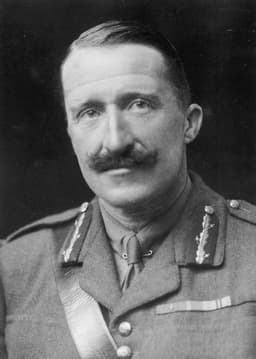
Unknown authorUnknown author, 2012. Wikimedia Commons. Public domain.
1748–1795
General John Vaughan
2
recorded events
Connected towns:
Kingston, NYBiography
General John Vaughan (1748–1795)
British Commander Who Burned Kingston
A career shaped by the relentless expansion of the British Empire prepared John Vaughan for the kind of warfare that would define his legacy in the Hudson Valley. Born in 1748 into a world of sustained imperial conflict, Vaughan entered the British Army during a period when officers were forged through campaigns spanning multiple continents and theaters of war. His formative years as a soldier coincided with an era of British military ambition that demanded proficiency in conventional European-style combat, amphibious landings, and the logistical complexity of projecting power across vast distances. These were not skills learned in classrooms but earned through grueling service in the field, and Vaughan proved himself capable enough to rise steadily through the ranks. By the time the American colonies erupted into open rebellion, he had accumulated the kind of operational experience that marked him as a reliable instrument of British military policy. His superiors recognized in him a disciplined officer who could be trusted with independent command — a distinction that not every officer of his generation could claim, and one that would soon place him at the center of a pivotal and devastating chapter of the Revolutionary War.
When the American Revolution transformed Britain's colonial crisis into a full-scale military conflict, Vaughan was dispatched to North America as part of the massive British effort to crush the rebellion through force of arms. His assignment placed him within the orbit of Sir Henry Clinton's command in the strategically vital Hudson River corridor, a geographic artery that both sides recognized as essential to controlling the flow of troops, supplies, and communications between New England and the rest of the rebelling colonies. The British grand strategy for 1777 envisioned splitting the colonies along this corridor, with General John Burgoyne pressing south from Canada while Clinton's forces pushed northward from New York City. Vaughan's role within this framework was not initially the most prominent, but the fortunes of war would elevate him quickly. As Clinton organized an expedition to seize the American fortifications guarding the Hudson Highlands, Vaughan was positioned to take on greater responsibility. His experience in combined land and naval operations made him a natural choice for the kind of river-borne campaign that the Hudson's geography demanded, and by early October 1777, circumstances were conspiring to hand him an independent command that would test both his military judgment and his moral compass.
The capture of Forts Montgomery and Clinton in early October 1777 by Sir Henry Clinton's forces opened the upper Hudson to British naval penetration, and Vaughan was given command of the squadron tasked with exploiting the breakthrough. His orders directed him to sail northward, threatening American positions along the river and, critically, attempting to relieve the mounting pressure on Burgoyne's beleaguered army near Saratoga. This was no simple patrol — it was a mission freighted with strategic urgency, as Burgoyne's situation was growing desperate by the day. Vaughan pushed his force upriver with purpose, encountering scattered resistance but no obstacle capable of stopping his advance. On October 16, 1777, his ships reached the town of Kingston, then known as Esopus, which served as the provisional capital of the state of New York. What followed was a deliberate and systematic act of destruction. After a brief bombardment from the river, Vaughan landed troops who moved through the town setting fire to buildings with methodical precision. The burning was not incidental to combat — it was the point. Vaughan intended to demonstrate that communities supporting the rebellion would pay a tangible and terrible price, and Kingston, as a seat of revolutionary government, made an unmistakable target.
The destruction of Kingston on October 16, 1777, stands as one of the most consequential single-day events in the Hudson Valley's Revolutionary War history — and also one of the most strategically futile. Vaughan's forces reduced most of the town to ashes, scattering the civilian population and destroying the buildings that had housed New York's fledgling state government. Yet the entire rationale for the expedition collapsed the very next day. On October 17, General Burgoyne surrendered his entire army to American General Horatio Gates at Saratoga, an event that transformed the war by persuading France to enter the conflict as an American ally. Vaughan's burning of Kingston could not influence an outcome that was already sealed. The raid, intended as a strategic diversion to draw American forces away from Saratoga, arrived too late and accomplished nothing of military value. What it did accomplish was the devastation of a civilian community, an act that hardened American resolve rather than weakening it. For the residents of Kingston, the burning was catastrophic in immediate human terms — homes, workshops, churches, and public buildings destroyed in hours — and it became a rallying symbol of British cruelty that propagandists and patriots alike would invoke for generations afterward.
Vaughan's actions during the Hudson River expedition cannot be fully understood without considering the chain of command and the strategic relationships that shaped his decisions. He operated under the broader authority of Sir Henry Clinton, who had orchestrated the assault on the Highland forts and authorized the northward push up the Hudson. Clinton himself was constrained by the decisions of General William Howe, the British commander-in-chief, whose controversial choice to campaign in Pennsylvania rather than support Burgoyne's advance from the north left Clinton with limited resources and impossible timelines. Vaughan, at the operational level, inherited the consequences of these high-command failures. His mission to relieve Burgoyne was, in many respects, doomed before it began — too little force, dispatched too late, over too great a distance. His relationship with the naval officers commanding the ships that carried his troops was essential to the expedition's execution, as combined operations on the Hudson required close coordination between land and sea forces. Yet none of these relationships could alter the fundamental strategic reality: Burgoyne was beyond saving. Vaughan continued to serve in North America through subsequent years of the war, but he never again received an independent command of comparable significance, and his career remained shadowed by the futility and destructiveness of the Kingston raid.
The legacy of General John Vaughan illuminates one of the American Revolution's most uncomfortable truths: that warfare against a civilian population, even when framed as strategic necessity, often produces consequences that far outlast any tactical calculation. Vaughan was not a rogue officer or a uniquely cruel man — he was a professional soldier executing a mission within the logic of eighteenth-century imperial warfare, where the destruction of enemy towns was an accepted, if controversial, instrument of military policy. Yet the burning of Kingston became something far larger than Vaughan likely intended. It became evidence, cited by Americans and their allies, of the moral bankruptcy of British rule. It became a foundational story for Kingston itself, a community that rebuilt from ashes and wove the memory of destruction into its civic identity. And it became a case study in strategic futility — a reminder that military actions disconnected from achievable objectives can cause immense suffering without advancing any cause. Vaughan died in 1795, his name largely forgotten in Britain but permanently inscribed in the history of the Hudson Valley. His story challenges students of the Revolution to grapple with the human costs of military decisions and the thin line between strategic action and punitive violence against civilians.
WHY GENERAL JOHN VAUGHAN MATTERS TO KINGSTON
General John Vaughan's name is inseparable from one of the most traumatic events in Kingston's history — the deliberate burning of the town on October 16, 1777. For students and visitors exploring Kingston today, Vaughan's story provides essential context for understanding why the town looks the way it does, why its oldest buildings date from after 1777, and why the memory of destruction runs so deep in local identity. His raid illustrates how the Revolutionary War was not fought only on distant battlefields but in the streets and homes of American communities. Vaughan's story also teaches a broader lesson about the consequences of military decisions made in pursuit of objectives already lost — Kingston burned for nothing, and that painful irony remains central to understanding the Revolution's human cost.
TIMELINE
- 1748: John Vaughan is born in England, entering a period of sustained British imperial expansion and military conflict.
- 1770s: Vaughan serves in the British Army across multiple theaters, building experience in conventional and amphibious warfare before his assignment to North America.
- 1777: Vaughan is stationed in North America under the broader command structure headed by Sir Henry Clinton during the critical Hudson River campaign.
- October 6, 1777: British forces under Sir Henry Clinton capture Forts Montgomery and Clinton in the Hudson Highlands, opening the river to northward advance.
- October 1777: Vaughan assumes command of a British squadron sailing north up the Hudson River with orders to relieve pressure on General Burgoyne's army near Saratoga.
- October 16, 1777: Vaughan's forces reach Kingston (Esopus), bombard the town, land troops, and systematically burn most of the provisional New York State capital.
- October 17, 1777: General Burgoyne surrenders his army at Saratoga, rendering Vaughan's Hudson River expedition strategically meaningless.
- 1777–1783: Vaughan continues to serve in North America through the remaining years of the Revolutionary War without achieving a comparably significant independent command.
- 1795: John Vaughan dies, his military career defined in American memory primarily by the burning of Kingston.
SOURCES
- Diamant, Lincoln. Chaining the Hudson: The Fight for the River in the American Revolution. Fordham University Press, 2004.
- Senate House State Historic Site. "The Burning of Kingston." New York State Office of Parks, Recreation and Historic Preservation. https://parks.ny.gov/historic-sites/senate-house
- Pell, John. "The Burning of Kingston." Proceedings of the Ulster County Historical Society, 1932–1933.
- Nickerson, Hoffman. The Turning Point of the Revolution: Or, Burgoyne in America. Houghton Mifflin, 1928.
- Schecter, Barnet. The Battle for New York: The City at the Heart of the American Revolution. Walker & Company, 2002.
Events
Oct
1777
British Capture Forts Montgomery and ClintonKingstonBritish General# The British Capture of Forts Montgomery and Clinton, 1777 In the autumn of 1777, the Hudson River Valley became one of the most strategically contested theaters of the American Revolutionary War. The British grand strategy for that year centered on controlling the Hudson River, a vital waterway that, if seized in its entirety, would effectively sever New England from the rest of the rebellious colonies. While General John Burgoyne marched southward from Canada in what would ultimately become a disastrous campaign ending at Saratoga, British forces in New York City were expected to push northward along the Hudson to link up with him. It was within this broader strategic framework that the assault on Forts Montgomery and Clinton unfolded — a military engagement that, while often overshadowed by the drama at Saratoga, carried profound consequences for the people and communities of the Hudson Valley. Forts Montgomery and Clinton stood as twin sentinel fortifications in the Hudson Highlands, a rugged, narrow stretch of the river approximately fifty miles north of New York City. These forts were critical to the American defense of the Hudson, and between them stretched a massive iron chain and log boom designed to obstruct British naval passage upriver. The forts were garrisoned by American forces under the command of George Clinton, who served not only as a brigadier general in the Continental forces but also as the first Governor of New York — a man whose dual military and political responsibilities placed him at the very heart of the struggle for control of the state. His brother, James Clinton, commanded Fort Clinton directly, while George Clinton oversaw Fort Montgomery. Together, the two brothers bore the heavy burden of defending the Highlands with limited troops and resources, as much of the Continental Army's strength had been directed northward to confront Burgoyne. On October 6, 1777, British General Sir Henry Clinton — no relation to the American Clintons — launched a carefully coordinated assault on both forts. British and Loyalist forces approached through the rugged terrain surrounding the fortifications, attacking from multiple directions in a maneuver designed to overwhelm the undermanned American garrisons. The fighting was fierce and, at times, desperate. The American defenders resisted stubbornly, but they were vastly outnumbered, and as evening fell, both forts were overrun. George Clinton narrowly escaped capture by making his way down the rocky cliffs to the river under cover of darkness. The British victory, though costly in casualties, achieved its immediate objective: the great chain across the Hudson was severed, and the river lay open to British navigation northward. With the Highland defenses shattered, General John Vaughan, commanding a British naval flotilla, sailed upriver virtually unopposed. His fleet pushed deep into the Hudson Valley, spreading alarm and destruction in its wake. On October 16, Vaughan's forces reached Kingston, New York, which at that time served as the state capital where New York's first constitution had been drafted and ratified only months earlier. The burning of Kingston by Vaughan's troops was a deliberate act of destruction aimed at demoralizing the patriot cause and destabilizing New York's fledgling state government. The town was left in ashes, and its residents were scattered as refugees into the surrounding countryside. Despite the shock of these losses, the British campaign ultimately failed to achieve its larger strategic goal. Burgoyne, isolated and without reinforcement from the south, surrendered his entire army at Saratoga on October 17, 1777 — just one day after Kingston burned. The American victory at Saratoga proved to be one of the great turning points of the war, convincing France to enter the conflict as an American ally. The fall of Forts Montgomery and Clinton and the destruction of Kingston thus stand as painful reminders that the road to American independence was neither straightforward nor without devastating cost, even in moments of broader triumph. For the people of the Hudson Valley, these events left scars — physical and emotional — that shaped the region's identity for generations to come.
Oct
1777
British Burn KingstonKingstonBritish General**The Burning of Kingston: A Revolutionary War Tragedy** In the autumn of 1777, the American Revolution was reaching a critical turning point along the Hudson River Valley of New York. British strategic planning had centered on a grand scheme to divide the American colonies by seizing control of the Hudson River corridor, effectively severing New England from the rest of the rebelling states. General John Burgoyne was advancing southward from Canada, while British forces in New York City were expected to push northward to meet him. It was within this broader military context that one of the war's most destructive acts against a civilian population took place: the burning of Kingston, New York. Kingston held a place of particular significance in the young revolutionary movement. The town had served as the first capital of the newly declared state of New York, and it was there that the New York State Constitution had been adopted earlier in 1777. The State Senate and Assembly had convened in Kingston, making it not merely a quiet Hudson Valley settlement but a living symbol of American self-governance and defiance against the Crown. Its political importance made it an attractive target for British forces eager to punish and demoralize the rebels. On October 16, 1777, British General John Vaughan led a flotilla of ships up the Hudson River and landed troops at Kingston. Vaughan, operating under the command of General Sir Henry Clinton, who had launched a campaign northward from New York City to support Burgoyne's faltering advance, directed his forces to systematically set fire to the town. The destruction was thorough and deliberate. Soldiers moved through the streets of the Stockade District, Kingston's historic core, putting homes, shops, barns, and public buildings to the torch one by one. By the time the flames subsided, nearly every structure in the district had been reduced to ashes. Only a small number of stone buildings survived the conflagration, among them the Senate House, where New York's state government had so recently conducted its business. The survival of that building would later take on powerful symbolic meaning — a testament to the resilience of the democratic institutions the British had sought to destroy. The human toll of the burning was devastating. Hundreds of Kingston's residents were rendered homeless virtually overnight, forced to flee into the surrounding countryside as refugees with little more than the clothes on their backs. Families lost everything — their homes, their livelihoods, their possessions accumulated over generations. The community, which had been a thriving center of commerce and governance, was shattered. Rebuilding would take not years but decades, and the scars of that October day would linger in the collective memory of Kingston's people for generations. What made the burning of Kingston all the more bitter was its ultimate strategic futility. Just two days after Vaughan's forces put the town to the torch, General Burgoyne surrendered his entire army to American General Horatio Gates at the Battle of Saratoga on October 17, 1777. The grand British plan to control the Hudson Valley and split the colonies had collapsed. Clinton's northward thrust, of which Vaughan's raid was a part, had come too late and accomplished too little to save Burgoyne. The destruction of Kingston, rather than serving any meaningful military objective, stood as nothing more than a punitive act of war — a reprisal against a civilian population for its role in the revolution. The burning of Kingston matters in the broader story of the American Revolution for several reasons. It illustrates the devastating impact of the war on ordinary communities and civilians, a dimension of the conflict often overshadowed by narratives of grand battles and military strategy. It also demonstrates how acts of British destruction frequently backfired, hardening American resolve rather than breaking it. The survival of the Senate House amid the ruins became an enduring symbol of perseverance and the durability of the democratic ideals for which Americans were fighting. Today, the Senate House still stands in Kingston as a state historic site, a quiet reminder of the day a town was destroyed and the spirit that ensured it would rise again.