

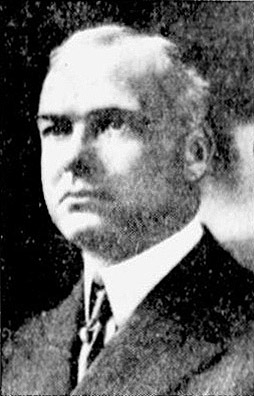
Youngstown Vindicator, 1925. Wikimedia Commons. Public domain.
1727–1775
Jonathan Harrington
1
recorded events
Connected towns:
Lexington, MABiography
Jonathan Harrington (1727–1775)
Militiaman and Farmer of Lexington, Massachusetts
On an ordinary spring morning in 1775, a forty-seven-year-old farmer stepped out of the house where he had lived for years, crossed a short stretch of ground to Lexington Green, and took his place in a thin line of his neighbors. He would never walk back. Jonathan Harrington was born in 1727 and spent his life in Lexington, Massachusetts, a small farming community northwest of Boston where families knew one another intimately, where militia service was a civic expectation rather than an extraordinary commitment. He was a working man rooted in the rhythms of New England agriculture—planting, harvesting, tending livestock, raising a family with his wife Ruth. Like most colonial farmers of his generation, Harrington was not a radical theorist or a professional soldier. He was a member of the local militia, a part-time civic duty that required periodic musters on the town common. What drew him into the defining confrontation of his life was not ideology alone but proximity: the Revolution arrived literally at his doorstep. When Captain John Parker called Lexington's militia to assemble on the Green in the predawn hours of April 19, 1775, Harrington did not have to travel far. He simply walked out his front door.
The events of that morning unfolded with terrifying speed. Riders including Paul Revere and William Dawes had spread the alarm overnight that British regulars were marching from Boston toward Concord to seize colonial military stores. Captain Parker gathered roughly seventy-seven militiamen on Lexington Green, a modest force that was never intended to stop the column of several hundred professional soldiers. Their purpose remains debated by historians—whether Parker meant to make a symbolic stand, gather intelligence, or simply demonstrate colonial resolve. What is certain is that Harrington stood among them. When the British troops arrived at approximately dawn, a confrontation erupted that neither side may have fully intended. A shot rang out—its origin still disputed—and then the British regulars fired a devastating volley into the loosely assembled militiamen. In the chaos of smoke and noise, eight Americans were killed and ten wounded. Harrington was struck by a musket ball that passed through his body. Rather than falling where he stood, he began to crawl. Witnesses reported that the mortally wounded man dragged himself across the road, away from the Green, in the direction of his own home, which stood in plain view just across the way.
What makes Harrington's death so harrowing is not its military significance—the skirmish on Lexington Green was brief and tactically inconsequential—but its searing human intimacy. This was a man who could see his own front door as he lay dying. His wife Ruth, according to tradition, watched from the house as her husband pulled himself across the ground toward her. He reached the doorstep of their home and died at her feet. Consider what Ruth Harrington experienced in those minutes: watching from a window as the man she had built a life with was shot down, then witnessing his agonizing crawl toward her, unable to do anything but wait as he arrived home for the last time. Their world collapsed in the space of a few hundred feet. Harrington was fighting for no abstraction that morning. He was fighting—or at least standing—for the community he could literally see around him, for the family sleeping in the house behind him, for the right of his neighbors to govern their own affairs. The terrible price was paid not on some distant battlefield but in the most domestic setting imaginable, a man's own front yard, witnessed by the person who loved him most.
Jonathan Harrington left no speeches, no written manifestos, no military record of distinction. He was one of eight men killed at Lexington that morning, and his name might have been forgotten entirely if not for the extraordinary manner of his death. Instead, his crawl across the Green became one of the most enduring images of the battle, depicted in paintings and illustrations throughout the nineteenth century and beyond. Artists seized on the scene because it crystallized something essential about April 19, 1775: the Revolution began not as a clash of armies but as a catastrophe visited upon a small community, where the dead were known by name and the bereaved watched from their windows. Harrington's house no longer stands, but its approximate location near Lexington Green is noted for visitors, and the Green itself—now a National Historic Landmark—preserves the geography of his final moments. To stand there today is to grasp the appalling closeness of it all, how little distance separated ordinary life from extraordinary violence. Harrington represents the countless ordinary people who paid the first and highest costs of American independence, not because they sought glory but because the conflict came to them, uninvited, on a morning when they simply did what their community asked.
WHY JONATHAN HARRINGTON MATTERS TO LEXINGTON
Students and visitors who walk across Lexington Green today can still trace the short, terrible distance Jonathan Harrington crawled on the morning of April 19, 1775. His story matters because it collapses the distance between history and human experience. The American Revolution is often taught through grand strategy, political philosophy, and famous leaders, but it began with specific people in a specific place—farmers who stepped outside their homes and were killed within sight of their families. Harrington's death reminds us that the cost of revolution was not theoretical. It was measured in the space between a village green and a front door, in a wife watching her husband die on their doorstep. For anyone standing on Lexington Green, his story transforms the landscape from a historical marker into a place where ordinary life and extraordinary sacrifice became inseparable.
TIMELINE
- 1727: Jonathan Harrington is born in or near Lexington, Massachusetts
- c. 1750s: Marries Ruth Harrington and establishes a household facing Lexington Green
- 1760s–1770s: Lives as a farmer in Lexington and serves in the town's militia company
- April 18, 1775: Riders spread the alarm that British regulars are marching from Boston toward Concord
- April 19, 1775: Assembles with Captain John Parker's militia company on Lexington Green before dawn
- April 19, 1775: Mortally wounded during the British volley on the Green; crawls to his doorstep and dies at his wife's feet
- April 19, 1775: Remembered as one of eight militiamen killed in the Battle of Lexington, the opening engagement of the American Revolutionary War
SOURCES
- Fischer, David Hackett. Paul Revere's Ride. Oxford University Press, 1994.
- Galvin, John R. The Minute Men: The First Fight—Myths and Realities of the American Revolution. Pergamon-Brassey's, 1989.
- Coburn, Frank Warren. The Battle of April 19, 1775, in Lexington, Concord, Lincoln, Arlington, Cambridge, Somerville, and Charlestown, Massachusetts. Self-published, 1912.
- Lexington Historical Society. "The Battle of Lexington." Lexington, Massachusetts. https://www.lexingtonhistory.org
- National Park Service. "Minute Man National Historical Park." https://www.nps.gov/mima/index.htm
Events
Apr
1775
Battle of LexingtonLexingtonMilitiaman# The Battle of Lexington In the early morning hours of April 19, 1775, a confrontation unfolded on the village green of Lexington, Massachusetts, that would forever alter the course of history. The Battle of Lexington, though brief and militarily one-sided, marked the first military engagement of the American Revolution and set into irreversible motion the colonies' long march toward independence from Great Britain. The roots of the conflict stretched back more than a decade. Years of escalating tensions between the American colonies and the British Crown—over taxation without representation, the quartering of soldiers, and the steady erosion of colonial self-governance—had brought the relationship to a breaking point. Parliament's passage of the Intolerable Acts in 1774, which punished Massachusetts for the Boston Tea Party by stripping away many of its political freedoms, only hardened colonial resolve. Across the countryside, local militias had been drilling and stockpiling arms and ammunition in anticipation of a possible confrontation. When British General Thomas Gage ordered a column of approximately 700 soldiers, under the command of Lieutenant Colonel Francis Smith and Major John Pitcairn, to march from Boston to Concord to seize a reported cache of colonial weapons and supplies, the stage was set for a fateful clash. Word of the British advance spread through the night thanks to a network of riders and alarm signals. By the time the British column neared Lexington in the predawn darkness, Captain John Parker, a veteran of the French and Indian War, had assembled roughly 77 militiamen on Lexington Green. These were not professional soldiers but farmers, tradesmen, and ordinary townspeople who had answered the call to defend their community and their rights. Among them stood Jonas Parker, a cousin of the captain and a man of fierce determination who reportedly vowed never to retreat from British troops. Prince Estabrook, an enslaved Black man, also took his place in the militia ranks that morning—a powerful reminder that the desire for liberty crossed racial lines even in a society deeply scarred by the institution of slavery. Jonathan Harrington, a young townsman, likewise stood among his neighbors, prepared to face whatever came. As the vastly superior British force arrived and formed up on the green, Major Pitcairn reportedly ordered the militia to lay down their arms and disperse. Captain Parker, recognizing the overwhelming odds, may have instructed his men to disband without surrendering their weapons. Before the militiamen could fully comply, a single shot rang out—the origin of which remains one of history's enduring mysteries. Neither side claimed responsibility, and no definitive evidence has ever established whether the shot came from a British soldier, a militiaman, or even a bystander. What followed, however, was devastating and unambiguous. British soldiers unleashed volleys of musket fire into the scattering militia. The engagement lasted perhaps ten minutes, but in that brief span, eight Americans were killed and ten more were wounded. Jonas Parker, true to his word, fell on the green without retreating. Jonathan Harrington, mortally wounded, reportedly crawled toward his home before dying on his own doorstep. Prince Estabrook was among the wounded, making him one of the first Black Americans injured in the fight for the nation's independence. On the British side, only one soldier sustained an injury. The lopsided nature of the engagement could have rendered it a footnote—a small skirmish quickly forgotten. Instead, it became a catalyst. As the British column continued toward Concord, news of the bloodshed at Lexington spread like wildfire through the surrounding communities. By the time the British reached Concord and encountered resistance at the North Bridge, thousands of militiamen from dozens of towns were converging on the area. The British retreat to Boston that afternoon became a harrowing gauntlet of colonial gunfire, and by day's end, the American Revolution had truly begun. The Battle of Lexington matters not because of its military significance—it was, by any tactical measure, a decisive British victory—but because of what it symbolized and set in motion. The blood shed on that small village green transformed a political dispute into an armed struggle for independence. Captain Parker and his militiamen, standing against impossible odds in the gray light of dawn, became enduring symbols of ordinary citizens willing to risk everything for the principle of self-governance. Their stand reminded future generations that revolutions are not born in a single moment of triumph but often in moments of sacrifice, loss, and defiant courage against overwhelming power.
Stories