
1742–1798
James Wilson
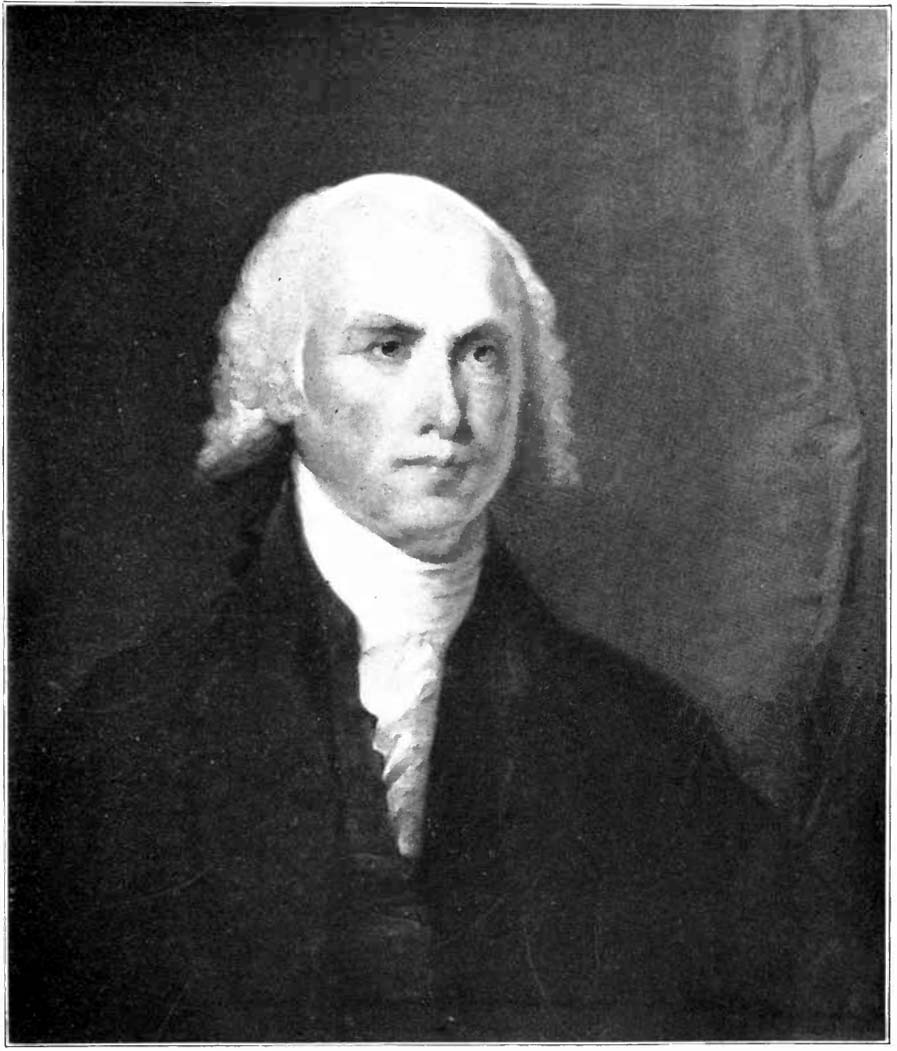
Gilbert Stuart, publ
Biography
James Wilson: Architect of Popular Sovereignty
Born in 1742 in the small village of Carskerdo, in the county of Fife, Scotland, the man who would become one of the most intellectually formidable of America's founders received his earliest education in a world shaped by the Scottish Enlightenment. Wilson studied at the University of St. Andrews, absorbing the classical curriculum and the philosophical traditions that emphasized reason, natural law, and the rights of individuals within civil society. These ideas would prove foundational to everything he later built in America. In 1765, at the age of twenty-three, he emigrated to Philadelphia, a city already crackling with political energy and debate. He quickly found a mentor in John Dickinson, one of Pennsylvania's most prominent lawyers and political thinkers, and studied law under his guidance. By 1770, Wilson had relocated to Carlisle, in the Cumberland Valley of western Pennsylvania, where he established a legal practice that distinguished him from the rough-hewn frontier attorneys who dominated the region. His intellect was unmistakable, his arguments grounded in deep reading and rigorous logic, and his reputation grew rapidly across the colony. The frontier sharpened him, but his mind had been forged in the lecture halls of St. Andrews.
Wilson's entry into the revolutionary struggle was intellectual before it was political. In the early 1770s, while still building his law practice in Carlisle, he composed a pamphlet titled Considerations on the Nature and Extent of the Legislative Authority of the British Parliament, in which he argued with striking precision that Parliament possessed no rightful authority over colonists who had no representation in that body. The pamphlet circulated widely and placed Wilson among the most advanced constitutional thinkers in the colonies, anticipating arguments that others would not articulate until years later. His reputation as a legal theorist led to his election as a delegate to the Continental Congress, where he arrived carrying the weight of western Pennsylvania's expectations and the intellectual tools to reshape the debate over colonial rights. Wilson was not a firebrand or a street agitator; he was a careful, lawyerly thinker who believed that revolution, if it came, must rest on sound legal and philosophical foundations. His contributions in Congress reflected this temperament — measured, deeply reasoned, and aimed at establishing the legitimacy of American self-governance on principles that could withstand scrutiny across centuries and across the Atlantic.
In the Continental Congress, Wilson signed the Declaration of Independence in 1776, but his path to that signature was not without controversy. He had urged caution on the timing of the vote, believing that the delegates needed clearer instructions from their constituents before severing ties with Britain — a position that put him at odds with more radical patriots who saw delay as cowardice or equivocation. His caution was not born of loyalism but of a deeply held conviction that legitimacy mattered, that the people's voice must undergird any revolutionary act. This tension between Wilson's deliberate legalism and the urgency of the moment reflected a broader struggle within the Congress itself. Throughout the war years, Wilson continued to grapple with questions of governance, finance, and the relationship between state and national authority. He moved from Carlisle to Philadelphia, where he became increasingly involved in the financial and legal machinery of the war effort. His understanding of commercial law and his connections to mercantile interests made him a valuable, if sometimes polarizing, figure in a Congress that was perpetually scrambling for resources and struggling to hold together a fragile coalition of states.
The turning point of Wilson's career — and arguably his most lasting contribution to American history — came at the Constitutional Convention of 1787 in Philadelphia. There, Wilson emerged as one of the most active and influential delegates, speaking more frequently and more substantively than anyone except James Madison. He argued passionately and persistently for popular sovereignty as the bedrock principle of the new government, insisting that both the president and members of the Senate should be elected, directly or indirectly, by the people rather than by state legislatures or congressional appointment. His vision of a strong, energetic executive — accountable to the nation as a whole rather than to the states individually — helped shape the presidency as it ultimately appeared in the Constitution. Wilson also played a critical role on the Committee of Detail, which produced the first working draft of the Constitution, translating weeks of debate into coherent constitutional language. His fingerprints are on the document's fundamental architecture, from the structure of representation to the allocation of powers between branches. In Pennsylvania's ratifying convention, Wilson led the campaign for adoption, delivering speeches that remain among the clearest articulations of the Constitution's philosophical underpinnings.
Wilson's relationships with other founders were complex, shaped by mutual respect, ideological alignment, and occasional friction. His intellectual partnership with James Madison at the Constitutional Convention was perhaps the most consequential collaboration of that summer; together, the two men drove the Convention toward a government grounded in popular consent rather than state sovereignty. Wilson's earlier legal training under John Dickinson connected him to a more conservative strain of revolutionary thought, though Wilson ultimately moved well beyond his mentor's cautious positions on independence and national power. George Washington recognized Wilson's brilliance by appointing him as one of the six original justices of the Supreme Court in 1789, a position that gave Wilson a platform to shape the new nation's jurisprudence. His opinion in Chisholm v. Georgia (1793), which asserted that states could be sued by citizens of other states, was a bold statement about federal authority that provoked intense controversy and ultimately led to the Eleventh Amendment. Wilson also delivered a series of law lectures at the College of Philadelphia, attended by Washington and other dignitaries, in which he attempted to construct a systematic American jurisprudence rooted in Enlightenment philosophy and constitutional text — an endeavor that placed him among the earliest architects of American legal education.
The final chapter of Wilson's life stands as one of the founding era's most sobering cautionary tales. Despite his towering intellect and his central role in creating the nation's constitutional framework, Wilson succumbed to ruinous land speculation schemes during the 1790s, investing heavily in frontier territories with borrowed money and wildly optimistic projections. His debts mounted catastrophically, and he found himself fleeing creditors across state lines — a sitting Supreme Court justice reduced to hiding from the law he had helped to write. He died on August 21, 1798, in Edenton, North Carolina, broken in health and fortune, far from the centers of power where he had once commanded such authority. His death attracted little notice at the time, and for generations his contributions were overshadowed by those of more celebrated founders. Yet historians have increasingly recognized Wilson as one of the most important constitutional thinkers of his generation, a man whose arguments for popular sovereignty and a strong national government shaped the document that still governs the United States. His story reminds us that the founding was not the work of demigods but of brilliant, flawed human beings whose ideas outlasted their personal failures.
WHY JAMES WILSON MATTERS TO CARLISLE
James Wilson's years in Carlisle were formative, and students and visitors to the Cumberland Valley should understand that one of the most consequential legal minds in American history cut his teeth on their ground. It was in Carlisle that Wilson built the law practice and the intellectual reputation that propelled him onto the national stage. The frontier legal culture of western Pennsylvania tested his abilities and sharpened the arguments he would later deploy at the Constitutional Convention. Wilson's story teaches us that the Revolution was not only fought with muskets on battlefields but also with ideas in courtrooms, pamphlets, and convention halls. His journey from a Scottish university to a small Pennsylvania town to the Supreme Court of the United States illustrates how the founding drew on diverse origins, local communities, and the power of reasoned argument to reshape the world.
TIMELINE
- 1742: Born in Carskerdo, Fife, Scotland
- 1757–1761: Studies at the University of St. Andrews
- 1765: Emigrates to Philadelphia; begins studying law under John Dickinson
- 1770: Moves to Carlisle, Pennsylvania, and establishes a law practice
- 1774: Publishes Considerations on the Nature and Extent of the Legislative Authority of the British Parliament
- 1775: Elected as a delegate to the Continental Congress
- 1776: Signs the Declaration of Independence
- 1787: Serves as a leading delegate at the Constitutional Convention in Philadelphia
- 1789: Appointed by President Washington as an original justice of the Supreme Court
- 1793: Authors the majority opinion in Chisholm v. Georgia
- 1798: Dies on August 21 in Edenton, North Carolina, in financial ruin
SOURCES
- Hall, Mark David. The Political and Legal Philosophy of James Wilson, 1742–1798. University of Missouri Press, 1997.
- Seed, Geoffrey. James Wilson: Scottish Intellectual and American Statesman. Orbis Books, 1978.
- Smith, Charles Page. James Wilson: Founding Father, 1742–1798. University of North Carolina Press, 1956.
- National Archives. "America's Founding Fathers: Delegates to the Constitutional Convention — James Wilson." https://www.archives.gov/founding-docs/founding-fathers-pennsylvania#Wilson
- Wilson, James. Collected Works of James Wilson. Edited by Kermit L. Hall and Mark David Hall. Liberty Fund, 2007.