
1717–1795
John Armstrong Sr.
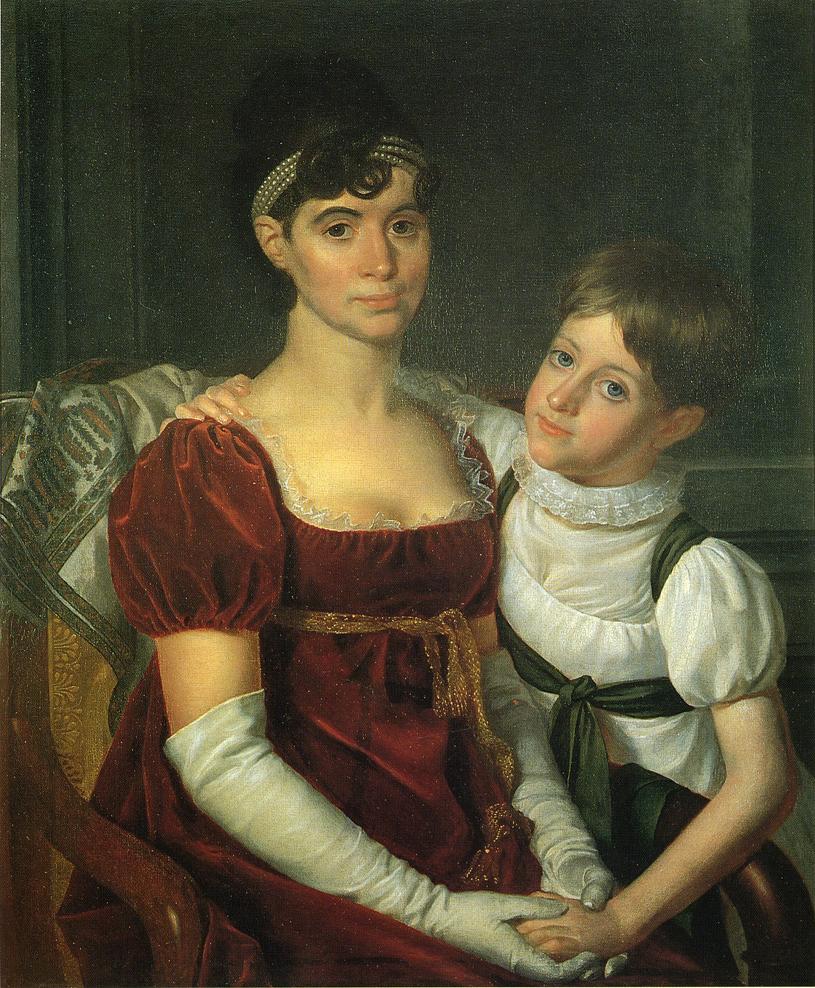
Rembrandt Peale, circ
Biography
John Armstrong Sr. (1717–1795): Frontier Warrior and Revolutionary Statesman
Born in 1717 in County Fermanagh, Ireland, the man who would become one of western Pennsylvania's most formidable military leaders arrived in the colony as a young immigrant seeking opportunity on the edge of the British Empire. John Armstrong Sr. settled in the Cumberland Valley, where the town of Carlisle served as the gateway between the established settlements of eastern Pennsylvania and the dangerous, contested frontier to the west. He trained as a surveyor and worked as a land agent — occupations that gave him an intimate knowledge of the terrain, the patterns of settlement, and the volatile relationships between colonists and the Native peoples whose lands were being steadily encroached upon. When the French and Indian War erupted in the 1750s, Armstrong was thrust into combat leadership. The devastating 1756 raid on Penn's Creek, in which Delaware warriors allied with France killed and captured dozens of settlers, demanded a response. Armstrong organized and led a daring retaliatory strike against the Delaware town of Kittanning that same year, destroying the village, recovering captives, and earning colony-wide fame as a frontier defender. That reputation would follow him for decades.
When tensions between the American colonies and Great Britain finally ignited into open war in 1775, Armstrong was nearly sixty years old — an age when most men of his era would have retreated into private life. But his decades of frontier military experience, his standing among Cumberland Valley settlers, and his deep understanding of backcountry defense made retirement impossible. Pennsylvania desperately needed leaders who could organize scattered militia companies into coherent fighting forces, particularly along the western frontier where the threat was not only from British regulars but from Native nations allied with the Crown and from loyalist sympathizers embedded within backcountry communities. Armstrong accepted appointment as a brigadier general of the Pennsylvania militia, taking command of forces responsible for defending the long, vulnerable settlement line that stretched across the western part of the state. His was not the kind of generalship that attracted attention in Philadelphia newspapers — it was the grinding, unglamorous work of garrisoning remote posts, coordinating intelligence from frontier scouts, and keeping militia forces supplied and motivated in a theater of war that most Continental leaders regarded as secondary to the campaigns along the eastern seaboard.
Armstrong's most important contributions to the Revolution lay in his dual capacity as military commander and political figure. He understood, from hard experience, that frontier defense could not succeed without legislative support — adequate funding, reliable supply chains, and clear authorization for militia operations against both Native raiders and loyalist insurgents. This understanding drove his service as a delegate to the Continental Congress, where he sat on committees dealing with military affairs and brought a practical, field-tested perspective to deliberations that were too often dominated by men whose knowledge of warfare was theoretical. In Congress, he advocated for the needs of western Pennsylvania's defenders, arguing that neglecting the frontier would invite catastrophic raids that could destabilize the entire war effort. On the military side, his decisions about where to station militia companies, how to respond to specific raids, and when to pursue diplomacy rather than force shaped the survival of settlements across the Cumberland Valley and beyond. His ability to move between the worlds of legislative politics and frontier command was rare and invaluable during a war that demanded both soldiers and statesmen.
The specific turning points of Armstrong's Revolutionary War service were less dramatic single battles than a sustained campaign of frontier management during a period of extraordinary danger. Western Pennsylvania in the late 1770s and early 1780s was a landscape of intermittent violence — raids by British-allied Native war parties, retaliatory strikes by militia forces, and the constant threat of loyalist activity within communities that were far from unified in their support for independence. Armstrong navigated this environment with the skills he had honed during the French and Indian War, applying lessons learned at Kittanning and in the years of frontier patrol that followed. His command encompassed not only military operations but the complex political work of maintaining allegiance among backcountry settlers who were often more concerned with their immediate survival than with abstract ideals of liberty. Every decision to deploy militia to one threatened settlement rather than another carried consequences — for the families left undefended, for morale across the region, and for the broader strategic picture of the war in the west. These were the choices that defined Armstrong's war, even if they rarely appeared in the dispatches that reached Congress.
Armstrong's relationships with other figures of the Revolution were shaped by the particular tensions between Pennsylvania's frontier and its eastern establishment. He worked alongside other militia commanders and Continental officers who operated in the western theater, coordinating defense efforts that were perpetually underfunded and undermanned. His interactions with fellow delegates in the Continental Congress placed him in contact with the most prominent leaders of the independence movement, though his role was more that of a specialist — the man who could speak with authority about frontier conditions — than a central political player. His influence was felt most powerfully in shaping how Congress understood the western war, pushing back against the tendency to treat the frontier as an afterthought. Within Carlisle itself, Armstrong was a pillar of the local leadership class, connected through networks of land, commerce, and kinship to the families who dominated Cumberland Valley society. His son, John Armstrong Jr., would extend the family's influence into the next century, eventually serving as a United States senator and as secretary of war during the War of 1812, carrying forward the tradition of public service his father had established.
The legacy of John Armstrong Sr. offers a critical corrective to popular narratives of the American Revolution that focus almost exclusively on the eastern seaboard — on Lexington, Bunker Hill, Valley Forge, and Yorktown. Armstrong's career reminds us that the Revolution was also fought along the western frontier, in small-scale but deadly engagements that determined whether thousands of settlers would remain within the new nation's orbit or be driven back eastward by raids and fear. His story illuminates the essential role of militia generals who never commanded armies of thousands but whose decisions kept the fragile edges of the American experiment from collapsing. Armstrong also embodies the continuity between the French and Indian War and the Revolution — two conflicts that, for frontier communities, were chapters in the same long struggle over land, sovereignty, and survival. His death in 1795, in a Cumberland Valley that had become a prosperous agricultural region rather than a war zone, stands as quiet testimony to the success of the frontier defense he spent his life conducting. Understanding Armstrong means understanding that the Revolution was won not only on celebrated battlefields but in the contested valleys and ridgelines of the American backcountry.
WHY JOHN ARMSTRONG SR. MATTERS TO CARLISLE
John Armstrong Sr.'s story is inseparable from the story of Carlisle itself. The town served as the organizing point for western Pennsylvania's defense during both the French and Indian War and the Revolution, and Armstrong was at the center of that effort for decades. Students and visitors walking through Carlisle today are walking through a landscape that Armstrong helped protect — a place that might not have survived as a thriving settlement without the militia forces he commanded and the political advocacy he conducted in the Continental Congress. His career teaches us that the Revolution looked very different on the frontier than it did in Boston or Philadelphia. Here, independence meant not only breaking from Britain but defending communities against raids, managing divided loyalties, and sustaining a war effort with scarce resources. Armstrong's life is a window into that harder, less celebrated dimension of the founding.
TIMELINE
- 1717: Born in County Fermanagh, Ireland
- c. 1740s: Emigrates to Pennsylvania and settles in the Cumberland Valley near Carlisle
- 1756: Leads the raid on the Delaware town of Kittanning during the French and Indian War, earning colony-wide recognition
- 1775–1776: Appointed brigadier general of the Pennsylvania militia at the outbreak of the Revolutionary War
- 1777–1778: Commands frontier defense operations in western Pennsylvania during a period of intensified Native and loyalist raids
- 1778–1780: Serves as a delegate to the Continental Congress, representing Pennsylvania and advising on military affairs
- 1783: Revolutionary War concludes; Armstrong continues involvement in Pennsylvania civic life
- 1795: Dies in Carlisle, Pennsylvania, after a public career spanning more than four decades
SOURCES
- Waddell, Louis M., and Bruce D. Bomberger. The French and Indian War in Pennsylvania, 1753–1763: Fortification and Struggle During the War for Empire. Pennsylvania Historical and Museum Commission, 1996.
- Browning, Charles H. The Welsh Settlement of Pennsylvania. William J. Campbell, 1912.
- Pennsylvania Historical and Museum Commission. "The Kittanning Raid, 1756." ExplorePAHistory.com. https://explorepahistory.com
- Smith, Paul H., ed. Letters of Delegates to Congress, 1774–1789. Library of Congress, 1976–2000.
- Hunter, William A. Forts on the Pennsylvania Frontier, 1753–1758. Pennsylvania Historical and Museum Commission, 1960.