
1738–1805
General Lord Charles Cornwallis
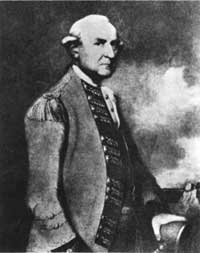
Unknown, 2006
Biography
General Lord Charles Cornwallis (1738–1805)
British General, Southern Army Commander, and Lieutenant General
Born into one of England's most prominent aristocratic families on the last day of 1738, Charles Cornwallis inherited both privilege and expectation. His father, the first Earl Cornwallis, ensured his son received an education befitting his station, first at Eton and then at the military academy in Turin, Italy, where young Charles studied the European art of war under some of the continent's finest instructors. He entered the British Army as an ensign in the Grenadier Guards at age eighteen and saw his first serious combat during the Seven Years' War, fighting at the Battle of Minden in 1759 and serving with distinction in several German campaigns. These formative experiences gave him a practical understanding of battlefield command that many of his aristocratic peers lacked. He was not merely a titled officer who purchased rank and avoided hardship; he was a soldier who had marched, fought, and bled alongside professional troops on the European continent. When his father died in 1762, Cornwallis inherited the earldom and took his seat in the House of Lords, entering a political world that would soon be consumed by the crisis in America. His character was shaped by duty, competence, and a genuine sense of noblesse oblige that would complicate his later role in suppressing colonial rebellion.
When tensions between Britain and her American colonies escalated into open warfare in 1775, Cornwallis occupied an unusual position among the British military aristocracy. He had actually voted against the Stamp Act in Parliament, siding with those who believed the government's colonial policies were unjust and counterproductive. This was not a casual political gesture — it reflected a sincere conviction that Britain was mishandling the relationship with its American subjects. Yet when the King called upon his officers to serve, Cornwallis answered without hesitation. His sense of duty to the Crown overrode his personal doubts about the wisdom of the conflict, a tension that would shadow his entire American experience. He arrived in North America in 1776 as a major general and quickly proved himself one of the more capable British field commanders, distinguishing himself during the New York campaign and the aggressive pursuit of George Washington's battered army across New Jersey in late 1776. His energy and tactical instincts impressed his superiors, and he gained a reputation as a general who could be relied upon in difficult situations. The irony of a man who had sympathized with colonial grievances now leading troops against those same colonists was not lost on his contemporaries, though Cornwallis himself seems to have compartmentalized the contradiction with the discipline of a professional soldier.
The Battle of Guilford Courthouse on March 15, 1781, stands as the defining engagement of Cornwallis's American career and one of the war's most instructive examples of a victory that destroys the victor. Cornwallis marched his exhausted and undersupplied army of roughly nineteen hundred regulars against a force of more than four thousand Americans commanded by Major General Nathanael Greene, who had carefully selected defensive ground near present-day Greensboro, North Carolina. Greene arranged his troops in three successive lines — North Carolina militia in front, Virginia militia in the second line, and Continental regulars on a hill at the rear — forcing the British to fight through each position in turn. Cornwallis's regulars attacked with characteristic discipline and ferocity, driving through the first two American lines but suffering punishing casualties at every stage. The fighting was close, confused, and savage, particularly around the third American line, where Continental troops stood and exchanged volleys with some of the finest regiments in the British Army. By the time Greene withdrew his forces in good order from the field, Cornwallis held the ground — the traditional measure of victory — but he had lost over a quarter of his effective fighting strength. It was a victory that tasted unmistakably of defeat, and Cornwallis knew it immediately.
Among the most controversial moments of the battle was Cornwallis's decision to order his artillery to fire grapeshot directly into a chaotic melee where his own troops were locked in hand-to-hand combat with American soldiers. This was not the decision of a general in comfortable control of his battlefield; it was the act of a commander who recognized that his army was in mortal danger and chose a terrible expedient to prevent something worse. The grapeshot tore through British and American soldiers alike, but it broke the American pressure at a critical moment and allowed the British line to reform. The decision cost British lives and has been debated by military historians ever since — some view it as ruthless pragmatism, others as a sign of desperation bordering on panic. The death toll from the battle included some of Cornwallis's most valued officers, among them Lieutenant Colonel James Webster, one of the finest regimental commanders in the British Army, who sustained wounds during the fighting and died shortly afterward. Webster's loss was both a personal blow to Cornwallis and a strategic one — experienced officers were as irreplaceable as the rank-and-file soldiers who fell alongside them. These losses shaped every decision Cornwallis made in the weeks that followed.
Cornwallis's relationships with his fellow British commanders and with his American adversary Nathanael Greene profoundly shaped the course of the Southern campaign. His partnership with Lieutenant Colonel Banastre Tarleton gave him a fast-moving cavalry force capable of striking deep into American territory, but Tarleton's reputation for brutality — earned at places like the Waxhaws — inflamed patriot sentiment and made pacification of the Southern population far more difficult. His relationship with his superior, General Sir Henry Clinton in New York, was marked by mutual frustration and poor communication; Clinton wanted Cornwallis to consolidate British control in the Carolinas, while Cornwallis increasingly believed that only an aggressive campaign into Virginia could end the war. Meanwhile, his contest with Greene became one of the most fascinating command rivalries of the entire Revolution. Greene was a general who understood that he could lose every battle and still win the war, while Cornwallis was a general who won battles at costs he could not sustain. The Race to the Dan River in February 1781, in which Cornwallis stripped his army of baggage to pursue Greene's retreating force, exemplified this dynamic — Cornwallis moved with extraordinary speed but failed to catch Greene before he crossed the Dan into Virginia, leaving the British army exhausted and exposed deep in hostile territory.
The moral complexity of Cornwallis's position in America is essential to understanding him as something more than a stock villain in the patriot narrative. He was a man of genuine personal honor who had argued against the policies that provoked the rebellion, yet he prosecuted the war with determination and sometimes with harshness. His decision to burn his army's baggage trains during the pursuit of Greene showed a willingness to risk everything on offensive action, but it also left his soldiers without tents, provisions, and basic supplies in the middle of a North Carolina winter. After Guilford Courthouse, he faced a brutal strategic choice: retreat south to rebuild his shattered force, or march north into Virginia and hope to link up with British reinforcements. He chose Virginia, effectively abandoning the Carolina campaign and leaving Greene free to systematically retake the posts that British arms had won. This decision has been criticized as a strategic blunder driven by frustration and wounded pride, but it also reflected the genuine impossibility of his situation — he lacked the men, supplies, and loyalist support necessary to hold the Southern interior. The war in the South had become a contest of attrition that Britain could not win, and Cornwallis was among the first British commanders to sense this uncomfortable truth.
The American war changed Cornwallis in ways that are difficult to measure precisely but impossible to ignore. The man who arrived in North America in 1776 was a confident, aggressive officer who believed British professional soldiers could defeat any number of colonial rebels. The man who retreated from Guilford Courthouse to Wilmington in the spring of 1781, his army bleeding and diminished, had learned something harder — that courage and discipline were not enough when the strategic fundamentals were wrong. He had watched his best officers die in battles that gained nothing of lasting value. He had ordered grapeshot fired into his own men because there was no better option available. He had chased Greene across North Carolina only to see the American general slip away, regroup, and return stronger than before. The frustration of fighting an enemy who refused to be decisively beaten, in a countryside where the population was at best divided and at worst openly hostile, wore on Cornwallis in ways his official dispatches only partially reveal. His decision to march into Virginia was partly a strategic calculation, but it was also the act of a man who had grown weary of an unwinnable situation and sought a decisive resolution. That resolution came at Yorktown, though not in the form Cornwallis had hoped for.
Cornwallis's march into Virginia in the spring and summer of 1781 culminated in the siege of Yorktown, where the strategic consequences of Guilford Courthouse reached their final expression. Weakened by his Carolina losses and unable to replace his casualties, Cornwallis established a position on the York peninsula at the direction of General Clinton, expecting the British navy to maintain control of the Chesapeake Bay and keep his supply lines open. When the French fleet under Admiral de Grasse defeated the British navy at the Battle of the Chesapeake on September 5, 1781, Cornwallis found himself trapped between a combined Franco-American army under Washington and Rochambeau and a hostile sea. The siege that followed was methodical and relentless, and by mid-October Cornwallis recognized that his position was hopeless. He surrendered on October 19, 1781, with approximately seven thousand troops — an event that effectively ended major combat operations in the American Revolution. The surrender at Yorktown was the direct consequence of a chain of decisions stretching back through the Carolina campaign, the pyrrhic victory at Guilford Courthouse, and the strategic miscalculations of the entire British Southern strategy. Cornwallis was not solely responsible for the British defeat, but he was the man who carried its weight on that October afternoon.
Contemporary reactions to Cornwallis's American service varied sharply depending on the perspective of the observer. Many in the British military establishment blamed Clinton rather than Cornwallis for the Yorktown disaster, accepting the argument that Cornwallis had been let down by inadequate naval support and unclear orders from his superior. King George III himself bore Cornwallis no lasting ill will, and the general's reputation recovered with remarkable speed after his return to Britain. His subsequent appointment as Governor-General of India in 1786 reflected the Crown's continued confidence in his abilities, and his Indian service — during which he reformed the colonial administration and led successful military campaigns against Tipu Sultan — was widely regarded as distinguished. He later served as Viceroy of Ireland during and after the 1798 rebellion, managing a volatile situation with the relative moderation that had characterized his political views throughout his life. American observers, predictably, viewed Cornwallis primarily through the lens of Yorktown and the Southern campaign, but even patriot commentators generally acknowledged his personal bravery and professional competence. He was not hated the way Tarleton was hated. He was respected as a formidable adversary who had been defeated by circumstances as much as by any single American commander.
Students and visitors today should know Cornwallis because his story illuminates one of the Revolution's most important lessons: that winning battles is not the same as winning wars. Cornwallis was brave, experienced, and tactically skilled — he defeated the Americans in nearly every engagement he fought — yet he lost the war. His experience at Guilford Courthouse demonstrates how a military victory can be so costly that it becomes a strategic defeat, a concept that has echoed through military history from the ancient world to the modern era. His story also complicates the simplistic narrative of the Revolution as a contest between good and evil. Here was a man who had opposed the Stamp Act, who sympathized with colonial grievances, and who nonetheless found himself commanding an army against people whose cause he partly understood. His grapeshot order at Guilford Courthouse forces us to consider the terrible choices that war imposes on even competent and well-meaning leaders. Understanding Cornwallis — not as a cartoon villain but as a skilled professional soldier trapped in a war his country could not win — deepens our understanding of the Revolution itself and of the human cost paid by all sides.
WHY GENERAL LORD CHARLES CORNWALLIS MATTERS TO GUILFORD COURTHOUSE
Guilford Courthouse is where the British Southern strategy broke apart, and Cornwallis was the man who broke it. His decision to attack Greene's carefully prepared position on March 15, 1781, produced a tactical victory that cost him twenty-seven percent of his army — losses that could never be replaced in the hostile interior of North Carolina. His desperate order to fire grapeshot into a melee involving his own soldiers remains one of the battle's most haunting moments, a testament to how close the British came to outright defeat on a field they technically won. When Cornwallis retreated to Wilmington and then marched to Virginia, he left Greene free to reclaim the Carolinas. Students visiting Guilford Courthouse are standing where the road to Yorktown truly began.
TIMELINE
- 1738: Born December 31 in London to Charles, first Earl Cornwallis, and Elizabeth Townshend
- 1757: Commissioned as an ensign in the Grenadier Guards; begins military career
- 1759: Serves at the Battle of Minden during the Seven Years' War in Germany
- 1762: Inherits the earldom upon his father's death; takes seat in the House of Lords
- 1765: Votes against the Stamp Act in Parliament, opposing government colonial policy
- 1776: Arrives in North America as a major general; serves in the New York and New Jersey campaigns
- 1780: Assumes command of British forces in the Southern theater of the war
- 1781: Fights the Battle of Guilford Courthouse on March 15; wins the field but suffers devastating casualties
- 1781: Surrenders to Washington and Rochambeau at Yorktown on October 19, effectively ending the war
- 1805: Dies October 5 in Ghazipur, India, during his second appointment as Governor-General
SOURCES
- Wickwire, Franklin and Mary. Cornwallis: The American Adventure. Houghton Mifflin, 1970.
- Buchanan, John. The Road to Guilford Courthouse: The American Revolution in the Carolinas. John Wiley & Sons, 1997.
- Babits, Lawrence E. and Joshua B. Howard. Long, Obstinate, and Bloody: The Battle of Guilford Courthouse. University of North Carolina Press, 2009.
- O'Shaughnessy, Andrew Jackson. The Men Who Lost America: British Leadership, the American Revolution, and the Fate of the Empire. Yale University Press, 2013.
- National Park Service. "Guilford Courthouse National Military Park." https://www.nps.gov/guco/index.htm
In Guilford Courthouse
Feb
1781
The Race to the DanRole: British General
**The Race to the Dan** By early 1781, the American Revolution in the Southern colonies had reached a critical and desperate phase. The British strategy of conquering the South had yielded significant victories, including the fall of Charleston in 1780 and the humiliating American defeat at Camden, where General Horatio Gates saw his army virtually destroyed. In the wake of these disasters, the Continental Congress turned to Major General Nathanael Greene, one of George Washington's most trusted and capable officers, to take command of the Southern Department and somehow salvage the American cause below the Potomac. Greene arrived in the Carolinas in late 1780 and immediately began assessing his situation. What he found was a small, poorly supplied army facing a formidable British force under General Lord Charles Cornwallis, an aggressive and experienced commander determined to crush remaining American resistance and bring the Carolinas firmly under British control. Greene understood that he could not afford a pitched battle against Cornwallis's superior force. Instead, he adopted a strategy of maneuver and attrition, dividing his army to threaten British posts and supply lines while avoiding decisive engagement on unfavorable terms. This bold and unconventional approach infuriated Cornwallis, who resolved to pursue Greene relentlessly and destroy the Continental force before it could grow stronger. In a fateful decision, Cornwallis stripped his army of its heavy baggage, burning wagons and excess supplies to increase the speed of his troops. This gamble made his army faster but also more vulnerable, as it could no longer sustain a prolonged campaign without resupply. What followed in February 1781 became known as the Race to the Dan, a grueling 200-mile chase across the winter landscape of North Carolina. Greene's objective was to reach the Dan River and cross into Virginia, where he could find safety, rest his exhausted troops, and gather the reinforcements he desperately needed. Cornwallis pursued with relentless determination, hoping to catch and destroy the American army before it could escape across the swollen river. The stakes could not have been higher. If Cornwallis succeeded, the American cause in the South might collapse entirely. The success of Greene's retreat depended heavily on the skill and courage of his rear guard, commanded by Brigadier General Otho Holland Williams. Williams and his light troops played a harrowing and indispensable role, positioning themselves between Cornwallis's advancing columns and Greene's main body. Day after day, Williams's force skirmished with British advance units, slowed their progress, and bought precious time for Greene's army to stay ahead. It was dangerous and exhausting work, requiring constant vigilance and nerves of steel, as Williams's men often marched and fought within striking distance of a much larger enemy force. Their discipline and determination during these critical days rank among the finest rearguard actions of the entire war. On February 14, 1781, Greene's army successfully crossed the Dan River into Virginia, narrowly escaping Cornwallis's grasp. The British general, now deep in hostile territory with an army that had outrun its supplies, had no choice but to fall back into North Carolina. The crossing was a turning point. In Virginia, Greene received fresh troops, supplies, and militia reinforcements that significantly strengthened his army. Within weeks, he turned south again, ready to confront Cornwallis on more favorable terms. The two armies would meet on March 15, 1781, at the Battle of Guilford Courthouse in North Carolina. Although Cornwallis technically held the field at the end of that bloody engagement, his army suffered devastating casualties that it could not replace, weakening his force so severely that he eventually abandoned the Carolinas and marched north into Virginia, where his campaign would end in surrender at Yorktown later that year. The Race to the Dan demonstrated that strategic retreat, executed with skill and discipline, could be as consequential as any battlefield victory. Greene's refusal to risk his army in a fight he could not win, combined with Williams's masterful handling of the rear guard, preserved the Continental Army in the South and set the stage for the chain of events that ultimately ended the war.
Feb
1781
Greene Re-enters North CarolinaRole: British General
**Greene Re-enters North Carolina: The Road to Guilford Courthouse, 1781** By early 1781, the war in the American South had become a grueling contest of endurance, strategy, and willpower. Major General Nathanael Greene, commander of the Continental Army's Southern Department, had spent the preceding weeks engaged in one of the most remarkable strategic retreats in American military history. After dividing his small, battered force in a daring gamble to keep the British off balance, Greene had led General Lord Charles Cornwallis on an exhausting chase across the breadth of North Carolina and into southern Virginia. Cornwallis, determined to destroy Greene's army and pacify the Carolinas once and for all, had stripped his own force down to its essentials, burning his baggage train to increase the speed of his pursuit. The result was a British army that was lean and fast but also dangerously far from its supply lines, growing weaker with every mile it marched through hostile territory. Greene, for his part, understood that retreat was not the same as defeat. His withdrawal into Virginia was a calculated move designed to buy time, preserve his army, and draw Cornwallis further from the network of British outposts that sustained royal authority in the Carolinas. Once across the Dan River and safely in Virginia, Greene began to receive the reinforcements he desperately needed. Fresh Virginia Continental troops arrived to bolster his regulars, and significant numbers of militia from Virginia and North Carolina swelled his ranks. With these additions, Greene's army grew to a size that, while still not overwhelming, represented a credible fighting force capable of standing against Cornwallis in open battle. It was at this moment that Greene made the bold decision to re-enter North Carolina and seek an engagement with Cornwallis. His reasoning reflected the kind of strategic sophistication that had made him one of George Washington's most trusted generals. Greene calculated that his reinforced army was now strong enough to inflict unacceptable losses on the British even if the Continentals themselves suffered a tactical defeat on the battlefield. This was a remarkable insight, one that grasped a fundamental truth of the war in the South: Cornwallis could not easily replace the soldiers he lost, while American forces, fighting on home ground with access to local militia, could regenerate more readily. Every British casualty brought Cornwallis closer to the point where his army would simply be too weak to hold the field, regardless of how many battles he technically won. Greene also recognized that further delay only favored the British by allowing Cornwallis time to rest, resupply, and consolidate. The moment to strike was now, while the British were still worn down from weeks of hard marching. Greene chose his ground carefully, positioning his army at Guilford Courthouse in central North Carolina. The battle that followed on March 15, 1781, unfolded largely as Greene had anticipated. Cornwallis attacked and, after a fierce and bloody engagement, held the field when Greene ordered a disciplined withdrawal. By the traditional measure of eighteenth-century warfare, the British had won. But the cost was staggering. Cornwallis suffered casualties amounting to roughly a quarter of his force, losses so severe that the famous British politician Charles James Fox reportedly quipped that another such victory would destroy the British army entirely. The consequences of Guilford Courthouse proved Greene's strategic vision correct. Cornwallis, too weakened to continue his campaign in the Carolinas, made the fateful decision to march his battered army east to Wilmington and then north into Virginia, where he would eventually entrench at Yorktown. Greene, meanwhile, turned south to systematically dismantle the chain of British outposts across South Carolina and Georgia, steadily reclaiming the region for the American cause. What had looked like a defeat at Guilford Courthouse thus became a pivotal turning point, one that set in motion the chain of events leading directly to Cornwallis's surrender at Yorktown in October 1781 and, ultimately, to American independence. Greene's willingness to accept a battlefield loss in pursuit of a larger strategic victory remains one of the most instructive episodes in the entire Revolutionary War.
Mar
1781
Battle of Guilford CourthouseRole: British General
**The Battle of Guilford Courthouse: A Pyrrhic Victory That Cost Britain the South** By the early months of 1781, the war in the American South had become a grueling contest of endurance, strategy, and attrition. The British had enjoyed a string of successes in the region, capturing Charleston in 1780 and scattering Continental forces at the devastating Battle of Camden. Yet the tide had begun to shift in subtle but important ways. When Major General Nathanael Greene was appointed by General George Washington to take command of the Southern Department of the Continental Army in late 1780, he inherited a battered and undersupplied force. Greene, widely regarded as one of Washington's most capable and resourceful subordinates, immediately set about reorganizing his troops and devising a strategy that would exploit the weaknesses of his British counterpart, General Lord Charles Cornwallis. Rather than risk a single decisive engagement that could destroy his fragile army, Greene adopted a campaign of maneuver, dividing his forces to stretch Cornwallis thin and drawing the British deeper into the Carolina backcountry, far from their coastal supply lines. This "Race to the Dan" — a weeks-long chase across North Carolina's rivers and rolling terrain — exhausted the British army and set the stage for one of the war's most consequential confrontations. On March 15, 1781, the two armies finally clashed at Guilford Courthouse, a small settlement in the wooded hills of north-central North Carolina. Greene had carefully chosen his ground and arranged his 4,400 troops in three successive defensive lines, a formation inspired by the tactics General Daniel Morgan had used to devastating effect at the Battle of Cowpens just two months earlier. The first line, composed largely of North Carolina militia, was positioned behind a rail fence at the edge of an open field, tasked with delivering an initial volley before falling back. The second line consisted of more experienced Virginia militia stationed in dense woods, where the terrain would slow and disorder the British advance. The third and strongest line, anchored by Continental regulars, held the high ground near the courthouse itself. Cornwallis, commanding approximately 1,900 seasoned British regulars, advanced into this layered defense with characteristic aggression. His troops pushed through the first line of militia after absorbing punishing fire, then struggled through the tangled woods against the Virginians, who fought with more tenacity than expected. By the time the British reached the third line, the fighting had become fierce and close-quartered. At one critical moment, with American and British soldiers locked in desperate combat, Cornwallis made the controversial decision to order his artillery to fire grapeshot into the melee — striking his own men along with the enemy — to break the engagement and prevent a potential collapse of his line. Greene, ever cautious with the army he could not afford to lose, chose to withdraw from the field rather than risk total destruction in the chaotic final phase of the battle. In a strict tactical sense, Cornwallis held the ground and could claim victory. But the cost was staggering. The British suffered approximately 532 casualties — killed, wounded, or missing — representing roughly twenty-seven percent of the force Cornwallis had brought into battle. Among the wounded were several experienced officers whose loss could not easily be replaced so far from reinforcement. Greene's army, though defeated on the field, remained intact and capable of further operations. The aftermath of Guilford Courthouse proved far more significant than the battle itself. Cornwallis, his army too weakened to pursue Greene or maintain offensive operations in the Carolina interior, was forced to abandon his campaign and march east to Wilmington on the coast, where he could resupply and regroup. From Wilmington, rather than returning to the Carolinas, Cornwallis made the fateful decision to march north into Virginia, believing that the key to controlling the South lay in defeating American forces there. This northward movement ultimately led him to the small tobacco port of Yorktown, where, besieged by a combined American and French force under Washington and the Comte de Rochambeau, and cut off from the sea by the French fleet, he surrendered his entire army in October 1781 — effectively ending major combat operations in the Revolutionary War. Greene, meanwhile, returned to the Carolinas and methodically reclaimed territory, forcing the British back toward Charleston and restoring Patriot control across the region. The Battle of Guilford Courthouse thus stands as a defining example of how strategic wisdom can outweigh tactical defeat. Greene lost the battle but won the campaign, and Cornwallis won the field but lost the war. It remains one of the Revolutionary War's most important engagements, a turning point that transformed a British victory into the first step toward American independence.
Mar
1781
Cornwallis Orders Grapeshot Into the MeleeRole: British General
# Cornwallis Orders Grapeshot Into the Melee On March 15, 1781, the rolling countryside near Guilford Courthouse in North Carolina became the stage for one of the most brutal and consequential engagements of the American Revolutionary War. The Battle of Guilford Courthouse pitted General Lord Charles Cornwallis, one of Britain's most aggressive and experienced field commanders, against Major General Nathanael Greene, the strategic mastermind appointed by George Washington to command the Continental Army's Southern Department. What unfolded that afternoon would become a defining moment not only of the Southern Campaign but of the entire war, culminating in a single desperate order that shocked observers on both sides of the Atlantic. In the months leading up to the battle, Cornwallis had been pursuing Greene's army across the Carolinas in an exhausting campaign of maneuver and counter-maneuver. Greene, understanding that his smaller and less experienced force could not afford a decisive defeat, had skillfully avoided a pitched battle while wearing down the British through constant movement and strategic retreats. By March, however, Greene had received enough reinforcements to feel confident enough to make a stand. He chose the area around Guilford Courthouse, arranging his forces in three successive defensive lines — a tactic inspired by the American victory at the Battle of Cowpens earlier that year under Brigadier General Daniel Morgan. The first line consisted of North Carolina militia, the second of Virginia militia, and the third and strongest line was composed of Continental regulars, including the veteran soldiers of the 1st Maryland Regiment. As the battle commenced, Cornwallis drove his roughly 1,900 troops forward against Greene's approximately 4,400 men. The British advanced through withering fire, pushing past the first and second American lines despite suffering heavy casualties. The fighting grew increasingly chaotic and savage as the British pressed into the third line, where they met the Continental regulars. It was here that the battle reached its crisis point. The 1st Maryland Regiment, among the most seasoned and feared units in the Continental Army, launched a ferocious counterattack that crashed directly into the British center. In close, hand-to-hand combat, the Americans threatened to break the British line entirely, and for a moment, it appeared that Cornwallis might face a catastrophic defeat. Faced with the potential collapse of his army, Cornwallis made a decision that would become one of the most controversial orders of the war. He commanded his artillery to fire grapeshot — canister rounds packed with small iron balls designed to shred human flesh at close range — directly into the swirling melee where British and American soldiers were locked together in desperate combat. Cornwallis knew full well that the volley would kill and maim his own men alongside the enemy. The grapeshot tore through the tangled mass of fighters indiscriminately, and the devastating blast succeeded in halting the 1st Maryland's counterattack, shattering the momentum that had so nearly broken the British line. Greene, recognizing that his army had fought admirably but could not risk total destruction, ordered a withdrawal from the field. Cornwallis technically held the ground at the end of the day, claiming a tactical victory, but the cost was staggering. British casualties amounted to over a quarter of his force, losses so severe that the army was left fundamentally weakened. Charles James Fox, the prominent Whig opposition leader in the British Parliament, later cited Cornwallis's grapeshot order as damning evidence of the general's desperation, using it to argue that the war in America was unwinnable and ruinously costly. The aftermath of Guilford Courthouse proved Fox right in a strategic sense. Cornwallis, unable to sustain further campaigning in the Carolinas, made the fateful decision to march his battered army north into Virginia, where he would eventually entrench at Yorktown. There, surrounded by American and French forces under Washington and the Comte de Rochambeau, and blockaded by the French fleet, Cornwallis surrendered in October 1781, effectively ending the war. The desperate order to fire into his own men at Guilford Courthouse thus stands as a pivotal moment — a decision born of battlefield crisis that foreshadowed the ultimate collapse of the British campaign in America.
Mar
1781
Greene Orders the Army to WithdrawRole: British General
**Greene Orders the Army to Withdraw at Guilford Courthouse, 1781** By the early spring of 1781, the war in the American South had become a grinding contest of maneuver, attrition, and calculated risk. Major General Nathanael Greene, appointed by George Washington to command the Continental Army's Southern Department after a string of devastating American defeats, had spent months rebuilding a shattered force and luring his British adversary into the interior of North Carolina. His opponent, General Lord Charles Cornwallis, was one of Britain's most aggressive and capable field commanders, a man willing to burn his own baggage train to travel light and chase the Americans across rivers and rough country. Cornwallis believed that if he could bring Greene to a decisive battle and destroy the Continental force in the South, British control over the Carolinas and Georgia would be secured. Greene understood this calculus perfectly, and it shaped every decision he made — including the most important one he would make at Guilford Courthouse on March 15, 1781. Greene chose the ground at Guilford Courthouse in north-central North Carolina deliberately, arranging his roughly 4,400 troops in three successive lines of defense along a road that ran through open fields and dense woods before reaching the courthouse clearing. The first line consisted of North Carolina militia, the second of Virginia militia, and the third — the strongest — of Continental regulars and veteran Virginia riflemen. Greene's plan drew on the model established by Brigadier General Daniel Morgan at the Battle of Cowpens two months earlier: use the less experienced militia to slow and disorder the British advance, then rely on the Continentals to deliver the decisive blow. Cornwallis, commanding fewer than 2,000 troops but leading seasoned British regulars and Hessian soldiers, attacked nonetheless, driving through the first and second American lines with hard fighting and heavy casualties on both sides. The crisis of the battle came when the fighting reached the third American line near the courthouse itself. Continental troops counterattacked fiercely, and for a moment it appeared the British line might break. The struggle became close and confused, with bayonet charges and hand-to-hand combat in the woods and clearings. Cornwallis, facing the possible collapse of his army, made the desperate decision to order his artillery to fire grapeshot directly into the melee — a command that meant killing some of his own men along with the Americans. The blast of canister tore into both forces and checked the American counterattack, halting the momentum Greene's Continentals had built. It was at this moment that Greene made the decision that would define both the battle and the broader campaign. Rather than press the attack and risk the destruction of his army in a prolonged and uncertain close-quarters fight, he ordered a general withdrawal. His troops pulled back in good order, leaving the field — and the courthouse ground — in British hands. By every conventional measure, Cornwallis had won the battle. Yet the victory was ruinous. British casualties at Guilford Courthouse amounted to more than a quarter of Cornwallis's force, with estimates of roughly 530 killed and wounded. The British army was left exhausted, far from its supply bases, and unable to pursue Greene's retreating force. Charles James Fox, a member of the British Parliament, reportedly remarked that another such victory would destroy the British army entirely. Cornwallis, unable to sustain operations in the Carolina interior, made the fateful decision to march his battered army east to Wilmington and eventually north into Virginia — a move that would ultimately lead him to Yorktown and to the surrender that effectively ended the war. Greene, meanwhile, turned south with his preserved army and methodically reclaimed nearly all of South Carolina and Georgia over the following months, winning no clear battlefield victories but systematically dismantling British control of the region. His decision to withdraw at Guilford Courthouse, though painful in the moment, proved to be one of the most strategically sound choices of the entire Revolutionary War. Greene understood a truth that Cornwallis did not: the Americans did not need to win battles to win the war. They needed to keep an army in the field. By ordering the retreat, Greene ensured that the fight would continue — and that, in the end, the British would have no answer for it.
Mar
1781
Cornwallis Retreats to WilmingtonRole: British General
**Cornwallis Retreats to Wilmington, 1781** By the early months of 1781, the war in the American South had reached a critical turning point. General Lord Charles Cornwallis, commanding British forces in the Carolinas, had spent months pursuing Major General Nathanael Greene's Continental Army through the rugged backcountry of North Carolina. Cornwallis was determined to destroy Greene's force and reassert British control over the Southern colonies, a strategy that had seemed promising after earlier British victories at Charleston and Camden. Greene, however, was one of the most gifted strategists in the Continental Army, and he had no intention of allowing Cornwallis to fight on purely British terms. Instead, Greene employed a campaign of calculated withdrawal, forcing the British to extend their supply lines deeper and deeper into hostile territory while wearing down their strength through exhausting marches and skirmishes. The two armies finally clashed on March 15, 1781, at the Battle of Guilford Courthouse in present-day Greensboro, North Carolina. Greene had chosen his ground carefully, positioning his troops in three defensive lines across wooded and open terrain. The battle was fierce and bloody. Cornwallis ultimately held the field when Greene chose to withdraw his army rather than risk its total destruction, which technically made Guilford Courthouse a British victory. But it was a victory that came at a devastating cost. Cornwallis lost nearly a quarter of his force, suffering somewhere around 500 casualties — killed, wounded, and missing — out of an army that numbered fewer than 2,000 effective soldiers. The British troops who survived were battered, hungry, and far from any reliable source of resupply. Charles James Fox, the prominent Whig politician in London, reportedly remarked upon hearing the news that another such victory would destroy the British army entirely. In the aftermath of the battle, Cornwallis faced an agonizing decision. His army was shattered, his supply lines were virtually nonexistent, and the North Carolina backcountry offered little in the way of food or forage. The local population, far from welcoming the British as liberators, was largely indifferent or openly hostile. Cornwallis could not remain where he was without risking the complete disintegration of his force through starvation and desertion. Reluctantly, he chose to abandon the interior of North Carolina altogether and march his army southeast toward the coastal town of Wilmington, where the British Navy could provide supplies and reinforcements. He arrived there on April 7, 1781, his troops exhausted and diminished. This retreat, though born of necessity, had enormous strategic consequences. By withdrawing to the coast, Cornwallis effectively ceded the North Carolina interior to Greene and the Continental Army. Greene wasted no time in exploiting this opening, turning his attention southward into South Carolina, where he launched a campaign to recapture British outposts and loosen the Crown's grip on the Deep South. One by one, British garrisons at places like Camden, Fort Motte, and Ninety-Six came under pressure, and the British position across the Southern theater began to crumble. Meanwhile, Cornwallis made the fateful decision not to retrace his steps back into the Carolinas to confront Greene. Instead, from Wilmington, he turned his army northward into Virginia, reasoning that the key to controlling the South lay in cutting off Continental supply lines and reinforcements flowing from that colony. It was a decision that carried him, step by step, to the small tobacco port of Yorktown on the Virginia Peninsula. There, trapped between George Washington's combined American and French army on land and the French fleet of Admiral de Grasse blocking escape by sea, Cornwallis would surrender his entire force on October 19, 1781, effectively ending major combat operations in the Revolutionary War. The retreat to Wilmington, then, was far more than a simple military withdrawal. It was the moment when British ambitions in the Southern campaign began to unravel irreversibly, and it set in motion the chain of events that would secure American independence.
Mar
1781
Lieutenant Colonel James Webster Dies of WoundsRole: British General
# The Death of Lieutenant Colonel James Webster at Guilford Courthouse The Battle of Guilford Courthouse, fought on March 15, 1781, in what is now Greensboro, North Carolina, stands as one of the most consequential engagements of the American Revolutionary War — not because of the territory it decided, but because of the terrible price it exacted from the army that technically won. Among the many costs the British paid that day, none struck closer to the heart of their command than the mortal wounding of Lieutenant Colonel James Webster, one of the most capable and respected infantry officers in General Lord Charles Cornwallis's southern army. Webster would survive for eight agonizing days after the battle before succumbing to his wounds, a loss that reverberated far beyond the Carolina backcountry and into the fateful campaign that followed. Webster had earned a formidable reputation over the course of the war as a bold, aggressive, and tactically brilliant field commander. At Guilford Courthouse, he commanded the British right flank, leading his troops forward into some of the fiercest fighting of the engagement. The battle itself was the culmination of weeks of grueling pursuit through the North Carolina wilderness, as Cornwallis chased the American Southern Army under Major General Nathanael Greene across rivers and through difficult terrain, stripping his own force of baggage and supplies in a desperate effort to bring Greene to a decisive confrontation. When Greene finally turned to fight at Guilford Courthouse, he chose his ground carefully, arranging his forces in three defensive lines that forced the British to advance through punishing fire across broken, wooded terrain. Webster's assault on the American positions was characteristically fearless. He drove his men forward with determination, helping to break through the successive lines of resistance, but in the course of the fighting he was struck by a musket ball that shattered his knee — a wound that, in the medical reality of the eighteenth century, was almost certainly fatal. The British ultimately carried the field that day, but it was a victory so costly that it hardly deserved the name. Cornwallis lost roughly a quarter of his force to casualties, a staggering proportion for an army already far from its supply lines and operating deep in hostile territory. The toll among officers was particularly severe, and it was this dimension of the battle's aftermath that made Webster's death, on March 23, 1781, so devastating. When word reached Cornwallis that Webster had died, the British general — a man known for his composure and aristocratic reserve — wept publicly. It was a remarkable display of grief from a commander not given to sentiment, and it spoke to the depth of the personal and professional bond between the two men. Cornwallis reportedly regarded Webster as one of the finest officers he had ever served with, and the loss was not merely emotional but profoundly strategic. The death of Webster, combined with the wounding and killing of numerous other experienced British officers at Guilford Courthouse, critically weakened the command capacity of Cornwallis's army at precisely the moment when effective leadership mattered most. In the weeks following the battle, Cornwallis made the fateful decision to abandon the Carolinas and march his battered force northward into Virginia, believing he could strike at the source of American strength in the southern theater. That campaign would eventually lead him to the small tobacco port of Yorktown, where, surrounded by American and French forces and cut off by the French fleet, he would be forced to surrender in October 1781 — effectively ending the war. The absence of seasoned officers like Webster, men who could exercise independent judgment and inspire confidence in exhausted troops, left Cornwallis's army less adaptable, less resilient, and less capable of navigating the complex operational challenges that Virginia presented. In this way, Webster's death at Guilford Courthouse was not simply a personal tragedy or a footnote to a single battle. It was part of a cascading series of losses that hollowed out British leadership in the South, transforming a tactical victory into a strategic catastrophe and setting the stage for the war's dramatic conclusion at Yorktown.
Apr
1781
Greene Moves South to Resume the Carolina CampaignRole: British General
# Greene Moves South to Resume the Carolina Campaign In the spring of 1781, the American Revolution in the Southern states reached a pivotal turning point, not through a dramatic battlefield victory but through one of the most brilliant strategic decisions of the entire war. After the bloody and technically inconclusive Battle of Guilford Courthouse in North Carolina on March 15, 1781, Major General Nathanael Greene of the Continental Army made a choice that would ultimately unravel British control across the Carolinas. Rather than pursuing the wounded army of General Lord Charles Cornwallis as it limped northward toward Virginia, Greene turned his forces south, setting his sights on the vulnerable chain of British outposts scattered across South Carolina. It was a decision that defied conventional military logic, yet it proved to be the strategic masterstroke that reshaped the war in the South. To understand why Greene's decision was so consequential, one must first appreciate the dire state of the American cause in the Southern theater. Beginning in 1780, the British had launched a devastating campaign to subdue the Carolinas and Georgia, capturing Charleston in May of that year and routing an American army under General Horatio Gates at the Battle of Camden in August. By late 1780, British forces occupied a network of fortified posts across South Carolina and Georgia, and Loyalist militias operated with increasing confidence. The Southern Continental Army was in tatters, and morale among American supporters in the region had plummeted. It was into this grim situation that General George Washington dispatched Nathanael Greene, one of his most trusted and capable subordinates, to take command of the Southern Department in December 1780. Greene immediately set about rebuilding his small army and devising a strategy suited to the realities he faced. He understood that he could not defeat Cornwallis in a single decisive engagement. Instead, he employed a campaign of maneuver, dividing his forces to stretch the British thin and drawing Cornwallis into an exhausting chase across North Carolina. The culmination of this phase came at Guilford Courthouse, where Greene offered battle on ground of his choosing. Though Cornwallis technically held the field at the end of the day, his army suffered crippling casualties it could not replace. Weakened and far from his supply bases, Cornwallis made the fateful decision to abandon the Carolinas and march his army north into Virginia, where he would eventually meet his fate at Yorktown. It was at this moment that Greene demonstrated the quality that set him apart as a strategist. Recognizing that Cornwallis's departure had left the British logistical network in South Carolina exposed and undermanned, Greene chose to ignore the retreating main army entirely. Instead, he marched his forces south to systematically attack and dismantle the chain of British forts, supply depots, and garrison posts that sustained British authority in the region. This was the critical insight that made the entire campaign's outcome possible. By targeting the infrastructure of British control rather than chasing after the main enemy force, Greene rendered the British position in the interior of the Carolinas untenable. Over the months that followed, Greene and his subordinate commanders fought a series of engagements across South Carolina, including battles at Hobkirk's Hill, Fort Motte, Fort Granby, Augusta, Ninety-Six, and Eutaw Springs. While Greene lost several of these tactical encounters, each one further eroded British strength and forced the abandonment of yet another post. By September 1781, British control in the South had been reduced to little more than coastal enclaves around Charleston and Savannah. The vast interior that the British had fought so hard to conquer was once again firmly in American hands. Greene's Southern Campaign stands as one of the most remarkable achievements of the Revolutionary War. His willingness to lose battles while winning the larger strategic contest demonstrated a sophistication of military thinking that was rare in the eighteenth century. By dismantling British power across the Carolinas, Greene ensured that even before Cornwallis surrendered at Yorktown in October 1781, the British cause in the South was already lost.