
27
Aug
1776
Battle of Long Island
New York City, NY· day date
The Story
**The Battle of Long Island, August 27, 1776**
In the summer of 1776, the American colonies were riding a wave of revolutionary confidence. The Declaration of Independence had been formally adopted on July 4, announcing to the world that the thirteen colonies considered themselves a free and sovereign nation. Yet independence declared on paper was a far cry from independence secured on the battlefield, and the British Empire had no intention of letting its most valuable colonial possessions slip away without a fight. The stage was set for the largest military engagement of the entire Revolutionary War — the Battle of Long Island — a confrontation that would test the resolve, the leadership, and the very survival of the fledgling Continental Army.
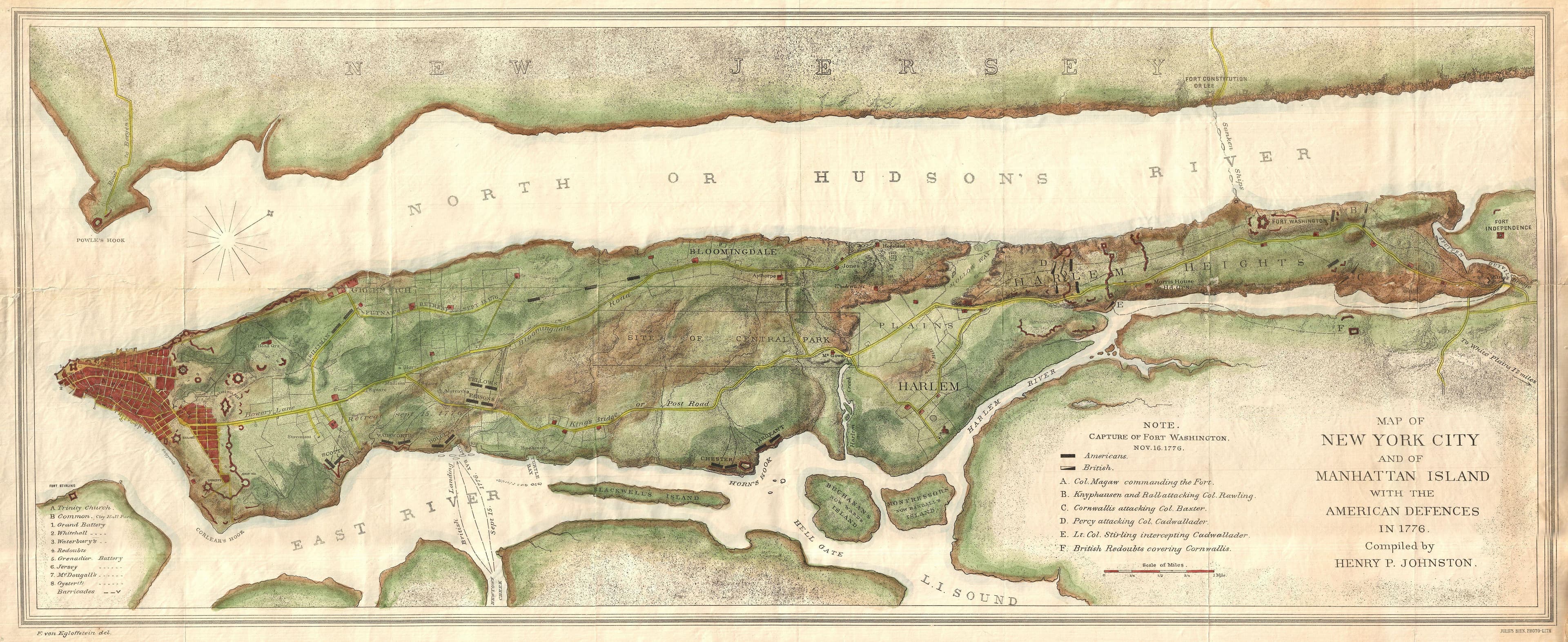
General George Washington, Commander-in-Chief of the Continental forces, had anticipated that the British would target New York City after their evacuation of Boston in March 1776. New York's strategic harbor and its position at the mouth of the Hudson River made it an invaluable prize, and controlling it would allow the British to sever New England from the rest of the colonies. Washington moved his army south and began fortifying positions across Manhattan and Brooklyn Heights on the western end of Long Island. However, his force of roughly 10,000 troops was a patchwork army, composed largely of inexperienced militia who had never faced the disciplined ranks of professional European soldiers. They were spread thin across multiple defensive lines, and critical intelligence about the surrounding terrain was lacking.
General Sir William Howe, the British Commander-in-Chief, arrived in New York Harbor with an overwhelming force. By late August, he had landed approximately 20,000 well-trained British and Hessian troops on the southwestern shore of Long Island, vastly outnumbering the American defenders. Howe devised a cunning plan of attack. While diversionary forces engaged the Americans along the Gowanus Road and Flatbush Pass, Howe personally led the main body of his army on a nighttime flanking march through the Jamaica Pass, a route on the American left that Washington's commanders had inexplicably left virtually unguarded. On the morning of August 27, 1776, the British struck from an unexpected direction, rolling up the American left flank and sending shockwaves through the Continental lines. The fighting was fierce and chaotic. American units, caught between converging British columns, suffered devastating losses. Soldiers who had never experienced combat broke and fled, while others fought bravely but were overwhelmed. By the end of the day, the Continental Army had been driven back to its fortified positions on Brooklyn Heights, having suffered approximately 1,000 casualties and nearly as many captured, compared to far lighter British losses.
The situation grew even more dire over the following two days as a heavy rainstorm drenched the area, turning roads to mud and making any organized movement agonizingly difficult. Washington and his officers faced a grim reality: the army was pinned against the East River with a superior enemy force closing in. If Howe launched a full assault on Brooklyn Heights — or if British warships sailed up the river to cut off escape — the entire Continental Army could be destroyed and the revolution effectively ended. Yet Washington, demonstrating the resourcefulness and composure under pressure that would come to define his leadership, organized one of the most remarkable retreats in military history. On the night of August 29–30, using every available boat and relying heavily on the seamanship of fishermen and mariners from Marblehead, Massachusetts, Washington ferried his entire army across the East River to Manhattan. The operation continued through the dark hours, and when dawn threatened to expose the final boats still crossing, a fortuitous fog settled over the river, concealing the last of the retreating troops from British eyes. By morning, the army had vanished.
The Battle of Long Island was a sobering defeat that shattered any illusion that enthusiasm alone could overcome British military power. It made clear that New York City could not be held, and Washington would eventually be forced to abandon Manhattan entirely in the weeks that followed, enduring further retreats through New Jersey as 1776 drew to a close. Yet the survival of the army itself was arguably more important than any single battle. Washington had lost the fight but preserved the force that would continue the war. The desperate crossing of the East River became an early testament to a principle that would sustain the American cause through years of hardship: as long as the army endured, the revolution lived on.
People Involved
George Washington
Continental Army Commander-in-Chief
Commander-in-chief who fought desperately to hold New York in 1776, lost the city after the Battle of Long Island, and returned in triumph on Evacuation Day 1783. His defense of New York was a military failure that nearly destroyed the army, but his escape preserved the Continental cause.
General Sir William Howe
British Commander-in-Chief
British commander who captured New York in 1776 through a series of brilliant flanking maneuvers that drove Washington from Long Island, Manhattan, and ultimately out of New York entirely. His failure to destroy Washington's retreating army has been debated by historians for centuries.
Sources for New York City