
1752–1818
George Rogers Clark
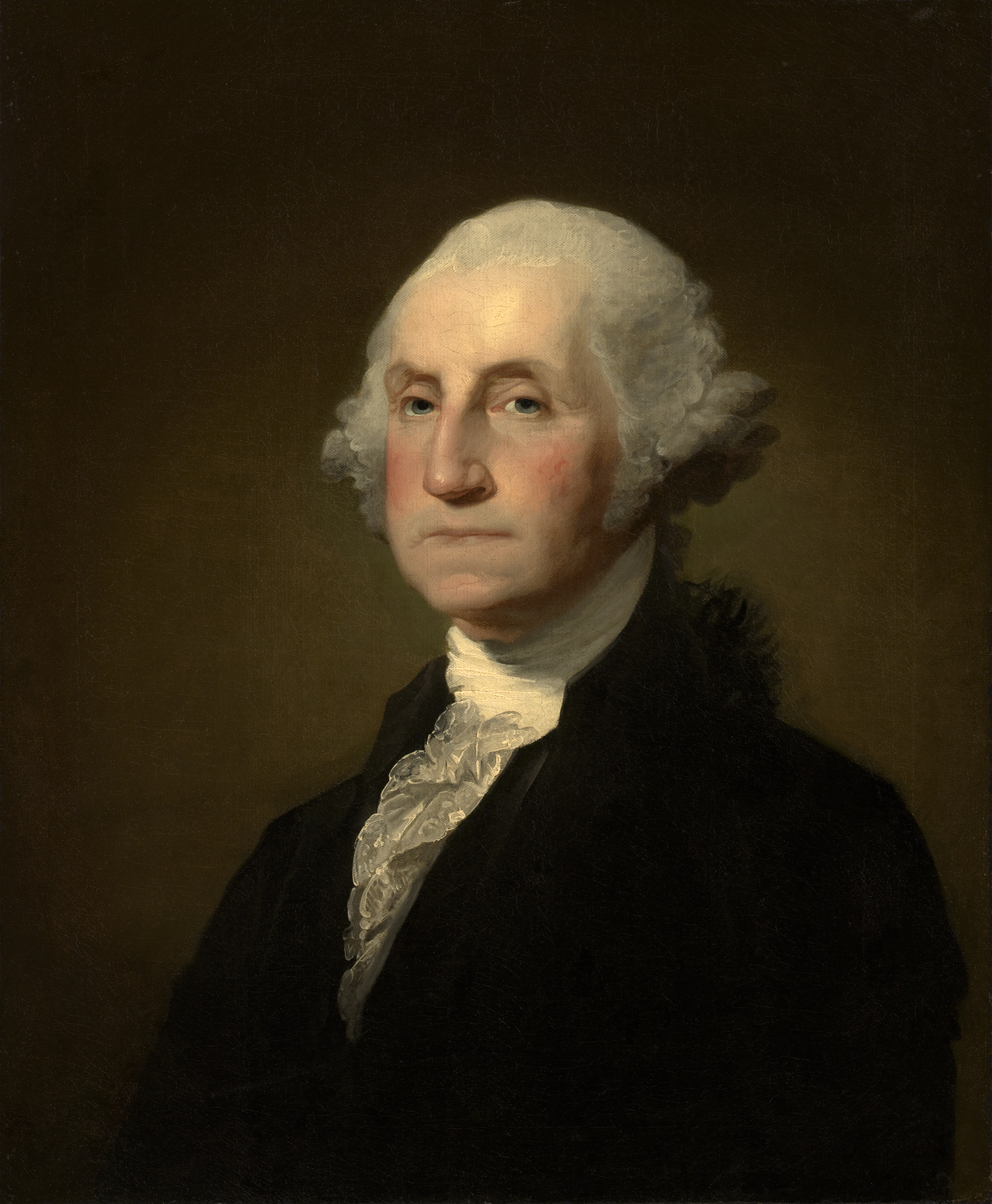
Gilbert Stuart, 1803
Biography
George Rogers Clark (1752–1818)
Virginia Militia General, Illinois Country Campaigner, Western Theater Commander
Born in 1752 in Albemarle County, Virginia — in the same rural neighborhood that produced Thomas Jefferson — the young George Rogers Clark was shaped by a frontier culture that valued boldness, physical endurance, and the relentless pursuit of western land. While Virginia's Tidewater gentry debated Enlightenment philosophy and parliamentary rights, Clark absorbed a rougher education. By his early twenties he was working as a surveyor in the dangerous, contested wilderness of Kentucky, learning to read the landscape, navigate river systems, and understand the volatile relationships among Native American nations, British traders, and American settlers pushing past the Appalachian barrier. This was no abstract knowledge. The Ohio Valley in the early 1770s was a powder keg of overlapping claims and simmering violence, and Clark developed a firsthand appreciation of how military force, diplomacy, and geography intersected in ways that eastern politicians rarely grasped. His years in Kentucky gave him something invaluable: an understanding that whoever controlled the western posts controlled the allegiance of Native communities, the flow of trade goods, and ultimately the future of an entire continent's interior. That understanding would soon drive him to conceive one of the Revolution's most daring campaigns.
When the American Revolution erupted, Kentucky's scattered settlements found themselves in a desperate defensive posture. British officers operating from posts in the Illinois Country and at Detroit organized and supplied Native American war parties that struck Kentucky with devastating raids, burning cabins, killing settlers, and threatening to drive the entire American presence back across the mountains. By 1776, Clark had emerged as the most capable military leader among these beleaguered frontier communities, a man who combined physical courage with strategic imagination. Rather than accept a purely reactive defense, Clark began formulating an offensive plan that was breathtaking in its ambition: he would carry the war directly to the British posts in the northwest, seizing the enemy's bases and severing the supply lines that fueled the raids against Kentucky. In late 1777 he traveled east to Williamsburg, where he presented his plan to Governor Patrick Henry and key members of Virginia's government. His persuasive intelligence won him authorization, a commission as a lieutenant colonel of Virginia militia, and modest funding — though far less than the operation truly required. The plan hinged on speed, secrecy, and a willingness to gamble everything on a small force penetrating deep into enemy-held territory with no realistic prospect of reinforcement or retreat.
Clark's most consequential decisions came in rapid succession during 1778 and early 1779. After assembling roughly 175 men and staging his expedition through Fort Pitt — Pittsburgh's strategic military installation that served as the indispensable gateway to the western waters — Clark's small force embarked down the Ohio River in May 1778. At Fort Pitt, boats were constructed, supplies accumulated, and final preparations made for a journey into territory where failure meant annihilation. Arriving in the Illinois Country, Clark captured the British post at Kaskaskia on July 4, 1778, achieving complete surprise and taking the settlement without a pitched battle. He quickly followed by securing Cahokia and winning the allegiance of French-speaking inhabitants who had little loyalty to the British Crown. These bloodless victories demonstrated Clark's gift for combining military intimidation with diplomatic persuasion, as he convinced local populations and several Native American groups that the American cause represented the stronger hand. But his greatest test still lay ahead, and it would demand a kind of physical and psychological endurance that few commanders in the Revolution ever faced.
The turning point of Clark's campaign — and arguably of the entire western war — came in February 1779 with his legendary march on Vincennes. After learning that the British lieutenant governor Henry Hamilton had recaptured Fort Sackville at Vincennes with a mixed force of regulars, militia, and Native warriors, Clark made the audacious decision to strike immediately rather than wait for spring. He led approximately 170 men on a harrowing 180-mile march through the flooded bottomlands of southern Illinois in the dead of winter, wading for days through icy water that sometimes reached their chests, with food supplies nearly exhausted. The suffering was extreme, but Clark held his men together through sheer force of personality, leading from the front and refusing to acknowledge the possibility of failure. On February 25, 1779, his bedraggled force appeared before Vincennes and launched an assault that caught Hamilton completely off guard. After two days of fighting, Hamilton surrendered — a humiliation the British never reversed. The capture of Vincennes and Hamilton's imprisonment became one of the most celebrated American victories in the west, and it fundamentally altered the strategic balance in the Ohio Valley for the remainder of the war.
Clark's achievements did not occur in isolation; they depended on a network of relationships and rivalries that shaped every outcome. Governor Patrick Henry's willingness to trust an untested young militia officer with an independent command was essential, as was the quiet support of George Mason and Thomas Jefferson, who understood the geopolitical significance of western territorial claims. Clark also relied heavily on French-speaking settlers and traders in the Illinois Country, particularly figures like Father Pierre Gibault, whose influence among the Catholic population of Kaskaskia and Cahokia helped swing those communities to the American side without bloodshed. His relationship with various Native American leaders was more fraught — Clark could alternate between diplomacy and brutal intimidation, and his treatment of Native peoples reflected the ruthless logic of frontier warfare. His inability to capture Detroit, the primary British base in the northwest, frustrated him throughout the war and represented the limits of what a small, poorly supplied force could achieve. Meanwhile, the British commander Hamilton — known to Americans as the "Hair Buyer" for allegedly paying bounties on American scalps — became Clark's personal antagonist, and their confrontation at Vincennes gave the campaign a dramatic, almost novelistic quality that has captivated historians ever since.
The legacy of George Rogers Clark illustrates both the grandeur and the tragedy embedded in the American Revolution. His conquest of the Illinois Country gave American diplomats a powerful territorial argument at the peace negotiations in Paris, and the 1783 Treaty of Paris confirmed American sovereignty over the vast Northwest Territory — the lands that would become Ohio, Indiana, Illinois, Michigan, Wisconsin, and part of Minnesota. Few military campaigns in the entire war had such enormous long-term consequences for the shape of the nation. Yet Clark himself was destroyed by his own success. Virginia's wartime finances were in chaos, his accounts were never properly settled, and he had personally guaranteed debts to supply his troops that the state refused to honor. He spent his final decades in poverty, alcoholism, and physical decline, eventually suffering a stroke and the amputation of a leg. He died in 1818 in a modest cabin near Louisville, Kentucky — the same frontier region he had fought to save. His story forces us to confront an uncomfortable truth about the Revolution: that the republic could consume its heroes, that sacrifice and accomplishment offered no guarantee of recognition, and that the west was won through a combination of extraordinary courage and terrible human cost.
WHY GEORGE ROGERS CLARK MATTERS TO PITTSBURGH
George Rogers Clark's story reveals Pittsburgh's indispensable role as the launchpad for America's western war. Fort Pitt was not merely a waypoint — it was the strategic nerve center where Clark organized his troops, built the flatboats that carried them downriver, and accumulated the scarce supplies that made the Illinois campaign possible. Without Pittsburgh's position at the confluence of the Allegheny, Monongahela, and Ohio rivers, there was simply no practical way to project American military power into the interior. Students and visitors standing at the Point today should understand that this ground was the starting line for one of the Revolution's most consequential offensives — a campaign that ultimately determined whether the new nation would remain a thin strip along the Atlantic seaboard or stretch westward across an entire continent.
TIMELINE
- 1752: Born on November 19 in Albemarle County, Virginia
- 1772–1774: Works as a surveyor in Kentucky and the Ohio Valley, gaining frontier experience
- 1776: Emerges as the leading military figure among Kentucky's besieged settlements
- 1777: Travels to Williamsburg and persuades Governor Patrick Henry to authorize the Illinois campaign
- 1778 (May): Stages his expedition through Fort Pitt in Pittsburgh, embarking down the Ohio River with approximately 175 men
- 1778 (July 4): Captures the British post at Kaskaskia in the Illinois Country without significant resistance
- 1778 (July): Secures Cahokia and wins the allegiance of French inhabitants and several Native American groups
- 1779 (February 25): Captures Fort Sackville at Vincennes after a grueling winter march; takes British commander Henry Hamilton prisoner
- 1783: Treaty of Paris confirms American sovereignty over the Northwest Territory, validating Clark's conquests
- 1818: Dies on February 13 near Louisville, Kentucky, in poverty and broken health
SOURCES
- Lowell H. Harrison. George Rogers Clark and the War in the West. University Press of Kentucky, 1976.
- James Alton James. The Life of George Rogers Clark. University of Chicago Press, 1928.
- William Hayden English. Conquest of the Country Northwest of the River Ohio, 1778–1783, and Life of Gen. George Rogers Clark. Bowen-Merrill Company, 1896.
- George Rogers Clark. Clark's Memoir (George Rogers Clark Papers, 1771–1781). Edited by James Alton James, Illinois State Historical Library, 1912.
- National Park Service. George Rogers Clark National Historical Park. https://www.nps.gov/gero/
In Pittsburgh
Jan
1778
George Rogers Clark Stages Illinois Campaign Through PittsburghRole: Virginia Militia General
**George Rogers Clark and the Illinois Campaign: Pittsburgh as the Gateway to the West** When most Americans think of the Revolutionary War, they picture the battlefields of Lexington, Bunker Hill, and Yorktown — clashes fought along the eastern seaboard between Continental regulars and British redcoats. But the war for American independence was also fought in the vast, heavily forested territories west of the Appalachian Mountains, and one of the most consequential campaigns of the entire conflict was organized and launched not from Philadelphia or Boston, but from the rugged frontier outpost of Pittsburgh, Pennsylvania. There, at the confluence of the Allegheny and Monongahela Rivers — the strategic crossroads long known as the Forks of the Ohio — a young Virginia militia officer named George Rogers Clark assembled the men, supplies, and resolve needed to seize the British-held settlements of the Illinois country, a campaign that would ultimately shape the boundaries of the new nation itself. By the winter of 1777, the American frontier was in crisis. British officers operating out of Detroit had cultivated alliances with numerous Native American nations, encouraging raids on American settlements stretching from western Pennsylvania to Kentucky. The most notorious of these officers was Lieutenant Governor Henry Hamilton, whom settlers bitterly called "the Hair-Buyer" for his alleged practice of offering bounties for American scalps. Frontier families lived in constant terror, and the thin line of American forts west of the mountains — chief among them Fort Pitt at Pittsburgh — struggled to maintain order and defense with chronically limited resources. Clark, a Virginian who had spent years surveying and fighting in Kentucky, recognized that a purely defensive posture would never end the threat. Instead, he conceived an audacious plan: rather than waiting for British-sponsored war parties to strike American settlements, he would carry the fight into the heart of British-controlled territory by seizing the old French villages of Kaskaskia, Cahokia, and Vincennes in present-day Illinois and Indiana. Clark traveled to Williamsburg, Virginia, where he secured the secret backing of Governor Patrick Henry and the Virginia Council. Henry authorized Clark to raise troops and provided him with funds, though the resources were modest for so ambitious an undertaking. Crucially, Clark was directed to use Fort Pitt and the broader Pittsburgh network as his primary staging and supply point. This was no accident of geography — it was a strategic necessity. Pittsburgh sat at the only practical gateway to the Ohio Valley, the place where overland supply lines from the East met the river system that flowed deep into the continental interior. Without access to Fort Pitt's stores, its small but vital garrison, and the network of frontier traders and militiamen who orbited the post, Clark's expedition would have been logistically impossible. In the spring of 1778, Clark gathered roughly one hundred and seventy-five volunteers and departed down the Ohio River. On July 4, 1778 — a date rich with symbolic resonance — his force surprised and captured Kaskaskia without firing a shot. Cahokia soon followed. Clark skillfully won over many of the French-speaking inhabitants, who had little loyalty to their distant British overlords. Vincennes, too, initially fell to American influence when its French residents shifted allegiance. But Hamilton, determined to reverse these losses, marched south from Detroit and recaptured Vincennes in December 1778. Clark's response became the stuff of frontier legend. In February 1779, he led his small force on an extraordinary winter march across nearly two hundred miles of flooded Illinois plains, wading through icy, chest-deep water for days. Arriving at Vincennes in a condition that Hamilton believed impossible, Clark bluffed and fought his way to victory, capturing Hamilton himself and sending him east as a prisoner. The consequences of the Illinois campaign reached far beyond the immediate military results. By establishing an American presence in the western territories, Clark gave American diplomats — particularly Benjamin Franklin, John Adams, and John Jay — a powerful argument during the peace negotiations that concluded the war. When the Treaty of Paris was signed in 1783, the new United States secured its western boundary at the Mississippi River, a vast territorial gain that many historians believe would have been far less certain without Clark's conquests. Pittsburgh's role as the indispensable staging ground for this campaign underscored a truth that would define American expansion for decades to come: whoever controlled the Forks of the Ohio controlled access to the West, and with it, the future shape of the continent.
Sep
1783
Treaty of Paris Confirms Ohio Valley ClaimsRole: Virginia Militia General
# Treaty of Paris Confirms Ohio Valley Claims When American and British diplomats gathered in Paris in the autumn of 1783 to finalize the terms that would formally end the Revolutionary War, one of the most consequential questions on the table was not about the thirteen coastal states themselves but about the vast interior of the continent stretching westward to the Mississippi River. The Treaty of Paris, signed on September 3, 1783, resolved that question decisively in America's favor, establishing the Mississippi as the western boundary of the newly independent United States. This extraordinary territorial gain effectively doubled the size of the nation beyond its original colonial footprints, and it was made possible in no small part because of what had happened during the war in and around Pittsburgh and the Ohio Valley. The significance of Pittsburgh in this story stretches back to the earliest years of the Revolution. Fort Pitt, situated at the strategic confluence of the Allegheny and Monongahela Rivers where they form the Ohio, had served as the primary American military installation in the western theater for nearly the entire duration of the war. For eight years, from the mid-1770s through the early 1780s, it functioned as a Continental outpost, supply depot, and staging ground for operations deeper into the frontier. Its garrison was often undersupplied, its defenses sometimes precarious, and its commanders frequently frustrated by the difficulty of maintaining a military presence so far from the eastern centers of power. Yet its very persistence mattered enormously. Fort Pitt represented a continuous, physical American claim to the Ohio Valley — not merely words on a map, but soldiers on the ground, a logistics chain stretching westward, and a community of settlers and militia who had committed themselves to holding that territory. No figure loomed larger in the western military effort than George Rogers Clark, the Virginia militia general whose daring campaigns through the Illinois Country in 1778 and 1779 had stunned the British and reshaped the strategic landscape of the frontier war. Clark's capture of Kaskaskia and Vincennes demonstrated that American forces could project power far beyond the Appalachian Mountains, striking at British-held posts deep in the interior. These campaigns, launched with the support and supply lines running through Pittsburgh, gave American diplomats in Paris something invaluable: evidence that the United States did not merely aspire to control the lands between the Appalachians and the Mississippi but had fought for and held them. British negotiators understood the principle that territory occupied and defended carried far more weight in peace negotiations than territory merely claimed on paper, and Clark's victories, combined with the sustained presence at Fort Pitt, made the American case difficult to dismiss. The treaty's provisions regarding these western territories were, however, deeply incomplete in one critical respect. The agreement between the United States and Great Britain made no mention whatsoever of the Native American nations who had inhabited and controlled much of the Ohio Valley for generations. The Indigenous peoples whose lands were being transferred between European and American powers were simply written out of the document, their sovereignty and their claims set aside as though they did not exist. This profound omission did not erase the reality on the ground, and it stored up decades of violent conflict that would define the post-Revolutionary frontier. Wars with Native nations in the Ohio Valley would continue through the 1790s and beyond, fueled by the fundamental injustice of a treaty that disposed of their homelands without their knowledge or consent. For Pittsburgh specifically, the Treaty of Paris marked a pivotal transformation. During the war, the settlement's identity had been defined almost entirely by its strategic military importance — it was the gateway through which American power flowed into the western interior. After 1783, that strategic role gradually gave way to a commercial and economic one. The same geographic advantages that had made Fort Pitt indispensable during wartime — its position at the headwaters of the Ohio River, its access to waterways reaching deep into the continent — now made Pittsburgh a natural hub for trade, migration, and westward expansion. Fort Pitt itself was gradually abandoned during the 1790s, its military purpose exhausted, but by then the town growing around its remnants had already begun its evolution into something larger. The treaty had confirmed what Clark's campaigns and Fort Pitt's long garrison duty had established: that the Ohio Valley belonged to the United States, and that Pittsburgh stood at its threshold, poised to become the gateway not just to a war but to a continent.