
1738–1805
General Lord Charles Cornwallis
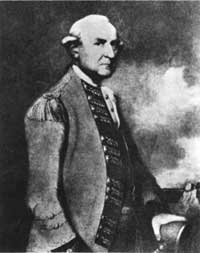
Unknown, 2006
Biography
General Lord Charles Cornwallis (1738–1805)
British Commander Whose Fateful Decision at Wilmington Changed the Course of a War
Born on December 31, 1738, into one of England's most distinguished aristocratic families, Charles Cornwallis grew up in the rarefied world of the British peerage with every expectation of a life spent in service to the Crown. His father, the first Earl Cornwallis, ensured that young Charles received an education befitting his station, first at Eton and then at the military academy in Turin, Italy, where he studied the art of European warfare under some of the continent's finest instructors. He entered the British Army as an ensign in the Grenadier Guards at the age of eighteen and saw his first combat during the Seven Years' War, fighting at the Battle of Minden in 1759 and serving with distinction in several German campaigns. These early experiences shaped a soldier who was brave to the point of recklessness, personally charismatic with his men, and tactically aggressive — qualities that would serve him brilliantly in small engagements but blind him to the broader strategic picture when it mattered most. He inherited his father's earldom in 1762, becoming the second Earl Cornwallis, and took his seat in the House of Lords, where he demonstrated a political independence that would later complicate his military relationships.
The path that brought Cornwallis to the American war was neither simple nor entirely willing. As a member of the House of Lords in the 1760s and 1770s, he had actually voted against the Stamp Act and expressed sympathy for colonial grievances, placing himself among a minority of British aristocrats who questioned Parliament's aggressive taxation policies. Yet when war broke out in 1775, Cornwallis's sense of duty to his king overrode whatever political reservations he harbored. He arrived in America in 1776 as a major general, bringing with him reinforcements for the campaign to capture New York. His early service under General William Howe proved him an energetic and capable field commander. He pursued Washington's retreating army across New Jersey with a vigor that nearly ended the Revolution before it truly began. The surprise American attack at Princeton in January 1777, which caught the British off guard after Cornwallis believed he had Washington cornered, offered an early lesson in the dangers of underestimating his opponents — a lesson he would repeatedly fail to fully absorb. His commitment to the war deepened even as the conflict's political complexity grew more apparent to officers serving in the field.
The most significant military action of Cornwallis's American career was not a single battle but rather the fateful strategic decision he made at Wilmington, North Carolina, in April 1781. After the Battle of Guilford Courthouse on March 15, 1781, Cornwallis had driven General Nathanael Greene's Continental Army from the field in what appeared to be a tactical victory. But the cost was staggering — nearly six hundred British soldiers killed or wounded, representing more than a quarter of his effective fighting force. Unable to pursue Greene and unable to sustain operations in the Carolina interior, Cornwallis retreated eastward to Wilmington, a loyalist-leaning coastal town where British naval supply ships could reach him. There, resting his battered and depleted army, he confronted a choice that would determine the outcome of the entire war. He could march south to reinforce the increasingly vulnerable chain of British outposts across South Carolina, or he could strike north into Virginia, which he believed was the true logistical heart sustaining the American war effort in the South. He chose Virginia — a decision made without authorization from his superior, Sir Henry Clinton, and one that would lead inexorably to the catastrophe at Yorktown.
The Battle of Guilford Courthouse itself stands as the pivotal engagement that made Cornwallis's Wilmington decision necessary. On that cold March morning near present-day Greensboro, North Carolina, Cornwallis attacked Greene's force of approximately 4,400 men with fewer than 2,000 of his own. The battle unfolded across three defensive lines that Greene had carefully arranged, and the fighting grew increasingly savage as the British advanced. At the critical moment, with American and British troops intermingled in desperate close combat, Cornwallis made the shocking decision to order his artillery to fire grapeshot into the melee, killing his own men alongside the enemy to break the American resistance. The tactic worked tactically but horrified many of his own officers. Greene withdrew in good order, his army battered but intact and capable of further operations. Cornwallis held the field — the traditional measure of victory — but his army was shattered. Charles James Fox famously remarked in Parliament that another such victory would destroy the British Army entirely. It was the purest example of a Pyrrhic victory the Revolution produced, and it set everything that followed in motion.
The relationships that defined Cornwallis's role in the American South were marked by tension, rivalry, and strategic disagreement that ultimately proved as damaging as any battlefield defeat. His relationship with Sir Henry Clinton, the British commander-in-chief in New York, deteriorated into mutual suspicion and recrimination that paralyzed unified British strategy at the war's most critical juncture. Clinton favored a cautious, consolidating approach that prioritized holding territory already gained, while Cornwallis believed that only aggressive offensive action could break American resistance. Neither man trusted the other's judgment, and their correspondence grew increasingly bitter as events spiraled toward disaster. Cornwallis's relationship with his subordinates was warmer — officers like Banastre Tarleton and Charles O'Hara admired his personal courage and willingness to share the hardships of campaign life. His relationship with Nathanael Greene, his principal American adversary, was one of grudging mutual respect between two skilled professionals. Greene understood Cornwallis's aggressive temperament and exploited it masterfully, drawing the British deeper into hostile territory while avoiding the decisive engagement Cornwallis craved. The fractured British command structure, more than any single American action, created the conditions for defeat.
Cornwallis's southern campaign was shadowed by controversy and moral complexity that complicated any simple narrative of military professionalism. The war in the Carolinas was among the most brutal theaters of the entire Revolution, characterized by savage partisan warfare, reprisals against civilians, and atrocities committed by forces nominally under British command. While Cornwallis himself was generally regarded as more honorable than many of his subordinates, he bore ultimate responsibility for the conduct of officers like Banastre Tarleton, whose cavalry earned a reputation for brutality that inflamed patriot resistance rather than suppressing it. The burning of his own baggage train before Guilford Courthouse — a dramatic gesture intended to speed his pursuit of Greene — destroyed supplies his army desperately needed and demonstrated a pattern of tactical boldness overriding logistical prudence. His decision to march to Virginia without Clinton's authorization represented a serious breach of military protocol that reflected either supreme confidence in his own strategic vision or a dangerous contempt for the chain of command. The aftermath of Guilford Courthouse, with hundreds of wounded British soldiers left in makeshift field hospitals with inadequate care, underscored the human cost of his aggressive campaigning style in a theater where replacements were almost impossible to obtain.
The war changed Cornwallis in ways both visible and deeply personal, though the full measure of that transformation only became clear in his later career. He had arrived in America in 1776 as a confident, ambitious officer eager for the glory that decisive victory would bring. During a brief return to England in 1778, he nursed his beloved wife Jemima through a fatal illness, a loss that devastated him and from which intimates said he never fully recovered. He returned to America partly, it was said, because he could no longer bear the domestic surroundings that reminded him of her. The grinding southern campaign of 1780 and 1781 — with its endless marches through hostile territory, its inconclusive victories, and the steady erosion of his once-formidable army — stripped away whatever romantic notions of war he may have carried. By the time he reached Wilmington in April 1781, he commanded an army at roughly half its original strength, exhausted and far from reliable supply. The decision to march into Virginia rather than retrace his steps south may have reflected not just strategic calculation but a psychological inability to accept that his aggressive campaign had failed and that retreat and consolidation were the wiser course.
Cornwallis's role in the war's resolution came at Yorktown, Virginia, where the consequences of his Wilmington decision reached their dramatic conclusion. After marching north from Wilmington in late April 1781, he spent the summer conducting raids across Virginia, burning supplies and disrupting American logistics, but failing to achieve any decisive strategic result. Under Clinton's orders, he fortified a position at Yorktown on the Chesapeake peninsula, expecting naval support and reinforcement that never materialized. When the French fleet under Admiral de Grasse sealed the Chesapeake in September 1781, and the combined armies of Washington and Rochambeau closed in by land, Cornwallis found himself trapped with approximately 8,000 men. After weeks of siege and a failed attempt to escape across the York River, he surrendered on October 19, 1781. In a final gesture that revealed his anguish and wounded pride, Cornwallis claimed illness and sent Brigadier General Charles O'Hara to present his sword in his place — a breach of protocol that Washington answered by directing his own second-in-command, General Benjamin Lincoln, to receive it. The surrender effectively ended major combat operations in America.
Contemporary assessments of Cornwallis were surprisingly divided and far more nuanced than the simple label of defeated general might suggest. Many British observers, including King George III himself, did not blame Cornwallis for the catastrophe at Yorktown, directing their anger instead at Clinton for failing to provide adequate support and at the Admiralty for losing naval control of the Chesapeake. Cornwallis returned to England not in disgrace but with his reputation largely intact among the political and military establishment. He was appointed Governor-General of India in 1786, where he conducted a successful war against Tipu Sultan and implemented administrative reforms that shaped British colonial governance for generations. He later served as Lord Lieutenant of Ireland during the turbulent 1798 rebellion and was involved in negotiating the Treaty of Amiens with France in 1802. American contemporaries viewed him with the respect typically accorded a worthy adversary — a brave and skilled soldier who had been undone by the impossible contradictions of fighting a people's war of independence with a conventional European army operating at the end of an impossibly long supply chain across the Atlantic Ocean.
Students and visitors today should know Cornwallis's story because it illuminates one of history's most profound lessons: that tactical brilliance without strategic wisdom leads to defeat, and that individual decisions made in specific places can alter the fate of nations. His experience at Wilmington — arriving with a broken army after a hollow victory, facing a choice between prudent consolidation and bold offensive action — crystallizes the dilemma that faces every military commander operating at the edge of sustainable operations. His choice to march into Virginia rather than reinforce South Carolina left Greene free to systematically dismantle the British interior position across the Carolinas, post by post, ultimately undoing everything British arms had achieved in the South. Cornwallis was not a villain, nor was he incompetent — he was a talented, brave, deeply human officer trapped in a war that could not be won by the methods he employed. His story teaches us that wars are not decided solely by who wins battles but by who understands the larger picture, and that the line between bold leadership and fatal overreach is often visible only in hindsight. For anyone standing in Wilmington today, the ground itself whispers the weight of that April 1781 decision.
WHY GENERAL LORD CHARLES CORNWALLIS MATTERS TO WILMINGTON
Wilmington, North Carolina, was the place where the American Revolution's endgame began to take its final shape. When Cornwallis arrived there in April 1781 with an army reduced to half its fighting strength, the small coastal town became the stage for one of the war's most consequential strategic decisions. By choosing to march north into Virginia rather than south to shore up crumbling British positions in the Carolinas, Cornwallis set in motion the chain of events that ended at Yorktown and effectively concluded the war. Wilmington's role reminds us that pivotal moments in history do not always happen on famous battlefields — sometimes they happen in quiet towns where exhausted commanders study maps and make choices that change the world.
TIMELINE
- 1738: Born December 31 in London, England, to Charles, first Earl Cornwallis, and Elizabeth Townshend
- 1757: Receives his first military commission as ensign in the Grenadier Guards
- 1759: Sees first combat at the Battle of Minden during the Seven Years' War
- 1762: Inherits the earldom upon his father's death, becoming second Earl Cornwallis
- 1776: Arrives in America as a major general; participates in the New York and New Jersey campaigns
- 1780: Takes command of British forces in the southern theater; wins the Battle of Camden in August
- 1781 (March 15): Wins the costly Battle of Guilford Courthouse, losing over a quarter of his effective force
- 1781 (April): Arrives at Wilmington, North Carolina, with his depleted army; decides to march into Virginia
- 1781 (October 19): Surrenders approximately 8,000 troops at Yorktown, Virginia, effectively ending the war
- 1805: Dies October 5 in Ghazipur, India, during his second appointment as Governor-General
SOURCES
- Wickwire, Franklin and Mary. Cornwallis: The American Adventure. Houghton Mifflin, 1970.
- Buchanan, John. The Road to Guilford Courthouse: The American Revolution in the Carolinas. John Wiley & Sons, 1997.
- Cornwallis, Charles. Correspondence of Charles, First Marquis Cornwallis, edited by Charles Ross. John Murray, 1859.
- Lumpkin, Henry. From Savannah to Yorktown: The American Revolution in the South. University of South Carolina Press, 1981.
- National Park Service. "Yorktown Battlefield: The Siege of Yorktown." https://www.nps.gov/york
In Wilmington
Mar
1781
Battle of Guilford Courthouse — Cornwallis's Pyrrhic VictoryRole: British Commander, Southern Army
**The Battle of Guilford Courthouse: A Victory That Cost Britain the South** By the early months of 1781, the war in the American South had become a grueling contest of maneuver and attrition. After a string of British successes — the fall of Charleston in 1780 and the devastating rout of American forces at Camden — General Lord Charles Cornwallis, commander of the British Southern Army, believed he was on the verge of crushing the rebellion below the Mason-Dixon line. But the appointment of Major General Nathanael Greene to lead the Continental Army's Southern Department in late 1780 changed the character of the campaign entirely. Greene, a Rhode Islander who had earned George Washington's deep trust through years of service, was a strategist of uncommon skill. He understood that he did not need to win battles to win the war; he needed only to keep his army intact and wear the British down. In the weeks before Guilford Courthouse, Greene employed a bold and unconventional strategy. He divided his already outnumbered force, sending Brigadier General Daniel Morgan with a detachment westward while he moved the rest of his army in a different direction. This gambit forced Cornwallis to divide his own troops, and the results were devastating for the British. At the Battle of Cowpens in January 1781, Morgan inflicted a stunning defeat on a British force under Lieutenant Colonel Banastre Tarleton, killing or capturing more than 800 soldiers. Enraged, Cornwallis stripped his army of its baggage and heavy supplies to pursue Greene across North Carolina in what became known as the "Race to the Dan." Greene narrowly escaped across the Dan River into Virginia, and Cornwallis, unable to follow, was left deep in hostile territory with an exhausted and diminished force. Greene, however, was far from finished. After receiving reinforcements — including Virginia and North Carolina militia — he recrossed the Dan and chose to give battle on his own terms. On March 15, 1781, the two armies met at Guilford Courthouse, near present-day Greensboro, North Carolina. Greene arranged his roughly 4,400 troops in three defensive lines, a formation inspired by Morgan's successful tactics at Cowpens. The first two lines consisted primarily of militia, whose job was to slow and disorganize the British advance before falling back. The third and strongest line was composed of Continental regulars, the backbone of the American force. Cornwallis, commanding approximately 1,900 seasoned British soldiers, attacked with characteristic aggression. The fighting was intense and, at times, desperate. The North Carolina militia in the first line fired volleys and then largely melted away, as Greene had anticipated. The Virginia militia in the second line fought more stubbornly before giving ground. When the British finally reached the third line, they met fierce resistance from the Continental regulars. At a critical moment, with the outcome in doubt and British and American troops locked in close combat, Cornwallis made the controversial decision to order his artillery to fire grapeshot into the melee — striking his own men along with the Americans — to break the deadlock. The tactic worked, and Greene, unwilling to risk the destruction of his army, ordered a disciplined withdrawal from the field. Cornwallis held the ground and could claim a tactical victory, but the cost was staggering. His army suffered over 500 killed and wounded, representing roughly twenty-seven percent of his entire force. Greene's casualties, while significant, were far lighter in proportion, and his army remained intact and ready to fight again. Too weakened to pursue Greene or to hold the interior of North Carolina, Cornwallis made the fateful decision to march his battered army southeast to Wilmington, where he could resupply by sea and rest his troops. The consequences of that decision reshaped the war. Rather than returning south to protect British gains in South Carolina and Georgia, Cornwallis chose to march north into Virginia, a move that ultimately led him to Yorktown — and to the siege that ended the war. Meanwhile, Greene turned south and methodically reclaimed nearly all of the territory the British had conquered in the Carolinas and Georgia, winning the broader Southern campaign despite never winning a major battle outright. In Parliament, the Whig opposition leader Charles James Fox captured the meaning of Guilford Courthouse with cutting precision: "Another such victory would destroy the British army." It remains one of history's most illustrative examples of a Pyrrhic victory — a win so costly that it amounts, in strategic terms, to defeat.
Apr
1781
Cornwallis Arrives at Wilmington — Army at Half StrengthRole: British Commander, Southern Army
**Cornwallis Arrives at Wilmington — An Army at Half Strength** By the spring of 1781, the British war effort in the American South had reached a critical turning point, though few fully understood it at the time. General Lord Charles Cornwallis, the commander of British forces in the Southern theater, had spent months pursuing an aggressive strategy to crush the Continental Army in the Carolinas and restore the region to royal control. That strategy had led him deep into the interior of North Carolina, far from his coastal supply lines, and it had culminated in the Battle of Guilford Courthouse on March 15, 1781. There, Cornwallis engaged the forces of Major General Nathanael Greene in a pitched battle that the British technically won — Greene withdrew from the field — but at a devastating cost. Cornwallis lost roughly a quarter of his fighting force in a single afternoon, suffering casualties he could not replace. The victory, if it could be called one, left his army shattered in spirit and body, too weakened to pursue Greene and too far from supply depots to sustain itself in the Carolina backcountry. With no viable option to continue offensive operations inland, Cornwallis made the difficult decision to retreat southeast toward the coast. His destination was Wilmington, North Carolina, where Major James Henry Craig had established a British garrison earlier that year. Craig had seized Wilmington in January 1781 as part of a broader effort to create coastal strongholds that could support British operations in the interior. His garrison controlled the port and the mouth of the Cape Fear River, providing a vital link to British naval supply lines. It was to this outpost that Cornwallis now dragged his battered column across the muddy roads of eastern North Carolina. When Cornwallis arrived at Wilmington in early April 1781, he brought with him approximately 1,400 soldiers — roughly half the strength he had commanded just weeks earlier. His men were exhausted, hungry, and demoralized. Many were sick or wounded. The army that had once seemed poised to conquer the Carolinas was now a diminished force clinging to a coastal town, dependent on Craig's supplies and whatever provisions could be shipped in by sea. Cornwallis remained at Wilmington for approximately three weeks, using the time to rest his troops, gather supplies, and tend to the wounded. But the most consequential activity during those weeks was not physical recovery — it was the strategic deliberation that consumed Cornwallis as he weighed his next move. The situation across the Carolinas was deteriorating rapidly for the British. While Cornwallis sat at Wilmington, Nathanael Greene made a bold and brilliant decision of his own. Rather than pursuing the weakened British army to the coast, Greene turned his forces southward into South Carolina, where a string of isolated British outposts and garrisons lay vulnerable. Greene understood that Cornwallis's retreat had left the interior of the Carolinas exposed, and he intended to systematically dismantle the British infrastructure of control that had been painstakingly built over the previous year. This meant that every day Cornwallis spent at Wilmington, the British grip on the Southern interior loosened further. Cornwallis faced a stark choice. He could march back into South Carolina to confront Greene and attempt to salvage British positions there, or he could move northward into Virginia, where he believed a more decisive blow could be struck against the American cause. He chose Virginia, a decision that would carry immense consequences. By abandoning the Carolinas to Greene, Cornwallis effectively conceded the interior of the South. His march into Virginia would eventually lead him to a small tobacco port called Yorktown, where the war's final decisive chapter would unfold in the autumn of 1781. The weeks Cornwallis spent at Wilmington thus represent one of the war's most significant strategic turning points. What appeared to be a mere pause for resupply was in reality the moment when the Southern campaign fractured irreparably. Greene's decision to strike south and Cornwallis's decision to march north sent the two armies in opposite directions, each shaping the outcome of the Revolution. Cornwallis's arrival at Wilmington with an army at half strength was not just a reflection of British losses at Guilford Courthouse — it was a symbol of a broader strategic collapse that would ultimately lead to American independence.
Apr
1781
Cornwallis Departs Wilmington for VirginiaRole: British Commander, Southern Army
# Cornwallis Departs Wilmington for Virginia By the spring of 1781, the British war effort in the American South had reached a critical crossroads. General Lord Charles Cornwallis, commander of the British Southern Army, had spent months pursuing a strategy of aggressive engagement across the Carolinas, believing that decisive battlefield victories would crush the American rebellion in the region and restore royal authority. While his forces had won tactical engagements, including a costly victory at the Battle of Guilford Courthouse in March 1781, those successes had come at a staggering price. Cornwallis's army was battered, undersupplied, and far from its coastal bases of support. After the brutal fighting at Guilford Courthouse, where Major General Nathanael Greene's Continental forces inflicted devastating casualties before withdrawing from the field, Cornwallis found himself commanding an exhausted force in hostile territory with dwindling provisions and no clear path to consolidating control over the Carolina interior. Rather than pursue Greene further inland, Cornwallis made the fateful decision to withdraw his weakened army southeast to the port town of Wilmington, North Carolina, where he could rest his troops and receive supplies by sea. It was from Wilmington that Cornwallis made one of the most consequential strategic decisions of the entire Revolutionary War. Faced with a choice between marching south to reinforce the chain of British outposts scattered across South Carolina and Georgia or striking north into Virginia, Cornwallis chose Virginia. His reasoning was rooted in a broader strategic vision: he believed that the interior of the Carolinas simply could not be held without a much larger army than he possessed, and that Virginia represented the true key to controlling the American South. In Cornwallis's estimation, Virginia served as the vital supply line and communication hub that sustained the American war effort throughout the southern states. If Virginia could be subdued, he argued, the rebellion in the Carolinas and Georgia would wither on the vine. In late April 1781, Cornwallis led his army north out of Wilmington, leaving behind the very positions his forces had fought so hard to establish across South Carolina. This decision, however bold in its logic, carried profound and unintended consequences. Major General Nathanael Greene, one of the most strategically gifted commanders on the American side, recognized the extraordinary opportunity that Cornwallis's departure had created. Rather than following the British army into Virginia, Greene turned his forces south and launched a methodical campaign to dismantle the network of British forts and outposts that Cornwallis had left inadequately defended. Over the following weeks and months, Greene and his subordinate commanders systematically reduced British control across South Carolina and Georgia, reclaiming territory and squeezing the remaining British forces into isolated coastal enclaves. Greene did not win every engagement during this campaign, but his relentless pressure and strategic acumen effectively undid the gains that years of British effort had produced in the Deep South. Meanwhile, Cornwallis's march into Virginia set in motion a chain of events that would prove catastrophic for the British cause. After weeks of maneuvering through Virginia, Cornwallis eventually established a position at the small tobacco port of Yorktown on the York River, where he intended to maintain a defensible post with access to the sea. But the convergence of American and French forces, both on land under General George Washington and the Comte de Rochambeau and at sea under the French Admiral the Comte de Grasse, trapped Cornwallis at Yorktown in a tightening siege. Cut off from reinforcement and resupply, Cornwallis surrendered his army in October 1781, effectively ending major combat operations in the Revolutionary War. Cornwallis's departure from Wilmington thus stands as a pivotal turning point in the conflict. In choosing Virginia over the Carolinas, he simultaneously abandoned the British position in the Deep South to Greene's methodical reclamation and placed his own army on a path toward encirclement and surrender. What seemed to Cornwallis like a bold strategic stroke ultimately fractured British control across the entire southern theater and delivered the war's decisive moment at Yorktown. This single decision illuminates how strategic choices made far from the most famous battlefields can reshape the outcome of an entire war.
Apr
1781
Greene Turns South — Dismantling British InteriorRole: British Commander, Southern Army
**Greene Turns South — Dismantling the British Interior** By the spring of 1781, the war in the American South had reached a critical turning point. For nearly two years, the British had pursued an ambitious strategy to pacify the southern colonies, beginning with the capture of Charleston in May 1780 and extending through a network of fortified interior posts stretching across South Carolina and Georgia. These garrisons, manned by British regulars and Loyalist militia, were designed to project royal authority deep into the backcountry and encourage Loyalist support. The strategy had shown early promise, but a series of brutal engagements and the tireless resistance of Continental and partisan forces had steadily eroded British confidence. At the center of the American effort stood Major General Nathanael Greene, a Rhode Islander whom George Washington had personally selected to command the Continental Army's Southern Department after the disastrous tenure of Horatio Gates. Greene had arrived in the South in December 1780 and immediately adopted an unconventional approach. Rather than concentrating his outnumbered forces for a single decisive battle against General Lord Charles Cornwallis and the British Southern Army, Greene divided his troops, forcing Cornwallis to chase him across the Carolina backcountry. This strategy of maneuver and attrition culminated in the Battle of Guilford Courthouse on March 15, 1781, where Cornwallis claimed a tactical victory but suffered crippling casualties that left his army battered and depleted. Unable to sustain operations in the Carolina interior, Cornwallis withdrew his weakened force to Wilmington, North Carolina, where he could receive supplies by sea and rest his exhausted troops. It was at Wilmington that Cornwallis made a fateful decision. Rather than turning back to confront Greene or reinforce the scattered British posts in South Carolina, he chose to march north into Virginia, believing that the war could be won by striking at what he considered the source of American resistance in the South. He departed Wilmington on April 25, 1781, setting in motion a chain of events that would ultimately lead him to Yorktown and to the catastrophic surrender that effectively ended the war. But the immediate consequence of his departure was equally significant, even if less famous. The day after Cornwallis left Wilmington, Nathanael Greene turned his own army south toward South Carolina. Greene recognized that Cornwallis's absence had created an extraordinary opportunity. The British interior posts — at Camden, Fort Watson, Fort Motte, Orangeburg, Fort Granby, Augusta, and Ninety Six, among others — were now isolated, cut off from any hope of reinforcement by the main British army. Greene set about dismantling them one by one, coordinating his Continental regulars with partisan leaders who had been harassing British supply lines and Loyalist strongholds for months. The campaign that followed was grueling and not without setbacks. Greene laid siege to the fortified post at Ninety Six from late May into June 1781, but the garrison held out long enough for a British relief column to approach, forcing Greene to withdraw. Yet even in retreat, Greene's strategy was working. Each post that fell, each garrison that was forced to consolidate toward the coast, shrank the territory under British control. On September 8, 1781, Greene fought the Battle of Eutaw Springs against a British force under Lieutenant Colonel Alexander Stewart. The engagement was one of the bloodiest of the entire war, and though Greene again left the field without a clear-cut victory, the British suffered such severe losses that they withdrew toward Charleston. By late 1781, the cumulative effect of Greene's relentless campaign was unmistakable. The British had been driven from every interior post in both South Carolina and Georgia. They clung only to the coastal cities of Charleston and Savannah, their grand southern strategy in ruins. Greene had not won a single conventional battlefield victory during this campaign, yet he had achieved something far more consequential. Through maneuver, persistence, and strategic brilliance, he had liberated the southern interior and rendered the British position in the South untenable. His campaign remains one of the most remarkable demonstrations of strategic thinking in American military history, proving that wars are not always won by winning battles but by making the enemy's victories meaningless.
Nov
1781
British Evacuate WilmingtonRole: British Commander, Southern Army
# The British Evacuation of Wilmington, 1781 The British evacuation of Wilmington, North Carolina, in November 1781 marked the end of a turbulent chapter in the state's Revolutionary War experience and signaled the broader collapse of British military strategy in the American South. Though often overshadowed by the dramatic surrender at Yorktown that precipitated it, the withdrawal from Wilmington carried deep significance for North Carolina and for the shifting fortunes of the war as a whole. To understand the evacuation, one must first consider why the British occupied Wilmington in the first place. In early 1781, General Lord Charles Cornwallis, commander of British forces in the Southern colonies, was pursuing an aggressive campaign through the Carolinas. After fighting a costly and inconclusive battle at Guilford Courthouse in March 1781 against American General Nathanael Greene, Cornwallis found his army battered, undersupplied, and deep in hostile territory. Rather than continue chasing Greene's forces through the Carolina interior, Cornwallis made the fateful decision to march his weary troops southeast toward the coast, where he could resupply and regroup. Wilmington, a port town situated along the Cape Fear River, became his destination. Cornwallis arrived there in April 1781, resting his army before making another consequential choice — to march north into Virginia rather than return to South Carolina. That decision would ultimately lead him to Yorktown and to the most famous American victory of the entire war. When Cornwallis departed Wilmington for Virginia, he left the town in the hands of Major James Henry Craig, a capable and determined British officer who had originally seized Wilmington in January 1781 with a small but effective garrison. Craig's occupation was far from passive. Over the course of roughly ten months, his forces used Wilmington as a base from which to project British power across southeastern North Carolina. Craig's troops conducted raids into the surrounding countryside, disrupted Patriot supply lines, and provided encouragement and support to Loyalist sympathizers in the region. His garrison enforced martial authority over the town itself, and the occupation imposed significant hardships on the local population. Craig proved to be a resourceful and aggressive commander, and his presence kept a considerable portion of eastern North Carolina under British influence even as the war's momentum shifted elsewhere. Everything changed on October 19, 1781, when Cornwallis surrendered his army to General George Washington and French commander the Comte de Rochambeau at Yorktown, Virginia. The surrender was a catastrophic blow to the British war effort, effectively ending major combat operations in the colonies. For Craig, isolated in Wilmington with a relatively small force and no realistic prospect of reinforcement, the news made his position untenable. Wilmington was now the last British-held position in all of North Carolina, and holding it served no meaningful strategic purpose. Following orders and recognizing the reality of the situation, Craig organized the evacuation of his garrison. His troops boarded ships and sailed south to Charleston, South Carolina, which remained under British control for the time being. The departure of British forces returned Wilmington to Patriot control after nearly ten months of occupation, and the town's residents could begin the difficult process of rebuilding civic life and recovering from the disruptions of war. However, the evacuation did not bring immediate peace to the region. In the countryside surrounding Wilmington, the bitter divisions between Patriots and Loyalists that had festered throughout the war continued to fuel violence. Raids, reprisals, and partisan skirmishes persisted for months, a reminder that the Revolutionary War in the South was as much a civil conflict among neighbors as it was a contest between armies and empires. In the broader narrative of the Revolution, the British evacuation of Wilmington represents one of the many falling dominoes that followed Yorktown. It illustrates how Cornwallis's strategic decisions — from Guilford Courthouse to Wilmington to Virginia — created a chain of events that ultimately unraveled British control across the South. The departure from Wilmington effectively ended British military presence in North Carolina and brought the state one step closer to the peace and independence that would be formally recognized with the Treaty of Paris in 1783.