
19
Apr
1775
Battle of North Bridge
Concord, MA· day date
The Story
# The Battle of North Bridge at Concord
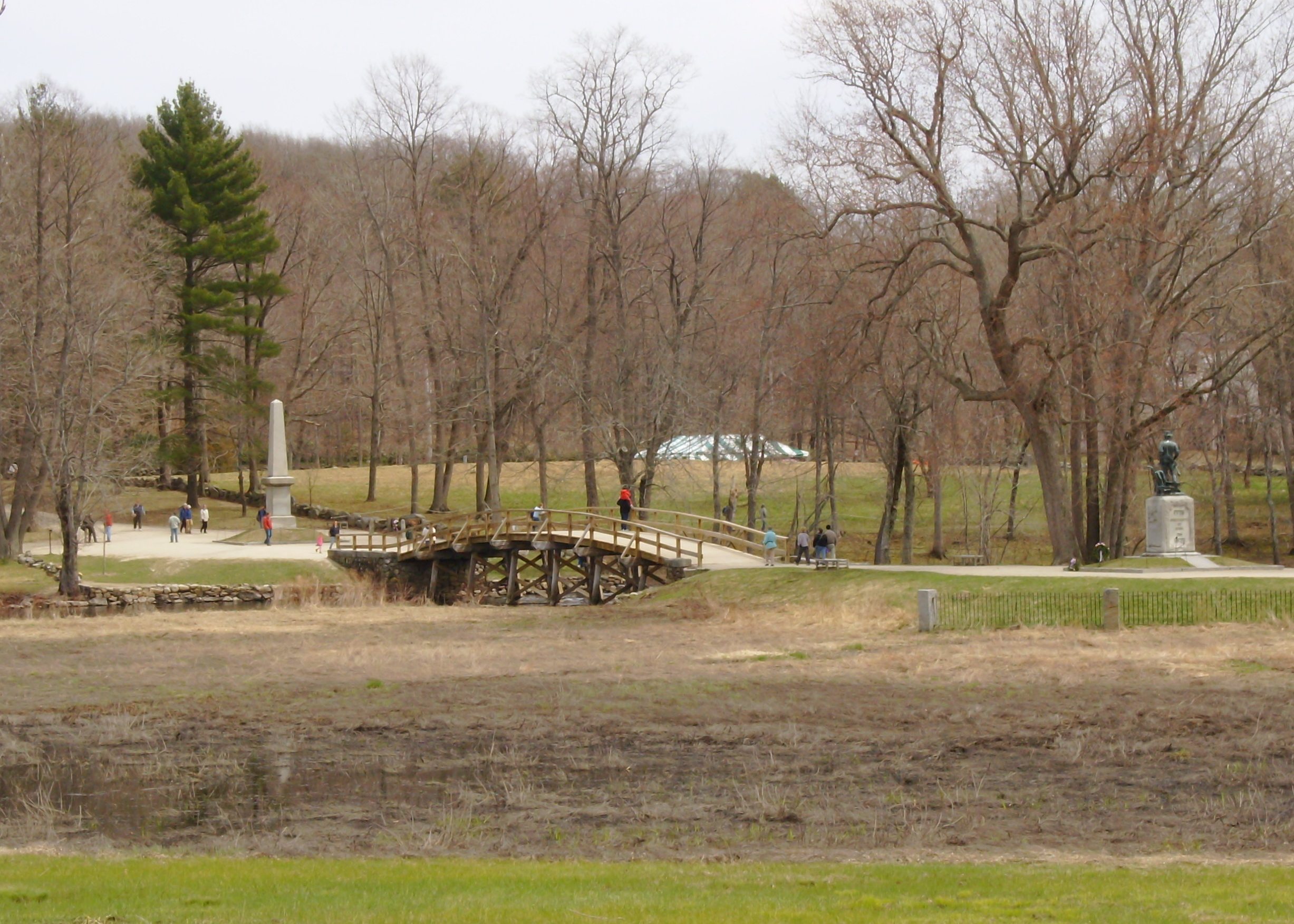
On the morning of April 19, 1775, a confrontation at a modest wooden bridge in Concord, Massachusetts, changed the course of American history. The engagement at North Bridge was not the first exchange of gunfire that day—shots had already been fired hours earlier on the Lexington green—but it represented something profoundly new: the first time that organized colonial militia successfully stood their ground, returned fire, and forced British regular soldiers into retreat. In the span of just a few violent minutes, the relationship between the American colonies and the British Crown was shattered beyond repair.
The events at North Bridge did not occur in isolation. For months, tensions between the colonial population and the British military government had been escalating toward a breaking point. The British Parliament had imposed a series of punitive laws on Massachusetts following the Boston Tea Party, and General Thomas Gage, the military governor stationed in Boston, had been tasked with enforcing order and disarming potential resistance. Intelligence reports indicated that the colonists had been stockpiling weapons and ammunition in Concord, a small town roughly twenty miles northwest of Boston. On the night of April 18, Gage dispatched approximately 700 British regulars on a secret march to seize and destroy these military stores. The mission was intended to be swift and quiet, but colonial intelligence networks—including the famous midnight riders—ensured that warnings spread rapidly through the countryside. By the time the British column reached Concord on the morning of April 19, militia companies from surrounding towns had already begun to muster.
As British troops entered Concord and began searching for hidden supplies, approximately 400 colonial militia gathered on Punkatasset Hill, a rise overlooking the North Bridge on the outskirts of town. Among them were men from Concord, Acton, Lincoln, Bedford, and other nearby communities. Major John Buttrick of Concord assumed overall command of the assembled force. Captain Isaac Davis of Acton, known for having one of the best-equipped and best-drilled companies in the region, positioned his men near the front of the column. Private Amos Barrett, a Concord minuteman, stood among the ranks, later recording his firsthand observations of the day's events. Watching from the Old Manse nearby was Reverend William Emerson, the town minister and a passionate advocate for colonial rights, whose presence reflected the deep moral and spiritual conviction that many colonists brought to their cause.
From their vantage point on the hill, the militia observed smoke rising from the center of Concord. British soldiers had set fire to some discovered supplies, but the militia could not know the fire's limited scope. Believing that the British were putting the entire town to the torch—burning homes and public buildings—the assembled men resolved to act. Major Buttrick ordered the militia to advance toward the bridge, with strict instructions not to fire unless fired upon. The column descended the hill and moved toward the North Bridge in a disciplined formation.
At the bridge, several companies of British light infantry watched the approaching militia with growing alarm. As the colonists drew closer, the British fired warning shots into the water, then discharged direct volleys into the advancing ranks. Two Americans were killed almost immediately, including Captain Isaac Davis, who fell at the head of his Acton company, becoming one of the first officers to die in the Revolution. Several others were wounded. In that instant, Major Buttrick reportedly rose up and shouted, "Fire, fellow soldiers! For God's sake, fire!" The militia discharged a devastating volley. Three British soldiers were killed and nine others wounded in the exchange, and the remaining redcoats, stunned and disorganized, broke ranks and retreated back toward the town center in disorder.
The psychological significance of this moment cannot be overstated. For years, many colonists had doubted whether citizen-soldiers could stand against the professional British army, widely regarded as one of the finest military forces in the world. At North Bridge, that myth of invincibility was decisively punctured. Ordinary farmers, tradesmen, and townspeople had faced disciplined regulars and driven them from the field. News of the engagement spread rapidly through the colonies, galvanizing resistance and convincing many previously hesitant Americans that armed opposition was both possible and necessary.
The British dead were buried near the bridge where they fell. A poignant epitaph, attributed to Reverend William Emerson—the grandfather of the celebrated poet Ralph Waldo Emerson—was later inscribed for their graves: "They came three thousand miles and died / To keep the past upon its throne." The words carry a remarkable empathy, acknowledging the humanity of the fallen soldiers while affirming that their cause belonged to a dying order. The battle at North Bridge was, in every sense, a beginning—the moment when colonial grievance transformed into revolution, and when the American struggle for independence found its first battlefield victory.
People Involved
Major John Buttrick
Commander
Concord militia officer who commanded the advance on North Bridge and reportedly gave the order to fire. His leadership at the bridge turned defense into attack.
Captain Isaac Davis
Company Captain
Captain of the Acton minutemen, killed at North Bridge. His company, armed with bayonets, led the advance—and Davis became the first American officer to fall in the Revolution.
Amos Barrett
Minuteman
Concord minuteman who fought at North Bridge and later wrote a detailed memoir of the day. His account is among the most valuable eyewitness sources.
Reverend William Emerson
Minister
Pastor of Concord whose parsonage, the Old Manse, overlooked North Bridge. He witnessed the battle from his window and served as chaplain to provincial forces.
Sources for Concord