NJ, USA
New Brunswick
The Revolutionary War history of New Brunswick.
Why New Brunswick Matters
New Brunswick at the Crossroads: A Town Caught Between Revolution and Occupation
Few towns in the American Revolution endured so thorough a transformation—from bustling colonial crossroads to military prize, supply depot, occupied city, and finally a symbol of strategic recovery—as New Brunswick, New Jersey. The town was generally known as Brunswick during the Revolution, although both names were used. Sitting astride the Raritan River along the main road connecting New York and Philadelphia, New Brunswick was never a place the war could simply pass through. It was a place where the war stopped, dug in, and stayed. Between late 1776 and the summer of 1777, the town changed hands multiple times, hosted the headquarters of both American and British commanding generals, and became the pivot point around which some of the Revolution's most consequential strategic decisions turned. To understand what happened at New Brunswick is to understand how close the American cause came to extinction in the winter of 1776—and how it survived.
New Brunswick's significance to the Revolution predated the military campaigns that would make it famous. The original settlement was called Inian's Ferry and was home to the Lenape people, whose Minisink Trail crossed the Raritan River at the site of present-day New Brunswick. Located at the head of navigation on the Raritan, the town had grown into a natural transfer point for people and goods, and a colonial center for trade and commerce. George Washington passed through New Brunswick on June 24, 1775, en route to taking command of the Continental Army in Cambridge, Massachusetts.
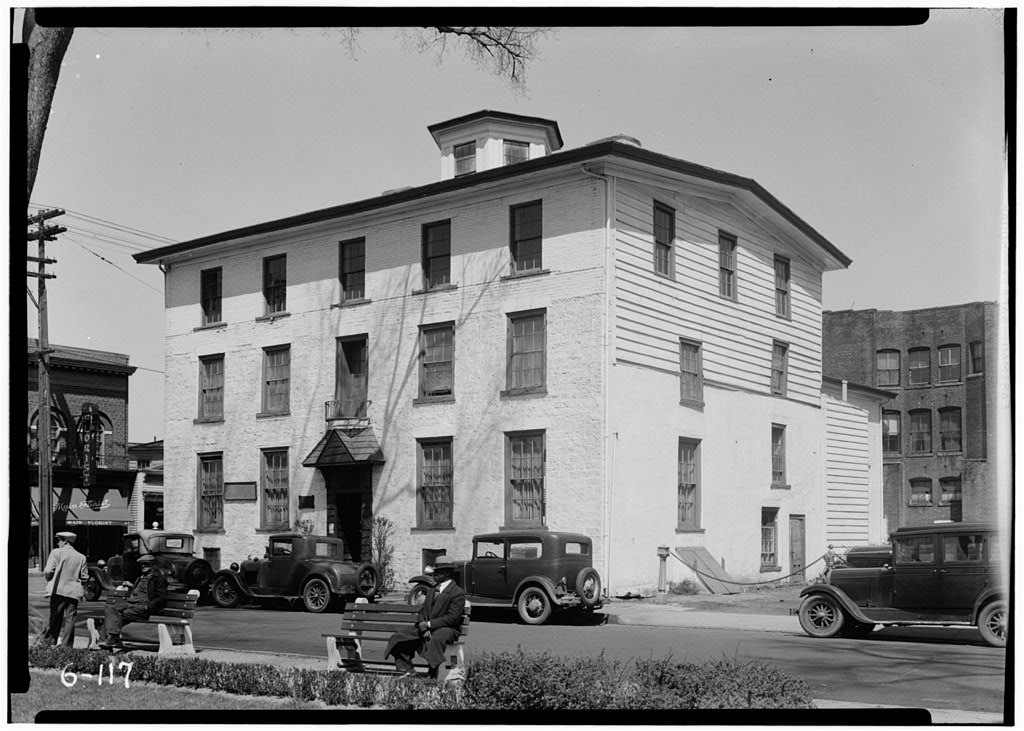
The Provincial Congress of New Jersey met in New Brunswick from January 31 to March 2, 1776, at the White Hall Tavern, which was located on Albany Street —a gathering that helped shape the colony's posture toward independence. And on July 9, 1776, just days after the Continental Congress approved the Declaration, one of the earliest public readings of the Declaration of Independence was made at the foot of the church tower of Christ Church. The man who delivered the reading was Colonel John Neilson, a local merchant and militia commander, who stood on a table carried out from the White Hall Tavern on Albany Street and read the document aloud to a gathered crowd—reportedly the third official public reading of the Declaration. The audience consisted largely of supporters of independence, though several Loyalists were present. Indeed, New Brunswick's Christ Church was so deeply riven by disputes between loyalists and patriots that its rector, Reverend Abraham Beach, was eventually forced to stop conducting worship services during the Revolution.
On September 9, 1776, Benjamin Franklin and John Adams stayed at the Indian Queen Tavern in New Brunswick —likely while traveling as part of the ill-fated Staten Island Peace Conference with Lord Howe. The town was already, in every sense, a crossroads of the emerging nation.
In the autumn of that year, the Continental Army was in full retreat. Washington's forces had been driven from New York after a string of devastating defeats—Long Island, Kip's Bay, Fort Washington, Fort Lee—and by late November they were streaming across New Jersey with British and Hessian troops in aggressive pursuit. Lieutenant General Charles Cornwallis, commanding the vanguard of General William Howe's army, pressed the Americans relentlessly, and on November 29, 1776, Washington's battered columns stumbled into New Brunswick. While in New Brunswick, Washington used Cochrane's Tavern as his headquarters. The town offered a momentary reprieve: the Raritan River was a natural defensive barrier, and the bridge over it could be destroyed to slow the British advance. Washington recognized the opportunity and ordered the bridge demolished after his forces crossed. They were only able to damage the bridge before being stopped by British and Hessian force.
Washington continued the retreat westward on December 1, judging his troops to be unready for battle against the approaching British. To cover the withdrawal, Captain Alexander Hamilton—then just twenty-one years old, commanding sixty men of the New York Provincial Company of Artillery—positioned his battery of horse artillery on the high ground overlooking the Raritan, the hilltop that is now the site of Rutgers University's Queens Campus. From that vantage point, Hamilton's guns engaged British troops stationed on the north side of the river in a fierce cannonade that delayed their advance. Captain Enoch Anderson, an American combatant, later recalled that "A severe cannonading took place on both sides, and several were killed and wounded on our side." The cannon duel continued until sundown, when the artillery was ordered to retreat. With no wagons available to carry equipment, the troops burned their tents to deny them to the enemy. Hamilton's stand bought Washington the time he needed to withdraw through Princeton to Trenton and ultimately across the Delaware—preserving the army that would strike back at Trenton on Christmas night.
British troops occupied New Brunswick from December 1, 1776, to June 22, 1777. General William Howe turned the town into one of his major garrison locations, with up to 7,800 troops occupying a community of roughly four hundred houses. On the high ground above the river, the 7th Regiment of the British Army established a camp and a redoubt. Buccleuch Mansion, the 1739 Georgian home built by Anthony White overlooking the Raritan, was seized by British officers and the Enniskillen Guards of Ireland; saber and musket marks from the occupation can still be seen on the mansion's floors and banisters today. Throughout the occupation, the British garrison sent foraging parties into the surrounding Raritan Valley countryside, seizing food, supplies, and animal feed from local farms.
But the occupiers were far from secure. In what became known as the Forage War—a partisan campaign of attrition waged from January to March 1777—New Jersey militia and Continental Army detachments launched relentless attacks on British supply columns and pickets in and around New Brunswick. David C. Munn's inventory of battles and skirmishes records more than a dozen engagements in and near New Brunswick during this period: ambushes of foraging parties, attacks on picket guards, the capture of supply wagons loaded with cattle, horses, and provisions, and even an assault on General Howe's escort as he traveled from New Brunswick to New York on March 9. On February 18, 1777, Colonel John Neilson—the same man who had read the Declaration aloud the previous summer—led approximately 150 militiamen and 50 Pennsylvania riflemen in a surprise pre-dawn raid on Bennett's Island, located on the Raritan River southeast of the town. The raid resulted in the capture of Major Richard Stockton, renowned as the "land pilot" who had guided British forces across New Jersey, along with three other officers and sixty soldiers of the New Jersey Volunteers, a Loyalist regiment. Neilson lost only one man. These constant, stinging engagements bled British strength and morale, and American operations across New Jersey during this period inflicted casualties exceeding those of the entire campaign for New York.
By the spring of 1777, Howe found his position in central New Jersey increasingly untenable. At the start of the Philadelphia Campaign, Howe determined to move to Philadelphia by sea rather than try a second time to advance overland through New Jersey. He attempted to lure Washington's army out of its strong position at Middlebrook in the Watchung Mountains by advancing from New Brunswick to Middlebush, but Washington refused the bait. In the early hours of June 22, 1777, under rainy conditions, the British evacuated New Brunswick before dawn, falling back through Amboy to Staten Island. Elements of Brigadier General Anthony Wayne's brigade and Colonel Daniel Morgan's newly formed Rifle Corps pursued closely, skirmishing with the British rear guard as they withdrew.
New Brunswick's role in the war did not end with the British departure. Throughout the revolutionary period, the town's port served as a base for privateers who preyed upon British ships around Manhattan. Among the most daring were William Marriner, a tavern-keeper, and Adam Hyler, a German-born privateer, both of whom lived in New Brunswick and conducted raids in Raritan Bay and around the British stronghold at Sandy Hook using fast, lightly armed sloops and whaleboats. Marriner once dropped down the Raritan from New Brunswick in a single whaleboat with just nine men, crossing the bay to capture prizes near Sandy Hook. Hyler reportedly captured five British ships in a single night. Their exploits harassed British logistics and supply lines throughout the war.
After the British evacuation of Philadelphia in June 1778, Washington's army fought the Battle of Monmouth on June 28 and then marched to the banks of the Raritan. On July 4, 1778, from his headquarters at Ross Hall near New Brunswick, Washington ordered one of the earliest formal celebrations of Independence Day. The army was formed on the Brunswick side of the Raritan at five o'clock in the afternoon. Thirteen cannons discharged, followed by a feu de joie—a running fire