
1729–1775
Captain John Parker
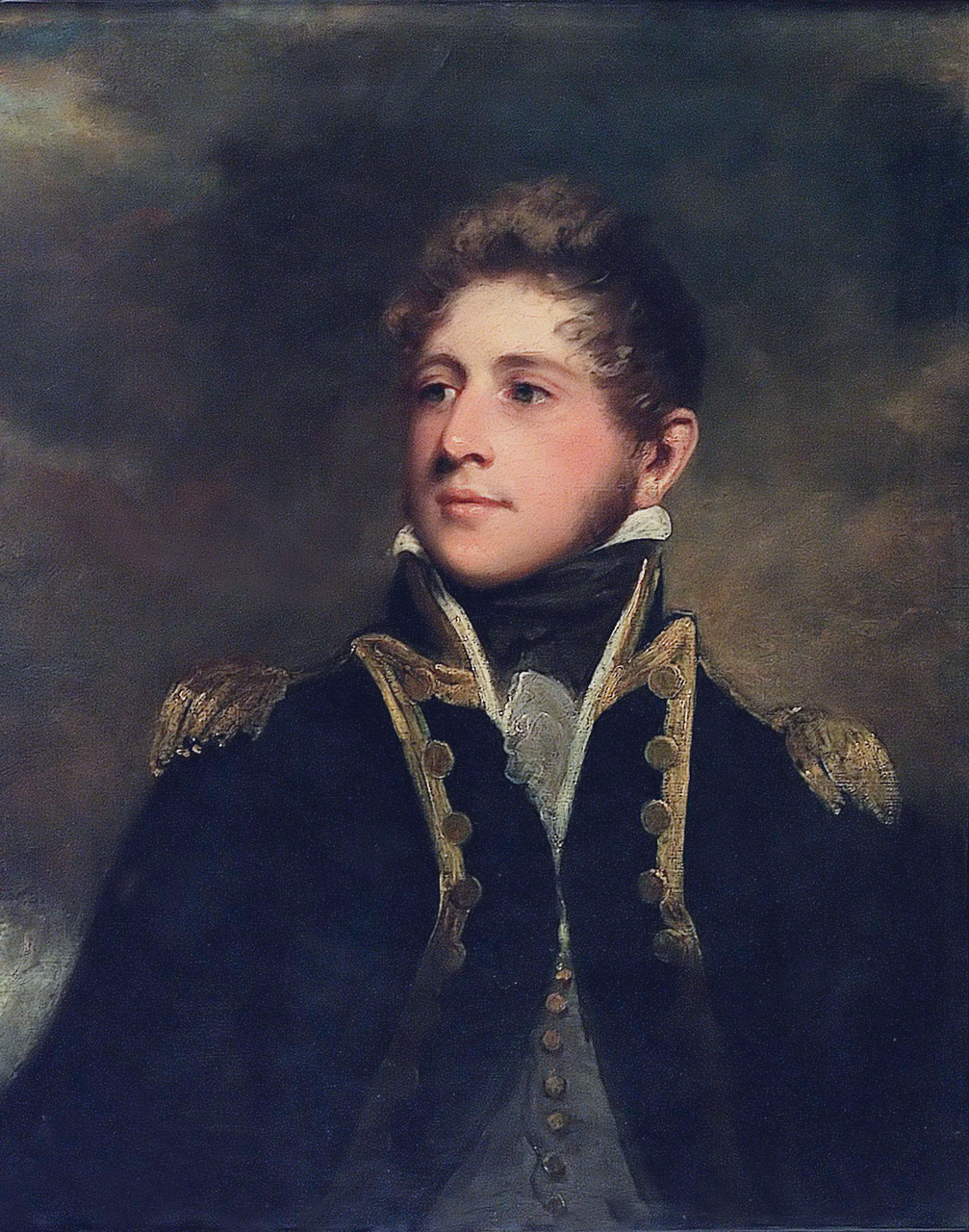
John Hoppner, betw
Biography
Captain John Parker (1729–1775)
Commander of the Lexington Militia
Born in 1729 in the small farming community of Lexington, Massachusetts, John Parker was a man shaped by both the rhythms of rural New England life and the brutality of imperial warfare. As a young man, he served during the French and Indian War, where he witnessed combat at two of the conflict's most consequential engagements: the siege of Louisbourg in 1758 and the Battle of Quebec in 1759. These experiences gave Parker something few of his Lexington neighbors possessed — a firsthand understanding of what it meant to face professional soldiers under fire. After returning home, he settled into the life of a farmer, married, raised a family, and became a respected figure in his community. That respect was formalized when his fellow townsmen elected him captain of the local militia, a role that in colonial Massachusetts reflected deep communal trust. By the spring of 1775, however, Parker was forty-five years old and suffering from tuberculosis, a disease that was slowly killing him. He was not a man seeking glory. He was a man whose neighbors believed he could lead them if the worst came.
The worst came before dawn on April 19, 1775. Warned by riders that a column of British regulars — some 700 strong — was marching through the countryside toward Concord, Parker mustered his militia company on Lexington Green in the early morning darkness. Roughly 77 men answered the call, a force outnumbered nearly ten to one. Parker faced an impossible tactical situation. Confronting the regulars head-on was reckless; dispersing without a stand risked appearing cowardly and abandoning the principle that free men had a right to assemble under arms. According to longstanding tradition, Parker addressed his men with words that have become iconic: "Stand your ground. Don't fire unless fired upon, but if they mean to have a war, let it begin here." When the British arrived and ordered the militia to disperse, chaos erupted. Shots were fired — by whom first remains disputed to this day — and within minutes, eight Lexington men lay dead and ten more were wounded. Parker survived the volley and, after the British marched on toward Concord, regrouped his men to join the pursuit of the retreating redcoats later that day.
What Parker risked on Lexington Green was not abstract. He was a farmer standing on ground he had walked his entire life, facing an empire whose professional army he knew well enough to fear. His men were his neighbors — people he worshiped with, traded with, and whose families were intertwined with his own. The depositions collected from Lexington militiamen in the days following the battle reveal not the voices of ideologues but of ordinary men stunned by what had happened to their community. Parker himself helped ensure these sworn accounts were gathered, understanding that the narrative of who fired first would matter enormously in the political struggle ahead. He knew, too, that his own body was failing him. Tuberculosis in the eighteenth century was a death sentence carried out slowly, and Parker was well into its grip by April 1775. He did not stand on the Green because he had nothing to lose — he stood there because he believed the cause was worth whatever time he had left. He was fighting not for personal survival but for the community around him and for principles he would not live long enough to see vindicated.
John Parker died on September 17, 1775, less than five months after the battle that made Lexington a household name throughout the colonies. He never saw the Declaration of Independence, never witnessed the alliance with France, never learned whether the war his men helped ignite would end in liberty or defeat. His significance lies not in military brilliance — the engagement on Lexington Green lasted only minutes and was, by any tactical measure, a disaster for the militia — but in the moral weight of his decision to stand. Today, a statue of Parker stands on Lexington Green, musket in hand, gazing outward near the spot where he ordered his men to hold their ground. He has become a symbol of citizen-soldiering: the idea that ordinary people, rooted in their communities and armed with conviction, can alter the course of history by choosing not to step aside. His story reminds us that the Revolution did not begin with generals and politicians but with local leaders making irreversible decisions in the gray light before sunrise.
WHY CAPTAIN JOHN PARKER MATTERS TO LEXINGTON
Students and visitors walking across Lexington Green today are standing in the exact space where Parker made his fateful decision. His story teaches us that the American Revolution was not launched by distant statesmen but by local people who understood the cost of resistance and chose it anyway. Parker was no radical firebrand — he was a dying farmer elected by his neighbors to lead them in a crisis none of them fully anticipated. His insistence on gathering sworn depositions after the battle shows an early awareness that truth and legitimacy mattered as much as musket fire. Lexington's identity as the birthplace of American liberty is inseparable from Parker's willingness to stand, and his story grounds the Revolution in the human, communal, and deeply personal choices that made it real.
TIMELINE
- 1729: Born in Lexington, Massachusetts
- 1758: Serves at the siege of Louisbourg during the French and Indian War
- 1759: Participates in the Battle of Quebec under British command
- c. 1760s–1770s: Returns to Lexington, farms, and raises a family
- c. 1774–1775: Elected captain of the Lexington militia by his townsmen
- April 19, 1775 (predawn): Musters approximately 77 militiamen on Lexington Green to face approaching British regulars
- April 19, 1775 (morning): Battle of Lexington erupts; eight militiamen killed, ten wounded
- April 19, 1775 (afternoon): Regroups his company to pursue retreating British forces along the road from Concord
- Late April 1775: Assists in collecting sworn depositions from Lexington participants to document British aggression
- September 17, 1775: Dies of tuberculosis in Lexington at age 46
SOURCES
- Fischer, David Hackett. Paul Revere's Ride. Oxford University Press, 1994.
- Tourtellot, Arthur Bernon. Lexington and Concord: The Beginning of the War of the American Revolution. W.W. Norton, 1963.
- Galvin, John R. The Minute Men: The First Fight: Myths and Realities of the American Revolution. Pergamon-Brassey's, 1989.
- Lexington Historical Society. Depositions of Lexington Militia, April 1775. Lexington, MA.
- National Park Service. "Minute Man National Historical Park: Battle of Lexington." https://www.nps.gov/mima/
In Lexington
Apr
1775
Captain Parker Musters the MilitiaRole: Commander
# Captain Parker Musters the Militia In the predawn hours of April 19, 1775, the small town of Lexington, Massachusetts, became the stage for one of the most consequential moments in American history. What unfolded on its modest village green that morning was not the result of a sudden impulse but the culmination of years of escalating tension between Britain's colonial government and the increasingly restless citizens of Massachusetts. Parliament's passage of the Coercive Acts, the dissolution of local self-governance, the quartering of soldiers in Boston, and the steady erosion of rights the colonists believed were theirs by birth had pushed the relationship between crown and colony to its breaking point. When British General Thomas Gage dispatched a column of approximately seven hundred regulars from Boston under the cover of darkness, their mission was to march to Concord and seize colonial military supplies stored there. But word of the march leaked almost immediately, and a network of riders — most famously Paul Revere and William Dawes — set out to warn the countryside that the regulars were coming. It was this warning that reached Lexington in the early hours of the morning, and it was upon receiving it that Captain John Parker ordered the town's meeting-house bell rung to summon the local militia and minutemen to the Green. Parker, a forty-five-year-old veteran of the French and Indian War who had seen combat at Louisbourg and Quebec, was a man familiar with the weight of military command. He was also gravely ill. Tuberculosis had already taken deep root in his body, and he would not survive the year, dying the following September. Yet on that cold April morning, whatever pain or fatigue he carried did not prevent him from stepping into his role as the elected leader of approximately seventy-seven militiamen who gathered at his call. The men who assembled came from all walks of Lexington's modest civilian life — farmers, tradesmen, fathers, and sons. Some had been roused from sleep and ran through the darkness still pulling on coats. Others had been waiting for hours inside Buckman Tavern, which stood adjacent to the Green, where they had gathered after the first rumors of a British march reached town. Among them was Jonas Parker, a kinsman of the captain and a man whose resolve that morning would prove absolute. Jonas Parker reportedly placed his musket ball and flint on the ground beside him, vowing not to retreat. He would be among the first to fall when violence erupted, killed as he stood his ground reloading his weapon. Captain Parker faced a decision that no amount of prior military experience could have made simple. His small band of militiamen was vastly outnumbered by the approaching British force — a disciplined, professional army column nearly ten times their size. Retreat would have been the tactically prudent choice, and no one could have faulted him for ordering his men to disperse before the redcoats arrived. But Parker and his men had not assembled merely to watch the British pass. They had gathered to make a statement — that free men would not stand passively while an armed force marched through their town to strip them of their means of self-defense. According to long-standing tradition, Parker addressed his company with words that have echoed through the centuries: "Stand your ground. Don't fire unless fired upon, but if they mean to have a war, let it begin here." Historians have debated whether Parker spoke these precise words, as the earliest recorded account of them came decades later. Yet whether exact quotation or faithful paraphrase, the sentiment they express is consistent with what the militiamen did next — they stood. When the British advance column arrived on the Green under the command of Major John Pitcairn, the two sides faced each other in the gray light of early morning. Exactly who fired the first shot — the famous "shot heard round the world" — remains unknown and fiercely debated. But within moments, musket fire erupted. Eight militiamen were killed and ten wounded. The British suffered only one minor casualty before the colonial line broke and the survivors scattered. It was a brief, lopsided engagement, and by any conventional military measure, it was a defeat for the colonists. Yet Lexington was not the end of the story — it was the beginning. The violence on the Green galvanized the countryside. By the time the British reached Concord and began their return march to Boston, thousands of colonial militia had mobilized, harrying the regulars from behind stone walls and trees in a running battle that inflicted devastating casualties. The day that began with Captain Parker's quiet order to stand ended with the British column limping back to the safety of Boston, and the American Revolution had irrevocably begun. Parker's decision to muster his men — sick, outnumbered, and uncertain of what the dawn would bring — transformed a village green into sacred ground and gave a newborn cause its first martyrs.
Apr
1775
Battle of LexingtonRole: Commander
# The Battle of Lexington In the early morning hours of April 19, 1775, a confrontation unfolded on the village green of Lexington, Massachusetts, that would forever alter the course of history. The Battle of Lexington, though brief and militarily one-sided, marked the first military engagement of the American Revolution and set into irreversible motion the colonies' long march toward independence from Great Britain. The roots of the conflict stretched back more than a decade. Years of escalating tensions between the American colonies and the British Crown—over taxation without representation, the quartering of soldiers, and the steady erosion of colonial self-governance—had brought the relationship to a breaking point. Parliament's passage of the Intolerable Acts in 1774, which punished Massachusetts for the Boston Tea Party by stripping away many of its political freedoms, only hardened colonial resolve. Across the countryside, local militias had been drilling and stockpiling arms and ammunition in anticipation of a possible confrontation. When British General Thomas Gage ordered a column of approximately 700 soldiers, under the command of Lieutenant Colonel Francis Smith and Major John Pitcairn, to march from Boston to Concord to seize a reported cache of colonial weapons and supplies, the stage was set for a fateful clash. Word of the British advance spread through the night thanks to a network of riders and alarm signals. By the time the British column neared Lexington in the predawn darkness, Captain John Parker, a veteran of the French and Indian War, had assembled roughly 77 militiamen on Lexington Green. These were not professional soldiers but farmers, tradesmen, and ordinary townspeople who had answered the call to defend their community and their rights. Among them stood Jonas Parker, a cousin of the captain and a man of fierce determination who reportedly vowed never to retreat from British troops. Prince Estabrook, an enslaved Black man, also took his place in the militia ranks that morning—a powerful reminder that the desire for liberty crossed racial lines even in a society deeply scarred by the institution of slavery. Jonathan Harrington, a young townsman, likewise stood among his neighbors, prepared to face whatever came. As the vastly superior British force arrived and formed up on the green, Major Pitcairn reportedly ordered the militia to lay down their arms and disperse. Captain Parker, recognizing the overwhelming odds, may have instructed his men to disband without surrendering their weapons. Before the militiamen could fully comply, a single shot rang out—the origin of which remains one of history's enduring mysteries. Neither side claimed responsibility, and no definitive evidence has ever established whether the shot came from a British soldier, a militiaman, or even a bystander. What followed, however, was devastating and unambiguous. British soldiers unleashed volleys of musket fire into the scattering militia. The engagement lasted perhaps ten minutes, but in that brief span, eight Americans were killed and ten more were wounded. Jonas Parker, true to his word, fell on the green without retreating. Jonathan Harrington, mortally wounded, reportedly crawled toward his home before dying on his own doorstep. Prince Estabrook was among the wounded, making him one of the first Black Americans injured in the fight for the nation's independence. On the British side, only one soldier sustained an injury. The lopsided nature of the engagement could have rendered it a footnote—a small skirmish quickly forgotten. Instead, it became a catalyst. As the British column continued toward Concord, news of the bloodshed at Lexington spread like wildfire through the surrounding communities. By the time the British reached Concord and encountered resistance at the North Bridge, thousands of militiamen from dozens of towns were converging on the area. The British retreat to Boston that afternoon became a harrowing gauntlet of colonial gunfire, and by day's end, the American Revolution had truly begun. The Battle of Lexington matters not because of its military significance—it was, by any tactical measure, a decisive British victory—but because of what it symbolized and set in motion. The blood shed on that small village green transformed a political dispute into an armed struggle for independence. Captain Parker and his militiamen, standing against impossible odds in the gray light of dawn, became enduring symbols of ordinary citizens willing to risk everything for the principle of self-governance. Their stand reminded future generations that revolutions are not born in a single moment of triumph but often in moments of sacrifice, loss, and defiant courage against overwhelming power.
Apr
1775
Lexington Depositions CollectedRole: Militia Captain
In the days following the battle, Patriots in Lexington collected sworn depositions from militia members and eyewitnesses. These statements, gathered under the direction of the Massachusetts Provincial Congress, were intended to establish that the British had fired first. The depositions—from men like Nathaniel Mulliken, John Parker, and others—became critical propaganda tools. Copies were rushed to England aboard the schooner Quero, arriving before the British military's official account. These eyewitness testimonies remain among the most important primary sources for understanding what happened on Lexington Green. The effort demonstrated that the Patriots understood the battle for public opinion was as important as the battle itself.
Stories